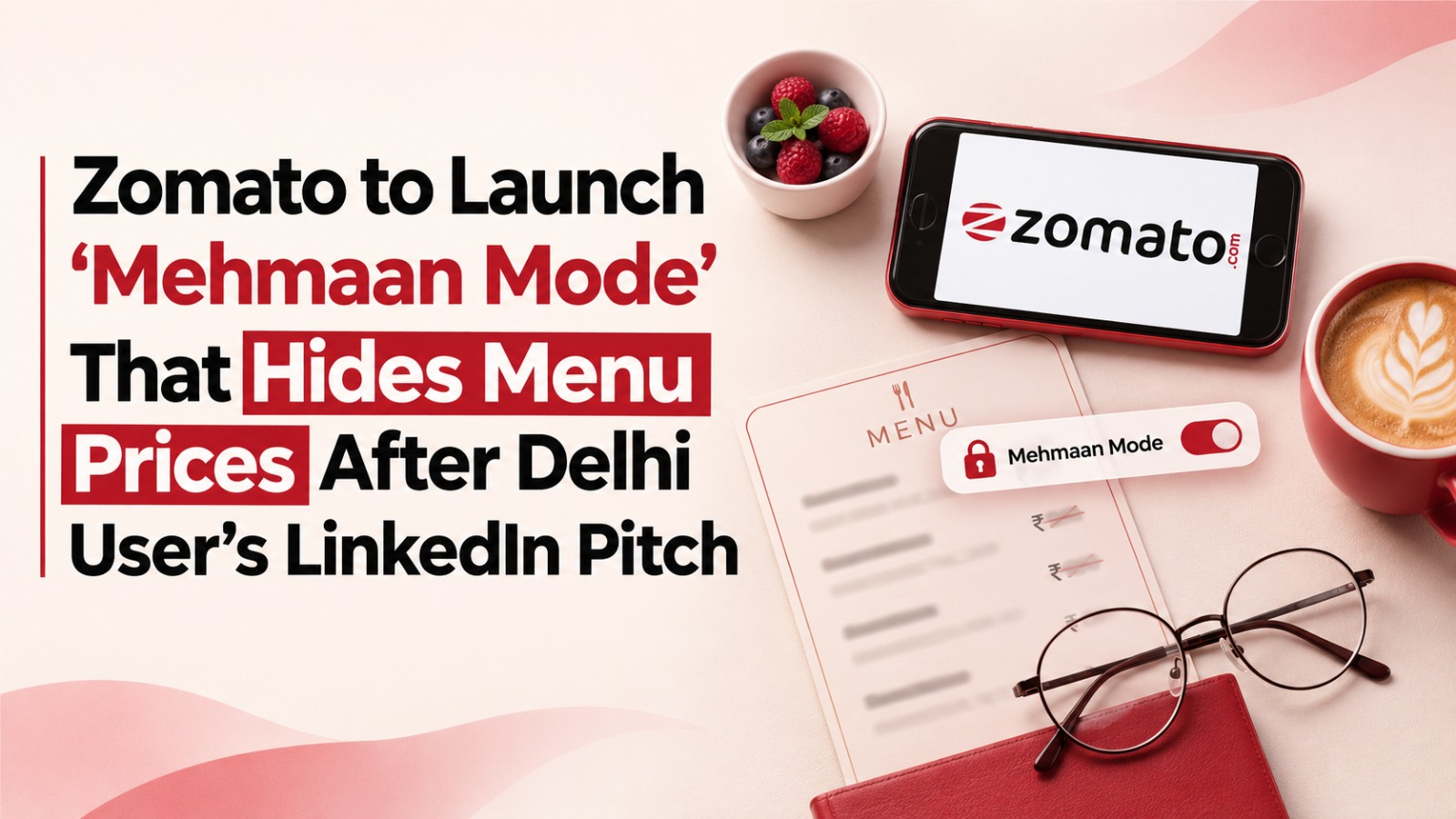
Zomato is preparing to introduce a new feature called ‘Mehmaan Mode’ this week after a LinkedIn suggestion highlighted an awkward situation that often arises when people order food at someone else’s expense: deciding what to eat without knowing how much it costs.
CEO Deepinder Goyal confirmed the upcoming rollout after Delhi-based marketing manager Ayushmaan Agarwalla proposed the feature on LinkedIn. The idea is simple. When activated, Mehmaan Mode will hide menu prices, allowing guests to select dishes without worrying about how much they are adding to the host’s bill.
Goyal responded to the suggestion within hours, confirming that Zomato would introduce the feature during the week. He also wished Agarwalla a happy festive season.
How Zomato’s Mehmaan Mode Will Work
The proposed feature addresses a familiar problem during group meals and gatherings. When someone else is paying for the food, guests may hesitate before ordering expensive dishes, even when the host has encouraged them to choose whatever they want.
Visible menu prices can make people conscious of the overall bill, sometimes leading them to pick cheaper options or avoid ordering something they actually want.
Mehmaan Mode aims to remove that hesitation by hiding prices from the guest-facing menu. This would allow people to browse available dishes and place their orders without constantly calculating the cost.
The idea is particularly relevant during India’s festive season, when families and friends frequently come together for meals and hosts place food orders for larger groups.
By removing the price information, Zomato wants to make the ordering experience more comfortable for guests while allowing hosts to take care of the payment.
Social Media Users Suggest Budget Caps and AI Recommendations
Goyal’s quick response attracted attention, with social media users appreciating the idea and its connection to Indian hospitality.
Some described it as the “most Indian feature request ever”, while others called the quick acceptance “peak execution”.
The discussion also brought several suggestions for improving the feature. Users proposed introducing budget limits so hosts could control their overall spending without displaying individual dish prices to guests.
Other suggestions included adding a guest count, offering AI-curated menus and renaming the feature as a ‘price-less menu’.
However, not everyone was convinced that hiding prices would be enough. Some users raised concerns about whether hosts would actually activate the feature if guests ended up ordering significantly more expensive meals.
This highlights a possible challenge for Zomato. While the feature could make guests more comfortable, hosts would still want some control over how much they spend.
Zomato and Blinkit Have Acted on User Suggestions Before
The Mehmaan Mode proposal is not the first instance of a user suggestion finding its way into the product plans of Zomato and its associated platforms.
In 2024, Blinkit CEO Albinder Dhindsa responded to a customer’s request on X by introducing free coriander with vegetable orders. The suggestion addressed a small but familiar grocery-shopping preference.
Deepinder Goyal has also engaged with users over improvements to Zomato’s Food Rescue feature.
These instances reflect how social media conversations can become a source of product ideas for consumer-facing platforms. Rather than limiting feedback to formal channels, companies can identify everyday problems through discussions with their users.
With Mehmaan Mode, Zomato is attempting to address something that goes beyond food delivery itself. The feature focuses on the social discomfort of spending someone else’s money, particularly when a host wants guests to enjoy a meal without worrying about the bill.
The upcoming rollout will show how the idea translates into the actual ordering experience.
Also Read: Nigerian-Born Engineer Saheed Akinbile Secures $3.8 Million for AI Startup Minicor