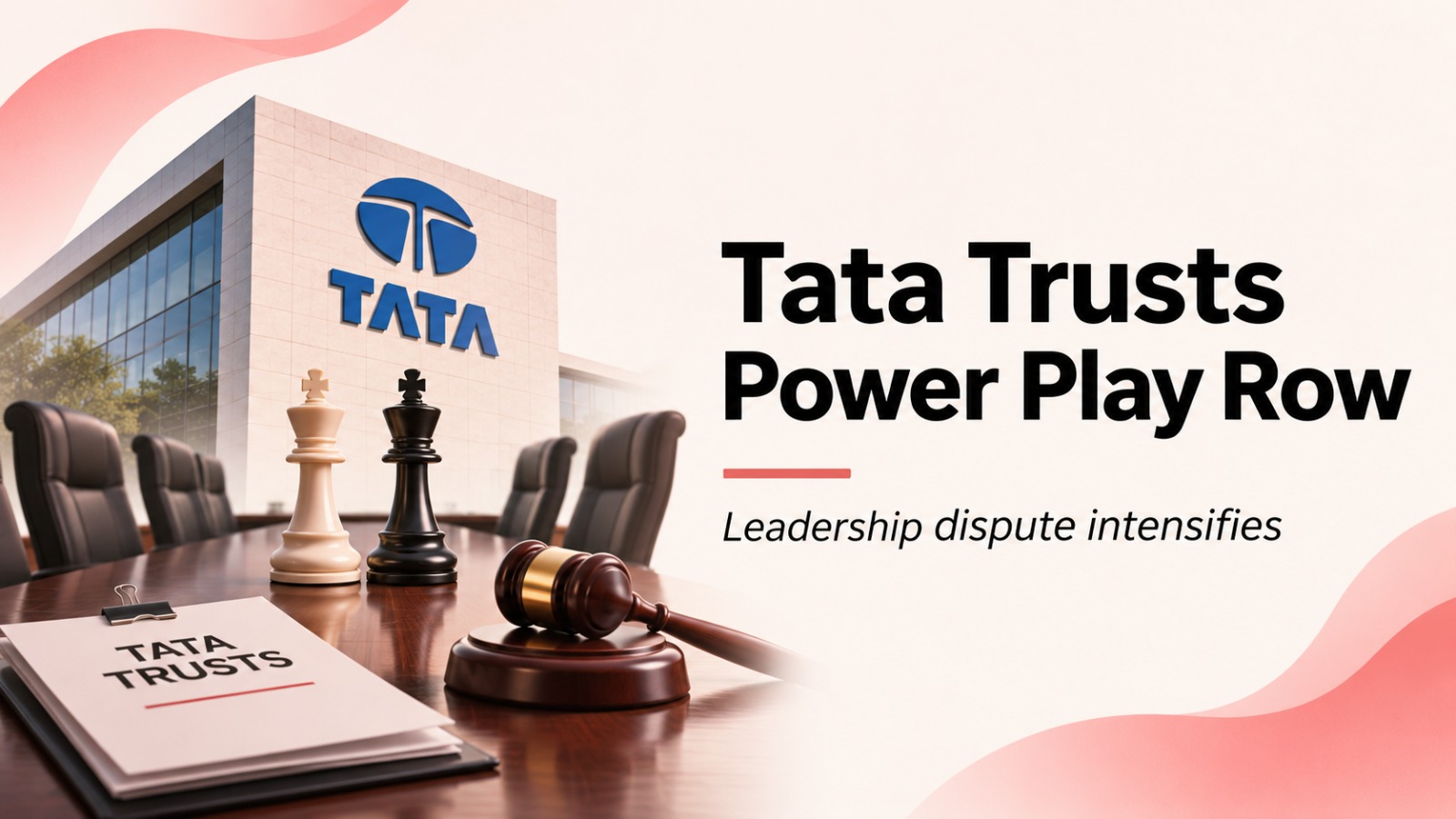
A fresh dispute has emerged within Tata Trusts, with trustees Venu Srinivasan and Vijay Singh accusing fellow trustee Darius Khambata of attempting to change the composition of Sir Dorabji Tata Trust to influence its internal power balance. The allegations have added another layer to the ongoing disagreement over Tata Sons’ proposed listing, the reappointment of chairman N Chandrasekaran and the role of nominee directors.
In a five-page letter dated November 11, reviewed by Moneycontrol, Srinivasan and Singh alleged that Khambata had planned to temporarily remove Srinivasan to facilitate the appointment of two new trustees in November 2025. They rejected Khambata’s suggestion that the process had been consensual.
“You strategized to temporarily oust one of us (Venu), so as to induct 2 new trustees in November, 2025. There was nothing consensual about that process,” the trustees wrote.
The letter was a response to an earlier communication from Khambata and questioned his position on several decisions involving the Tata Trusts and Tata Sons.
Trustee appointments become a flashpoint
Srinivasan and Singh argued that the induction of two trustees into Sir Dorabji Tata Trust in November 2025 significantly changed its composition. They also challenged Khambata’s account of the September 11, 2025 decision not to renew Vijay Singh’s tenure as a Tata Sons nominee director.
The two trustees claimed that Khambata had acknowledged that four trustees, including himself, voted against Singh’s renewal to strengthen opposition to Tata Sons’ listing and preserve the Trusts’ veto rights.
They questioned whether the decision was based on Singh’s performance and suitability or on the voting position needed to influence the listing debate.
Another point of disagreement concerned the responsibilities of nominee directors. Srinivasan and Singh disputed Khambata’s interpretation of the Supreme Court’s judgment in the Tata-Mistry dispute, arguing that nominee directors remained bound by their fiduciary duties towards Tata Sons and could not automatically act according to the Trusts’ preferences.
Chandrasekaran’s reappointment remains disputed
The disagreement also extends to the leadership of Tata Sons. Srinivasan and Singh said the trustees of Sir Dorabji Tata Trust and Sir Ratan Tata Trust had unanimously recommended a five-year extension for N Chandrasekaran on July 28, 2025.
According to the two trustees, Khambata had supported the resolution and drafted it himself.
However, following changes to the composition of Sir Dorabji Tata Trust in November 2025, Chandrasekaran’s reappointment was deferred in February 2026. The trustees argued that no subsequent resolution had formally overturned the earlier unanimous recommendation.
They also referred to a July 10, 2025 communication in which Khambata had praised Chandrasekaran’s performance and future plans, suggesting that Ratan Tata would have been pleased with his work.
“We would like to know what changed between that letter and the position you now take, other than the composition of the Trusts?” Srinivasan and Singh wrote.
The prolonged uncertainty reportedly prompted Chandrasekaran to decide against offering himself for another term, even after the Nomination and Remuneration Committee unanimously asked him to reconsider.
Srinivasan and Singh defended the Tata Sons board’s September 17 decision, arguing that it had acted to bring an end to uncertainty surrounding the chairman’s reappointment.
Tata Sons listing divides the trustees
The proposed listing of Tata Sons remains one of the central disagreements between the trustees.
Srinivasan and Singh rejected Khambata’s argument that listing would weaken the Tata model. They pointed to the RBI’s two-year review, which concluded that Tata Sons remained a systemically significant financial institution subject to the applicable listing framework.
The two trustees questioned whether resistance to listing was genuinely about protecting the Tata Group’s long-term business philosophy or about retaining control over its holding company.
They also raised concerns about the fiduciary responsibilities and tax-exempt status of charitable trusts if maintaining corporate control became an objective in itself.
The disagreement reflects different positions on how Tata Sons should balance regulatory obligations, shareholder interests and the group’s traditional approach to long-term investments.
Khambata had criticised Tata Sons board meeting
The latest letter follows Khambata’s November 2 communication to Tata Trusts chairman Noel Tata and CEO Siddharth Sharma, in which he strongly criticised the September 17 Tata Sons board meeting concerning Chandrasekaran’s reappointment.
Khambata described the meeting as a day that would live in infamy, claiming that it had damaged Tata Sons’ reputation and the image of corporate India.
He also announced that he would not seek reappointment to Sir Dorabji Tata Trust and Sir Ratan Tata Trust. He said the requirement of obtaining unanimous consent from fellow trustees could compromise his independence.
Khambata questioned why Srinivasan and Singh supported Tata Sons’ listing in April 2026 despite earlier unanimous resolutions opposing it.
He maintained that a listing could expose the holding company to short-term shareholder pressures, potentially restricting its ability to make long-term investments and support struggling group companies.
Rather than listing, Khambata argued that Tata Sons could adopt transparency standards associated with listed companies while remaining privately held. He also said any opposition to listing should be accompanied by a mechanism to provide liquidity to the Shapoorji Pallonji Group, which holds around 18% of Tata Sons.
Khambata further questioned whether the Tata Sons board would have taken the same decision on September 17 had Ratan Tata been alive.
Srinivasan and Singh rejected the suggestion that Ratan Tata’s authority could be measured through his position or designation. They argued that his influence came from years of building consensus among stakeholders.
“Such authority cannot be inherited. It has to be earned, and it is not conferred by a title or a voting majority,” they wrote.
The exchange highlights the growing differences within Tata Trusts over trustee appointments, corporate governance and the future ownership structure of Tata Sons. With the chairman’s reappointment and the proposed listing both emerging as major points of contention, the dispute has become a broader debate over who should shape the group’s long-term direction.