
FarmDidi, a direct-to-consumer (D2C) pickle and condiments brand focused on empowering rural women entrepreneurs, has secured over ₹7 crore in a seed funding round. The investment was led by Samved Ventures with participation from LetsVenture, Indigram Labs, IIM Calcutta Innovation Park, and a group of angel investors associated with IIM Calcutta and Symbiosis.
Purpose of the Fundraise
FarmDidi has outlined clear goals for deploying the new capital. A large portion will be used to grow the companies team and thus fortifying it’s operational backbone; the second target area will be research and development, which is setting out to provide new and additional product lines while elevating food safety standards.
The startup is also looking to upgrade its tech infrastructure, especially in quality control and traceability systems that allow every jar of pickle to be traced back to the rural entrepreneur who originally produced it. Also, the startup is looking to invest to scale its community of rural women micro-entrepreneurs, referred to as “Didis”. The network currently includes around 2,000 women and is targeted to grow beyond 5,000 in the next few years.
Also Read: SnapE Cabs Bags $2.5M to Drive EV Cab Expansion in Delhi
Origins and Founders
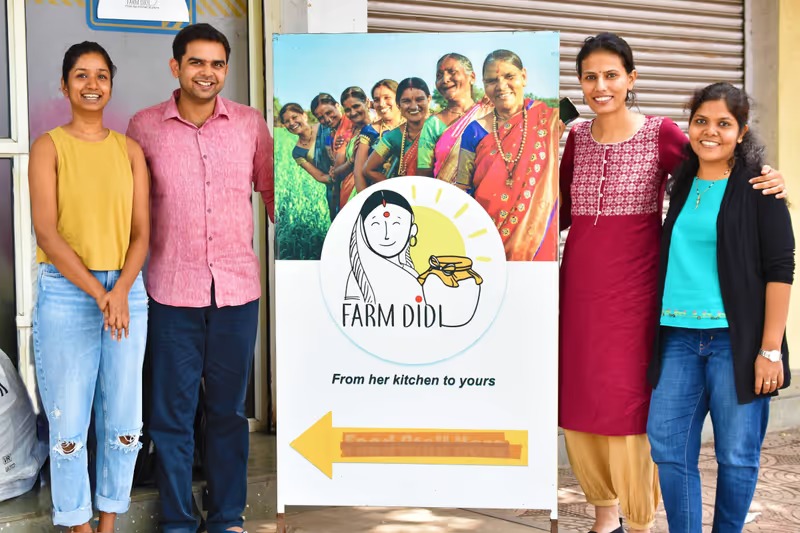
FarmDidi was founded by Manjari Sharma, Anukrit Johari, and Asmita Khobragade While initial pilots of the model began in 2021, the company formally launched in 2022. The founding team envisioned a business that could combine India’s culinary traditions with modern consumer needs, while also addressing the issue of sustainable livelihood creation in rural communities.
Business Model
Fundamentally, FarmDidi aims to support rural women to become food entrepreneurs. The firm will develop micro production units for women to make homemade, homemade and without preservatives pickles and condiments. The recipes use authentic regional practices, but the methods used to make them are conforming to current food safety practices required by retail firms today.
FarmDidi has multiple channels to market their products, they also have their own website, top ecommerce sites, and quick commerce apps such as Blinkit, Zepto and Instamart. Using a multi-channel distribution strategy has allowed FarmDidi to draw urban households while ensuring the products origin remain in rural kitchens.
A distinguishing feature of their business model is traceability. Consumers will be able to find information about who exactly produced the food they purchase, which provides transparency & strengthens consumer trust with the brand commitment to safety and authenticity.
Growth and Market Position
FarmDidi reports that it has grown rapidly since its inception. The company has achieved an annual recurring revenue of around ₹18 crore and currently processes and ships more than 30,000 orders per month. On Amazon India, several of its pickle varieties are ranked among the top sellers, helping the brand gain recognition in the highly competitive packaged foods space.
Recognition and Earlier Funding
FarmDidi saw national exposure after its appearance on Shark Tank India Season 3, and for making a ₹ 1 crore investment deal with investors Vineeta Singh and Peyush Bansal. This exposure brought national attention to FarmDidi’s unique blend of social impact and consumer products, setting the stage for subsequent growth and funding milestones.
Challenges and Opportunities
The brand has achieved some early traction, but as it moves into its next stage of growth, it will be critical to maintain high operational discipline. Scaling from 2,000 to over 5,000 Didis will require structured training, a strong supply chain, and guaranteed quality standards in multiple markets.
The Indian pickle and condiments market is crowded with well-established competitors, and differentiating through authenticity and clean-label promises will be critical. At the same time, the rise in consumer demand for preservative-free, home-style foods presents a major opportunity for FarmDidi to capture a loyal customer base.
If the company succeeds in balancing tradition with technology, it could solidify its place as a household brand while continuing to deliver meaningful impact in rural communities.
Also Read: From Schoolgirl Coder to Global Founder: Geethu Sivakumar’s Steady Climb