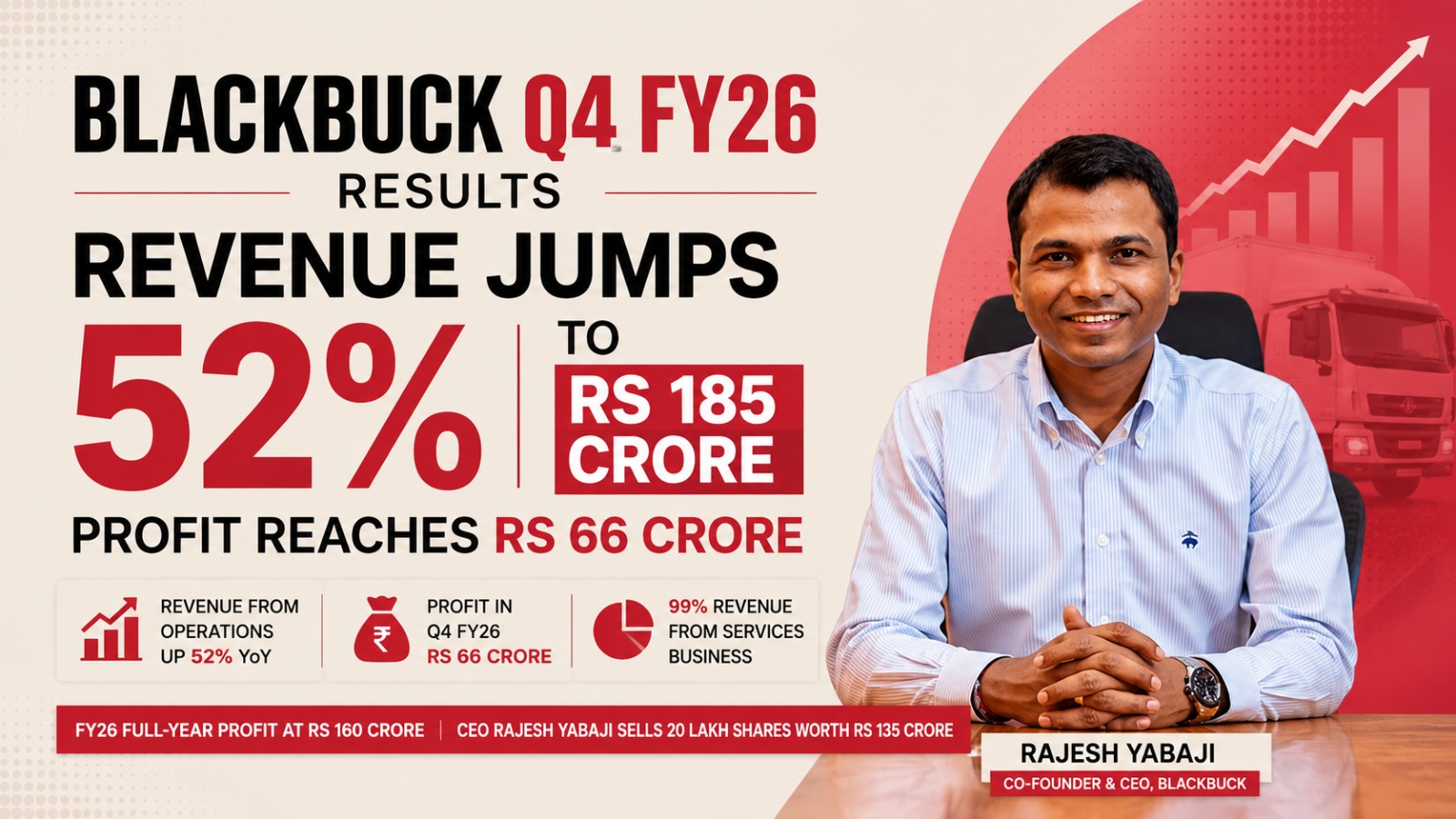
BlackBuck, founded by Rajesh Yabaji closed the final quarter of FY26 with a sharp rise in revenue and a profitable bottom line, signalling a stronger year for the online trucking platform after a period of wider cost pressure in India’s logistics-tech market.
The company reported Rs 185 crore in revenue from operations in Q4 FY26, up from Rs 122 crore in the same quarter last year. That marks nearly 52% year-on-year growth for the quarter. BlackBuck also posted a profit of Rs 66 crore during the quarter.
For the full financial year ended March 2026, BlackBuck’s operating revenue rose to Rs 652 crore, compared with Rs 427 crore in FY25.
The company’s services business remained the core growth engine, contributing 99% of operating revenue.
Revenue from services increased 52.5% year-on-year during the quarter, rising to about Rs 184 crore from Rs 120.4 crore in Q4 FY25. The remaining operating revenue came from its other business lines.
BlackBuck’s total income, including other income, stood at Rs 200 crore in Q4 FY26, compared with Rs 137 crore a year earlier.
The growth, however, came with higher spending. Total expenses rose 67.5% year-on-year to Rs 159.2 crore in Q4 FY26 from Rs 95.1 crore in Q4 FY25. Employee benefit expenses remained the company’s largest cost head and increased 23.9% during the quarter.
The Rs 66 crore profit reported on a quarterly basis contained a benefit of Rs 28.59 crore through taxes. Once this tax benefit is excluded, the net profit comes down to roughly Rs 37 crore. In FY25, the company reported an annual profit of Rs 160 crore, against an annual loss of Rs 38 crore.
In a separate market transaction during the quarter, chairman and CEO Rajesh Kumar Naidu Yabaji sold 20 lakh shares through a bulk deal worth Rs 135 crore. His stake reduced from 11.81% to 10.7%.
BlackBuck’s share price was trading at Rs 532.45, giving the company a market valuation of Rs 9,597 crore.
This quarter indicates better financial results for BlackBuck in terms of more revenue, profitability throughout the year, and service-focused business growth. On the other hand, an increase in expenses indicates that its next challenge would be to sustain quality profit while growing its business operations.
Also Read: Who Owns Your Team Now? IPL’s Latest Ownership Breakdown