Though it is likely that the next iPhones from Apple and next Pixel phones from Google will resemble their predecessors on the surface, it is possible that the real fight will take place under the hood. Based on what early rumors are saying about iPhone 18 Pro Max and Pixel 11 Pro XL, the two flagships are likely to pursue somewhat different goals.
Neither phone is tipped for a dramatic redesign. Instead, the biggest differences are expected to emerge in the processors, cameras, battery capacities, displays and software-driven features that users interact with every day.
There is one number that stands out from the first comparison of the two phones. The US variant of the iPhone 18 Pro Max with only eSIM is alleged to have 5,567mAh capacity in its battery, compared to the 5,200mAh capacity on the Pixel 11 Pro XL. This equates to a difference of 367mAh on paper, but actual battery performance relies on more than just capacity alone.
iPhone 18 Pro Max and Pixel 11 Pro XL could stick with familiar designs
Anyone expecting Apple or Google to completely rethink its flagship design may have to wait.
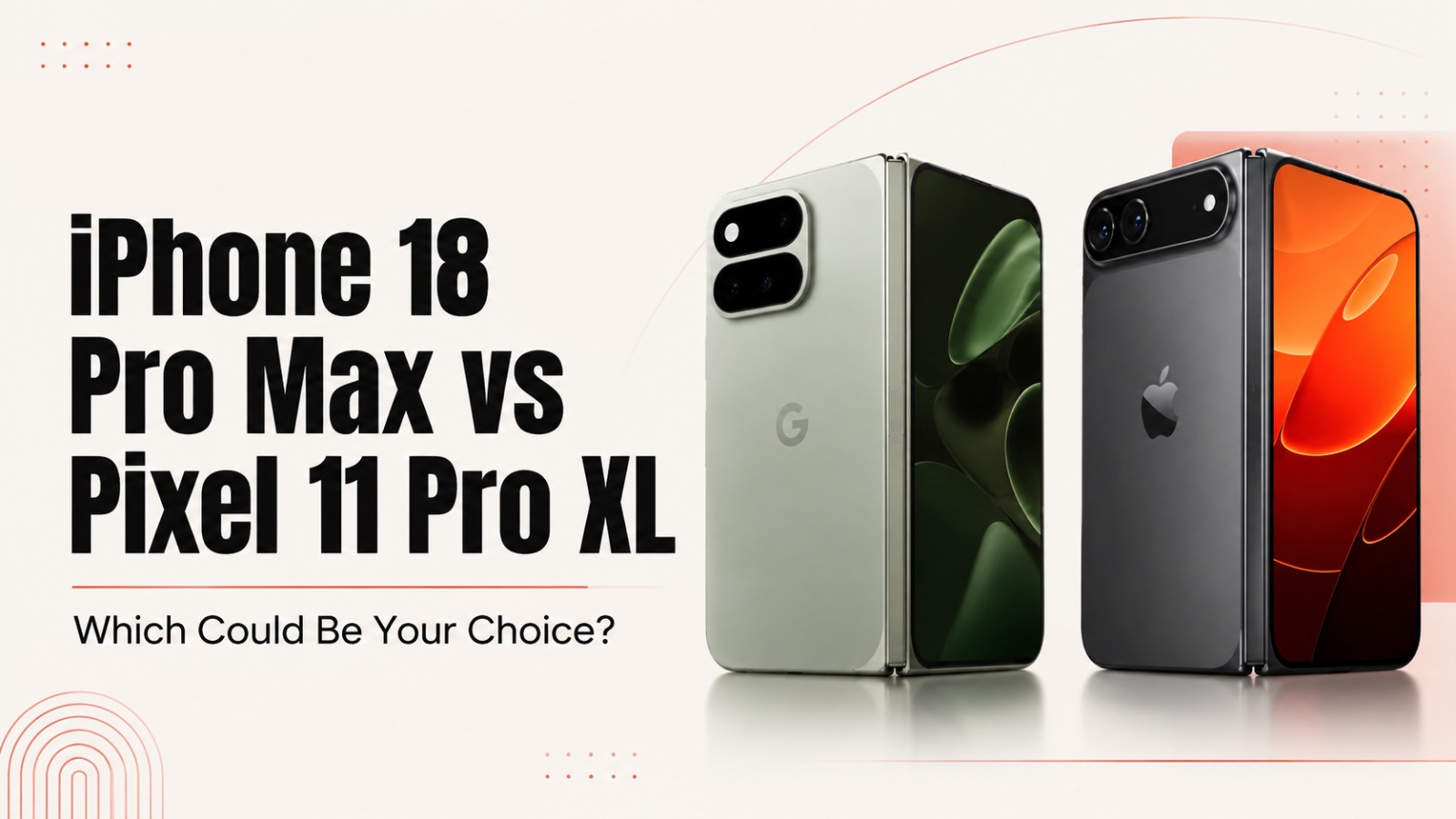
The iPhone 18 Pro Max is expected to retain an aluminium frame and raised rear camera module similar to its predecessor. Dark Red, Light Blue, Dark Grey and Silver are among the colour options being reported.
Google may take a similarly cautious approach with the Pixel 11 Pro XL. Its overall design could remain close to the Pixel 10 Pro XL, although a neon LED strip around the rear camera bar has been tipped as one possible visual change. Green, Light Green, Black and Dune finishes are expected.
That leaves both companies with a familiar-looking exterior while potentially directing more of their changes towards the technology inside.
Displays could be separated by just 0.1 inch
The iPhone 18 Pro Max is expected to feature a 6.9-inch Liquid Retina XDR display with ProMotion and LTPO+ technology. Peak brightness could move beyond 3,000 nits.
Apple may also reduce the size of the Dynamic Island, with reports suggesting it could become as much as 40 per cent smaller.
Google’s Pixel 11 Pro XL is tipped to use a slightly smaller 6.8-inch OLED display with a 120Hz refresh rate, HDR support and brightness exceeding 3,000 nits.
The security systems could remain notably different. Apple is expected to continue with Face ID, while Google may combine an ultrasonic in-display fingerprint sensor with advanced face unlock.
The 2nm chip race could reveal two very different priorities
Both flagships are expected to make the move to 2nm processors, but their approaches may not be identical.
Apple’s iPhone 18 Pro Max is tipped to run on the A20 Pro chip, with improvements expected in both performance and power efficiency.
The Pixel 11 Pro XL could use Google’s Tensor G6, also reportedly built on a 2nm process. Tensor chips have traditionally been positioned more heavily around AI and machine-learning workloads rather than pursuing raw benchmark performance alone.
Both devices could offer 12GB of RAM along with 256GB, 512GB and 1TB storage configurations. Google may go a step further by introducing a 2TB version of the Pixel 11 Pro XL.
For buyers, that could make the processor battle less about which chip produces the bigger number and more about what each company chooses to do with the additional computing power.
Camera fight may come down to hardware flexibility versus computational photography
Photography is shaping up to be one of the more closely watched parts of the iPhone 18 Pro Max and Pixel 11 Pro XL comparison.
Apple is expected to retain a triple 48-megapixel rear camera system on the iPhone 18 Pro Max. The bigger change could come to the main camera through variable aperture technology, which may help improve portraits and photography in lower light.
The front camera could also move to an 18-megapixel Centre Stage sensor.
Google, meanwhile, is expected to continue with a 50-megapixel main camera, 48-megapixel ultrawide and 48-megapixel periscope telephoto camera on the Pixel 11 Pro XL. A 42-megapixel selfie camera is also tipped.
The two companies could therefore continue approaching smartphone imaging from different directions. Apple is expected to remain focused on areas such as video recording and colour consistency, while Google could rely heavily on computational photography and AI-powered imaging.
Battery could become one of the iPhone 18 Pro Max’s bigger upgrades
Battery capacity may be where the iPhone 18 Pro Max makes one of its most noticeable changes.
The US eSIM-only model is rumoured to contain a 5,567mAh battery. International versions could instead use a 5,391mAh unit. Either figure would represent an unusually large battery for an iPhone if the reported specifications hold.
The Pixel 11 Pro XL is expected to remain at around 5,200mAh.
Capacity does not tell the full battery-life story, however. The expected efficiency gains from Apple’s A20 Pro processor could also influence endurance, just as Google’s Tensor G6 and software optimisation will play a role in the Pixel’s performance away from a charger.
Until both devices can be tested under the same conditions, the numbers are better treated as an indication of direction rather than proof of which phone will last longer.
Launch timing could put Google ahead of Apple again
Google is expected to unveil the Pixel 11 Pro XL in August, while Apple’s iPhone 18 Pro Max is likely to follow in September.
If the expected specifications prove accurate, choosing between the two may become less about design and more about priorities.
The iPhone 18 Pro Max could have the stronger appeal for users focused on processor performance, battery efficiency and video capabilities. The Pixel 11 Pro XL may attract buyers who place greater importance on AI features, computational photography and Google’s software-led approach.
For now, much of the comparison remains based on expected and reported specifications. The final picture will depend on which of those details survive through the official launches and, more importantly, how the two phones perform in everyday use.
Also Read: GTA 6 Map Guide: Vice City, Leonida and Confirmed Locations Explained