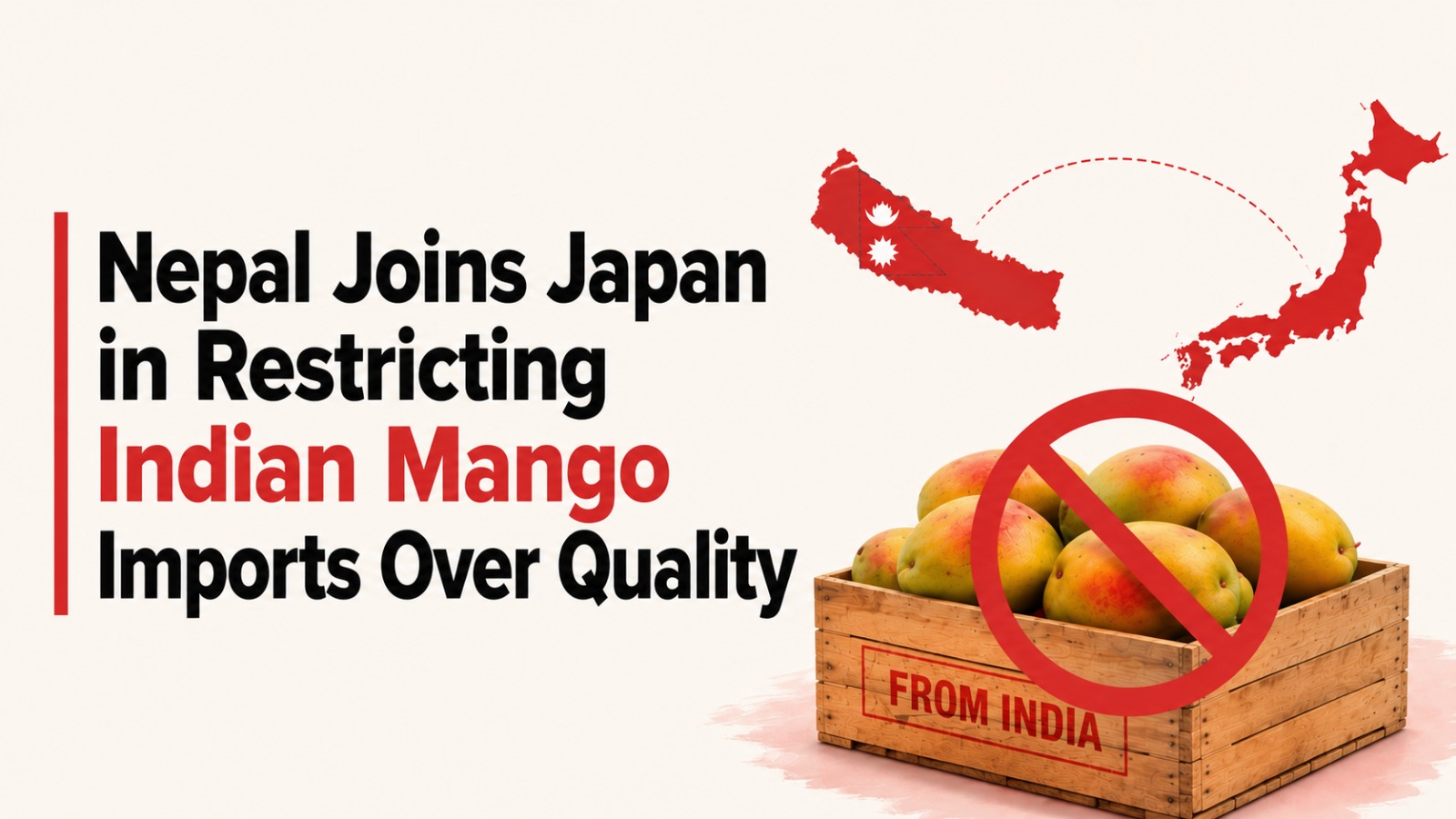
Nepal has imposed restrictions on the import of Indian mangoes after quarantine inspectors detected pesticide levels exceeding permitted limits in shipments entering the country. The restrictions, introduced by Nepal’s Ministry of Agriculture and Livestock Development, have reportedly been in effect since April and May.
The move marks another setback for Indian mango exports, coming shortly after Japan imposed restrictions on several popular Indian mango varieties due to concerns related to treatment and inspection procedures.
Nepal Positions Ban as Support for Local Growers
Nepali authorities have presented the decision as a step that could strengthen domestic fruit production while improving food safety for consumers. Officials believe the restrictions may encourage greater reliance on locally cultivated mango varieties and support domestic farmers during the harvest season.
According to government representatives in Nepal, the decision is expected to provide additional encouragement to local fruit producers while ensuring that consumers have access to produce considered safer and healthier.
Traders Fear Supply Gaps and Higher Prices
While officials have highlighted the potential benefits for local agriculture, fruit traders in Nepal have expressed concerns about the impact of the restrictions on the market.
Although Nepal produces mangoes and exports a portion of its harvest, domestic output is not sufficient to meet year-round demand. The country’s mango season is relatively short, lasting only about two months, making imported fruit an important source of supply during other periods.
Traders warn that limiting imports could lead to shortages in the market, increased prices for consumers, and financial losses for businesses that depend on cross-border fruit trade. Many sellers have argued that strengthening inspection and quarantine mechanisms would be a more effective solution than imposing a blanket restriction on Indian mangoes.
Also Read: WindBorne Systems AI Weather Model Challenges Global Forecasting Giants
Questions Raised for India’s Mango Industry
The development has drawn attention to quality control and pesticide management practices within India’s fruit production sector. While Nepal is not among the largest destinations for Indian mango exports, the detection of excessive pesticide residues has renewed discussions around compliance with international standards and import requirements.
India exports mangoes to several major international markets. Among its leading export destinations are the United States, the United Arab Emirates, the United Kingdom, the Netherlands, and Saudi Arabia.
The latest restriction also comes during a difficult season for mango growers in Maharashtra’s Konkan region. Farmers cultivating Alphonso mangoes have faced significant challenges due to unseasonal weather conditions, including late rainfall and intense heatwaves that affected crop yields in several areas.
Japan’s Recent Action Added to Export Challenges
Nepal’s decision follows a separate action taken by Japan last month. Japanese authorities halted imports of several Indian mango varieties, including Kesar, Alphonso, Langra, and Banganapalli, after identifying irregularities at facilities involved in the treatment and certification process.
The action was triggered following an inspection conducted in March by Japanese quarantine officials at facilities in Rehmanpur, Uttar Pradesh. Inspectors reportedly found deficiencies related to fumigation procedures and other disinfection measures required for export certification.
Subsequently, the Yokohama Plant Protection Association informed stakeholders that mango consignments accompanied by inspection certificates issued by India on or after 25 March would no longer be accepted. The organisation stated that imports would resume only after the required operational standards were improved and compliance requirements were met.
A Long History of Quarantine Scrutiny
Japan’s concerns over Indian mango imports are not new. In 1986, the country imposed a ban on Indian mangoes following reports of fruit fly infestations. That restriction remained in place for two decades before being lifted after improvements in export protocols and quarantine measures.
With both Nepal and Japan tightening scrutiny of Indian mango shipments, exporters and industry stakeholders are likely to face increasing pressure to ensure compliance with the quality, safety, and treatment standards required by international markets.
Also Read: Klassroom Gets BSE In-Principle Approval for SME IPO