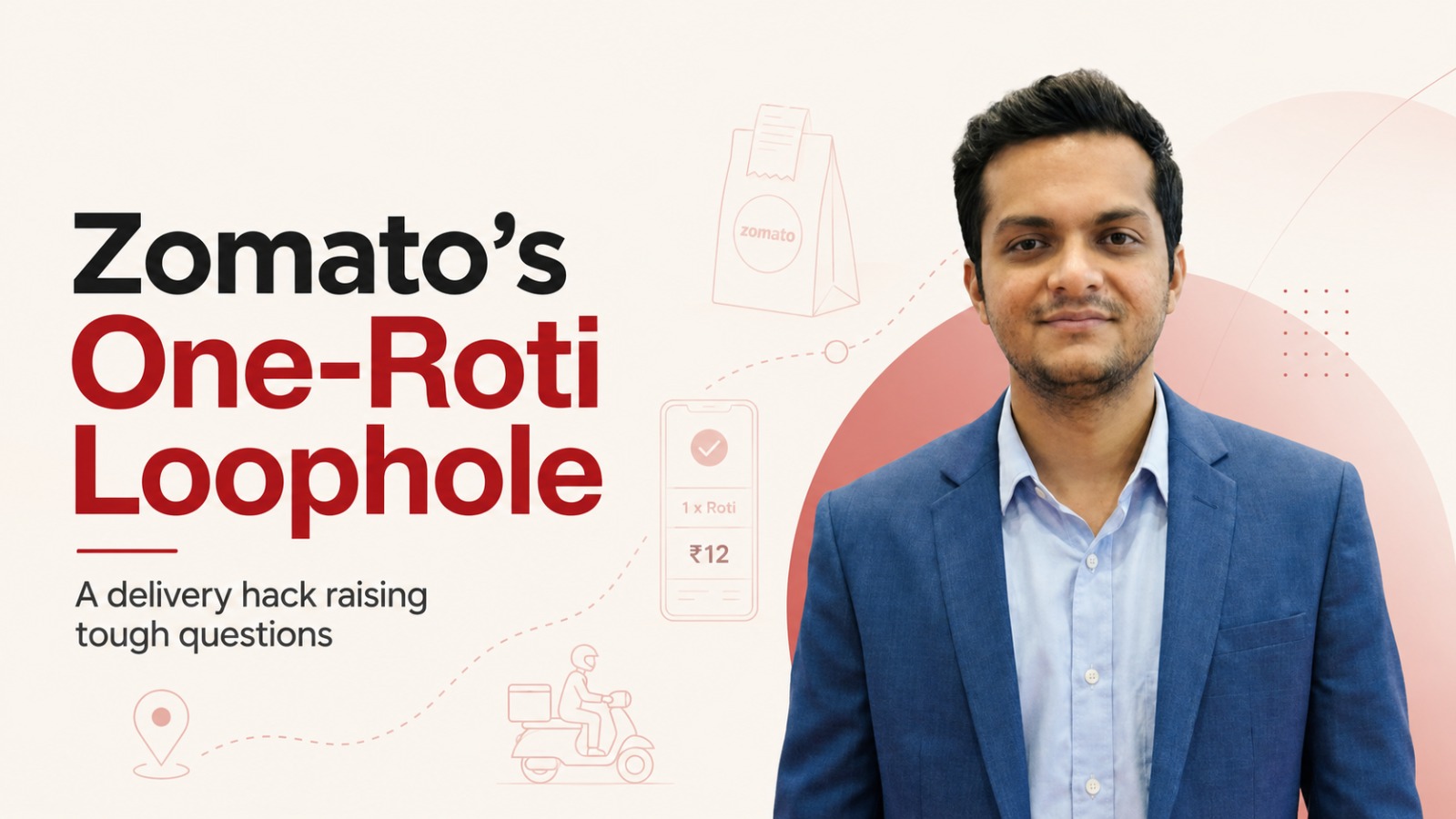
A social media post by wealth advisor Prem Soni has triggered a sharp debate around a simple but potentially damaging loophole in food delivery platforms like Zomato.
The claim is straightforward. A customer places a small order on Zomato, for example one roti worth ₹40. After placing the order, the customer calls the restaurant directly and adds several more items outside the platform.
The extra food is paid for directly to the restaurant through UPI. The restaurant then packs the entire meal along with the small Zomato order, and the Zomato delivery partner delivers it as if it were only a low-value order.
In the above situation, the customer receives his full order using the logistics services of Zomato, where only a small percentage of the total cost can be seen on the app. In this case, the restaurant has avoided paying the commission on the order, the customer does not pay the additional charges, and the logistics still carry the complete order.
The concern is not about one odd customer trying a trick. The worry is that restaurants themselves may be encouraging regular customers to place only a token order on the app while billing the larger order directly. If that practice spreads, it could quietly weaken the economics of food delivery platforms from within.
Why This Loophole Is Serious?
Food delivery platforms depend on visibility. They need to know what is being ordered, what value is being delivered, and whether the commission earned on the order justifies the cost of delivery.
In this alleged case, that visibility disappears.
Zomato sees a ₹40 order. The rider picks up a parcel linked to that ₹40 order. But the actual value of food being delivered could be much higher. The platform still provides the app, rider assignment, delivery tracking, customer support, and logistics infrastructure, while the bulk of the transaction happens outside its system.
That is where the problem becomes bigger than a consumer hack. It becomes a platform leakage issue.
Why Restaurants May Be Tempted?
Restaurants have a clear incentive in the example shared by Soni. If a larger portion of the order is paid directly, the restaurant keeps more of the bill instead of sharing a cut with the platform.
For businesses that have been struggling with discounts, packaging costs, dependency on delivery and fighting for visibility through platforms, this seems like an appealing deal. Moreover, the consumer is provided with convenience without having to incur costs associated with the platform on their entire order.
But what looks convenient for both sides creates a trust problem for the marketplace.
Zomato’s model works only when the platform has an accurate view of the order. Once restaurants and customers start splitting bills between the app and direct payment, the platform becomes a delivery tool without being compensated for the full transaction it helped complete.
The Customer Gains, but the System Loses?
For the customer, the appeal is obvious. The order still arrives at home. The same delivery network is used. The app provides tracking. The rider does the job. The restaurant receives the money directly.
But this kind of workaround can create long-term problems. If platforms begin losing revenue on such orders, they may respond through stricter checks, higher fees, tighter restaurant controls, or changes in delivery rules. That could eventually affect genuine customers and compliant restaurants too.
The bigger issue is fairness. Restaurants that follow the rules may end up paying platform commissions properly, while others quietly bypass them. That creates an uneven playing field inside the same marketplace.
What Zomato May Need to Watch?
This claim has not been independently verified here, and there is no confirmed evidence in the information provided that the practice is widespread. But the allegation raises important questions that food delivery platforms cannot ignore.
Zomato may need to examine whether restaurants are packing items that are not listed in the app order, especially when extremely low-value orders lead to unusually large parcels. It may also need stronger checks around restaurant packaging, order weight mismatch, repeated low-ticket orders from the same customer, and direct-payment patterns flagged through complaints or rider feedback.
The challenge is to fix the loophole without making food delivery more difficult for honest users. Over-policing every order could slow down operations. Ignoring the issue could create silent revenue leakage.
A Small Order, a Big Warning?
The alleged “one roti” loophole shows how fragile marketplace economics can be when users and sellers find ways to use the infrastructure without paying for the full service.
For Zomato, the issue is not just a ₹40 order. It is about protecting the integrity of the platform. If the company’s delivery network is being used to move food that was never billed through its system, the platform is effectively carrying the cost while missing the commercial value of the transaction.
This could either be on a widespread scale or simply being discussed as an example on social media, but in either case, the reality is that there is a very serious threat for these companies to deal with, not just from competitors but also from behind the scenes.
Also Read: Vaibhav Suryavanshi’s Rise Is Bigger Than a Net-Worth Number