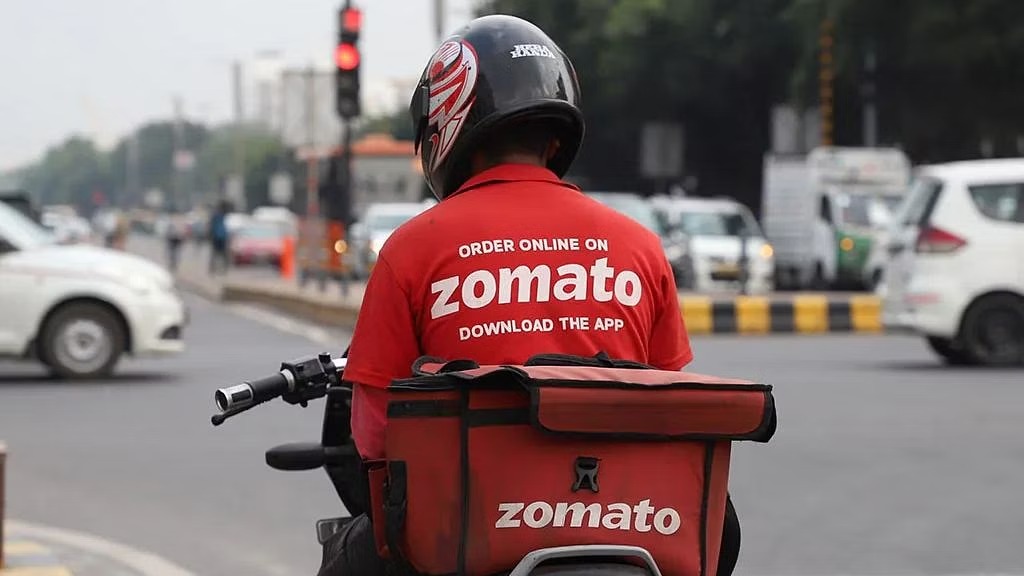
Zomato has raised its platform fee to Rs 14.9 per order, in what is now the company’s second such increase in six months. The move points to a larger shift in India’s food delivery business, where small add-on charges are becoming a more important tool for improving margins.
The latest revision takes the fee up from Rs 12.5 per order. While the increase may appear modest at the customer level, it reflects how digital platforms are increasingly relying on recurring per-order charges to strengthen their revenue streams without making sweeping changes to their core service model.
The fee hike also comes at a time when food delivery companies are under continued pressure to show stronger profitability. In that context, platform fees have quietly become one of the most effective monetisation levers. What was once introduced as a nominal charge is now emerging as a regular and visible component of the final bill.
This is not an isolated phenomenon, as another player in this space, Swiggy, has also increased its platform fees to 14 rupees around this same time. It seems as though this entire industry is going in this direction. The message is quite clear: food delivery platforms are no longer relying on commissions, delivery charges, and discounts as a way of managing their economics. Instead, they are increasingly relying on smaller consumer charges, which can indeed add up quite significantly for these companies.
This phenomenon has actually been in progress for some time now. Platform fees, which started from a much lower base in 2023, have become increasingly important. For companies that handle millions of transactions, even a minor increase in fees per transaction can result in substantial revenue for these companies. It is this scale factor that makes this important for the business, even though it is a minor factor for each and every consumer.
The broader ecommerce industry has already shown how effective this model can be. Across food delivery and online retail, per-order fees have become common as companies search for better unit economics. Over time, these charges have shifted from being barely noticeable to becoming a standard part of how platforms bill users.
For Zomato, the latest hike also fits into a wider pattern of experimenting with new revenue levers. The company has, in recent months, tested or introduced additional surcharges and premium service options in select cases. Taken together, these efforts suggest a more layered monetisation strategy, one that spreads revenue generation across different parts of the customer and delivery experience.
The challenge, however, lies in how far this can go. Customers may accept gradual increases for now, but food delivery remains a frequent-use category where price sensitivity can quickly show up in ordering behaviour. As long as the hikes remain incremental, resistance may stay limited. But there is always a point at which convenience begins to feel expensive.
For now, Zomato’s latest fee increase shows how the food delivery battle is changing. It is no longer only about scale, speed or discounts. It is also about how efficiently platforms can monetise every order without pushing customers away.
Also Read: Have You Bought Noice Without Knowing It’s Swiggy’s?