

In a sharply observed piece for The Times of Israel, Achiya Cohen uses an ordinary South Tel Aviv falafel shop to explain a much larger shift through Israeli startups: automation is no longer being built only for large corporations, but is beginning to reach the small businesses that were long left out of the technology conversation.
The change, as Cohen frames it, is not being driven by flashy consumer apps or headline-grabbing IPOs. It is happening in clinics, restaurants, salons and neighbourhood businesses that have traditionally managed customers through phone calls, memory, handwritten notes and constant interruptions.
Israeli startups drive automation for local businesses
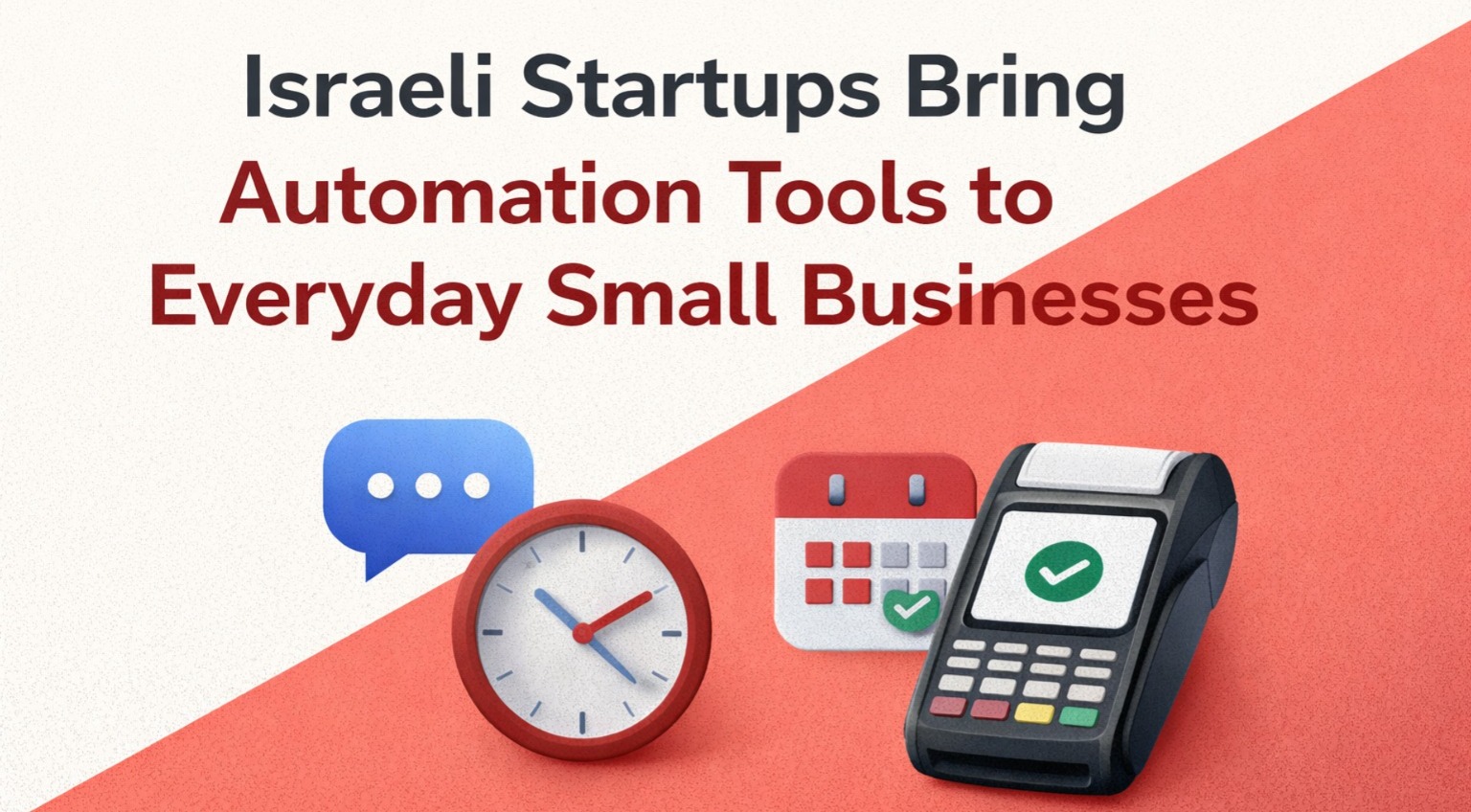
In that world, automation is less about replacing people and more about reducing friction: answering customer questions late at night, confirming bookings, sending reminders and collecting payments without adding extra staff.
That is what makes the Israeli case especially interesting. For years, business automation tools largely belonged to companies with big software budgets, specialist teams and the patience to handle long implementation cycles.
Small operators were rarely the intended users. Cohen argues that this mismatch was especially striking in Israel, a country known globally for its tech talent, yet one where many local small businesses were still running customer communication in highly manual ways.
The report’s central point is that Israel may now be moving faster than many other markets because automation there is being built around habits people already have, not around systems they must first learn.
That habit, above all, is WhatsApp. Cohen notes that the platform is deeply embedded in everyday Israeli life and is used not just socially, but across practical, routine exchanges: doctor appointments, school coordination, service confirmations and business queries. In that setting, automation does not arrive as a foreign corporate layer. It slips into an existing behaviour.
This may explain why the small business automation story in Israel feels less like a software rollout and more like a cultural fit. Instead of asking a salon owner or clinic manager to adopt a complex enterprise platform, startups are building tools that work inside the communication channels these businesses already trust.
That shift lowers resistance. It also changes what adoption looks like. Businesses are not being told to transform themselves overnight; they are being offered simpler ways to manage work they are already doing.
Cohen also links this moment to Israel’s wider tech ecosystem. He points to the country’s elite military technology pipelines and their long-recognised role in producing strong engineering talent. Traditionally, that talent has flowed into cybersecurity, defence-linked systems and large enterprise technology. What seems to be changing now, in his telling, is the direction of ambition.
Technologists with experience solving complex systems problems are turning toward very practical small-business pain points: missed appointments, overloaded booking windows, repetitive customer messages and basic workflow gaps.
That matters because the value of automation becomes easier to grasp when measured in everyday stress rather than abstract productivity theory. Cohen writes that small businesses using even basic automation tools are seeing meaningful operational gains.
One of the clearest examples he cites is from medical clinics, where automated reminders sent through a messaging app patients already check regularly have reportedly reduced no-shows by 40% to 60%. If that pattern holds more broadly, the significance goes beyond efficiency. It affects revenue stability, staff workload and service reliability.
Another important thread in the article is cultural informality. Cohen argues that Israeli business communication is unusually direct and unceremonious. Customers message business owners late at night. Voice notes replace polished emails. Personal and professional exchanges often happen in the same digital space.
In many countries, such a blur might be viewed as messy. In this case, however, he implies that it is a benefit. If a business already uses a singular messaging system to conduct business, then making it more automated is easier than in other markets where there is a more segmented and time-consuming system of approvals.
The broader implication is that Israel could be emerging as a real-world testing ground for a different kind of automation economy, one aimed not at giant back offices but at ordinary operators. The businesses at the centre of this story are not venture-backed startups.
They are reception desks, kitchen counters and service businesses trying to save time without losing their personal touch. That is why this shift deserves attention. It suggests that the next meaningful wave of automation may not come from making large firms even more efficient, but from giving smaller firms tools that finally match how they work.
Cohen’s conclusion is restrained but pointed: technology works best when it improves daily life for ordinary people. In the small-business automation story he describes, Israel appears to be rediscovering that principle from the ground up.
Also Read: Have You Bought Noice Without Knowing It’s Swiggy’s?















