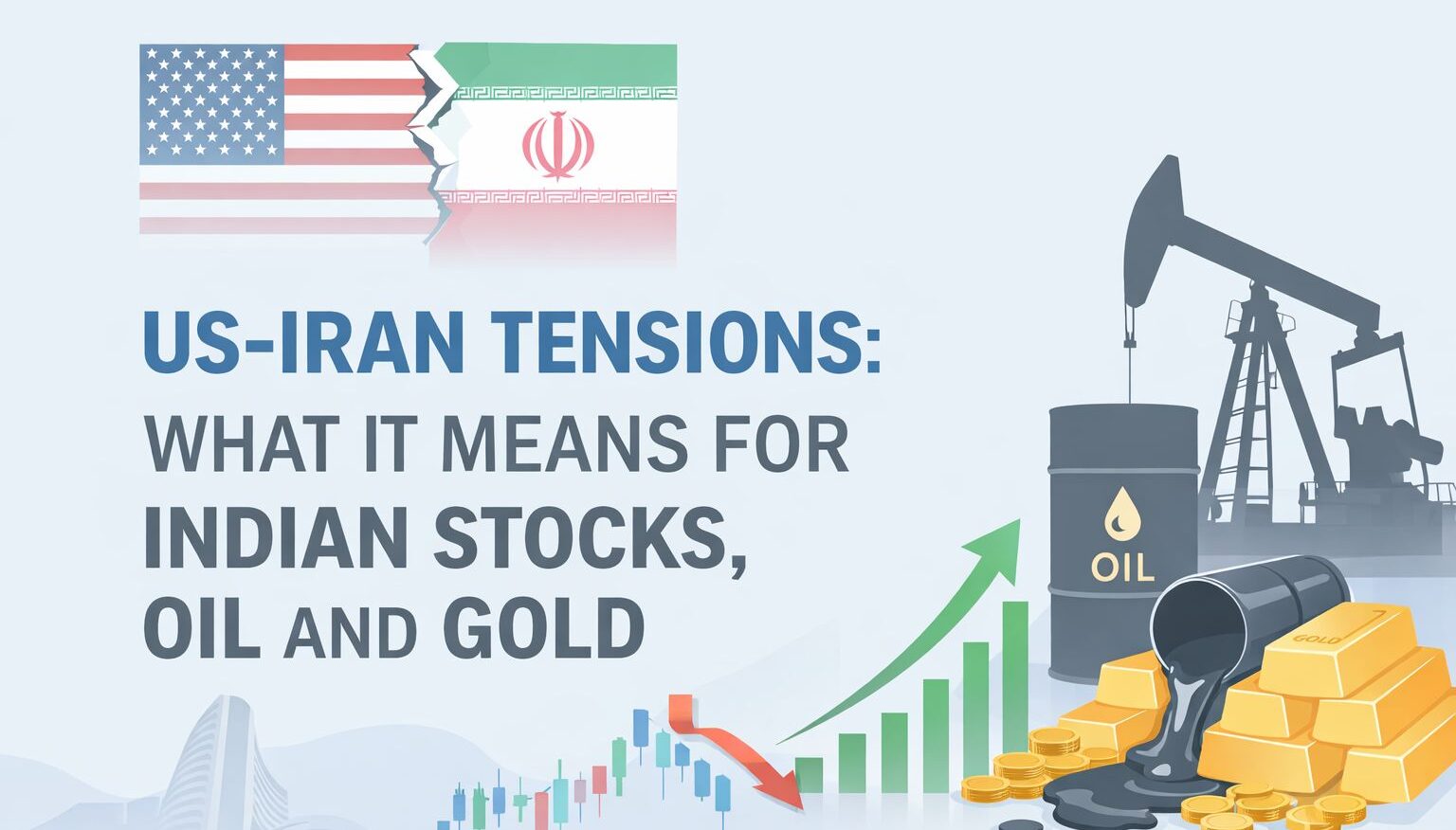
Growing tensions between the United States and Iran have once again raised concerns in global financial markets. Whenever instability increases in the Middle East, investors around the world closely watch its possible impact on energy supplies, commodity prices and stock markets. For India, the situation carries added importance because the country relies heavily on imported crude oil and is closely connected to global trade and financial flows.
Any escalation between the two countries can influence several parts of the global economy. Oil prices, stock markets and safe-haven assets such as gold often respond quickly when geopolitical tensions rise. In India, these changes can affect inflation, market sentiment and overall economic stability.
Why the Strait of Hormuz Matters
A major reason the world pays attention to tensions involving Iran is its location near the Strait of Hormuz. This narrow waterway is one of the most important energy routes in the world. A significant share of global crude oil shipments passes through the strait every day, connecting oil-producing countries in the Gulf with international markets.
Because of this, any conflict or security concern in the region can create fears about disruptions to oil transportation. Even the possibility of such disruption can push crude prices higher, as traders factor geopolitical risks into the market.
Higher oil prices can quickly ripple through the global economy. Fuel becomes more expensive, transportation costs rise and industries that rely on petroleum products face higher operating expenses.
Also Read: Animaj: The Paris Startup Using AI to Reimagine Children’s Entertainment
Oil Prices and India’s Economic Sensitivity
India is among the world’s largest consumers of crude oil, but most of its energy needs are met through imports. This makes the country particularly sensitive to global price movements.
When crude prices increase sharply, the impact spreads across several parts of the economy. Higher fuel costs can raise transportation expenses and production costs for many businesses. These increases may eventually reach consumers through higher prices for goods and services.
A sustained rise in oil prices can also affect the country’s trade balance, as India spends more on importing energy. This can create pressure on inflation and influence economic policy decisions.
How Indian Stock Markets Usually Respond
When geopolitical dangers increase, financial markets usually respond swiftly. During times of global uncertainty, benchmark indexes like the Nifty 50 and the BSE Sensex frequently see short-term volatility in India.
When international tensions rise, investors typically become more wary. As a result, stocks may be temporarily sold while market players evaluate the circumstances.
Some sectors are more affected than others. Industries that rely heavily on fuel, including aviation, logistics and transportation, may face higher costs when oil prices rise. On the other hand, companies involved in oil exploration and production could benefit if crude prices remain elevated.
The overall market reaction usually reflects uncertainty rather than a long-term shift. Once the geopolitical situation becomes clearer, markets often stabilize.
Gold’s Traditional Role in Times of Uncertainty
During global crises, investors often look for assets that can hold value even when markets are unstable. Gold has historically served this role.
When geopolitical tensions increase, demand for gold tends to rise because investors consider it a relatively safe place to store wealth. This shift can push gold prices upward as funds move away from riskier assets such as equities.
Gold also attracts attention when inflation risks increase. If rising oil prices contribute to broader price pressures in the economy, investors may view gold as a hedge against inflation.
A Situation That India Is Watching Closely
For India, the broader impact of a US–Iran escalation will depend largely on how events unfold and whether global energy supplies remain stable. Short-term market volatility is common during geopolitical tensions, but long-term effects depend on how long the situation continues.
Higher oil prices, if sustained, could influence inflation, trade balances and corporate profitability. At the same time, global markets have historically shown resilience once tensions ease or diplomatic solutions emerge.
Until there is greater clarity, investors, businesses and policymakers will continue to closely monitor developments in the Middle East, aware that events in the region can quickly shape economic conditions far beyond its borders.
Also Read: Legacy of Shantanu Narayen: The Indian-Origin Leader Who Reshaped Adobe