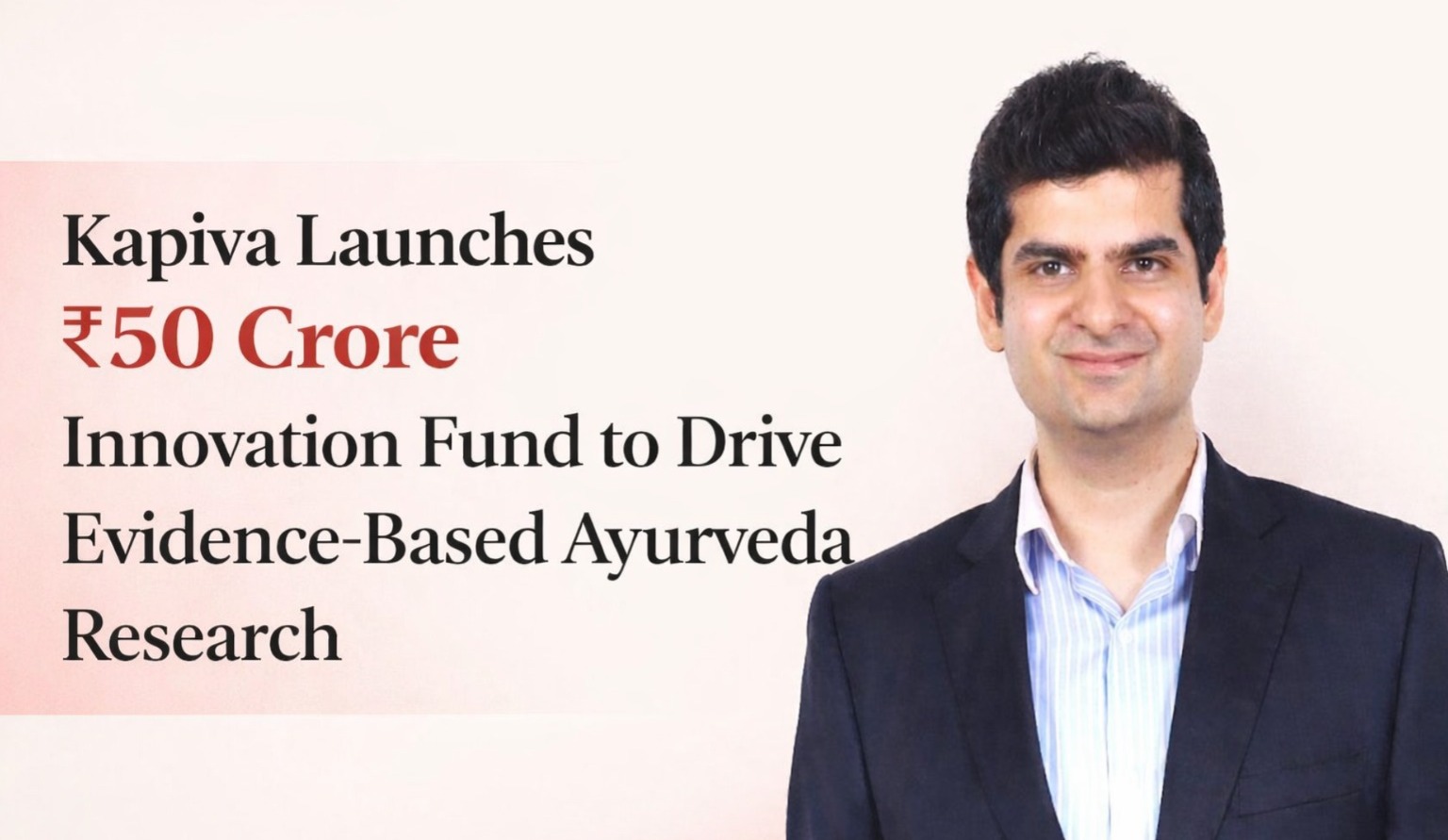
Kapiva has announced a new ₹50-crore commitment, called the Kapiva Innovation Fund (KIF), aimed at backing research and innovation in Ayurveda with a sharper focus on clinical validation and outcomes that can stand up to modern scientific scrutiny.
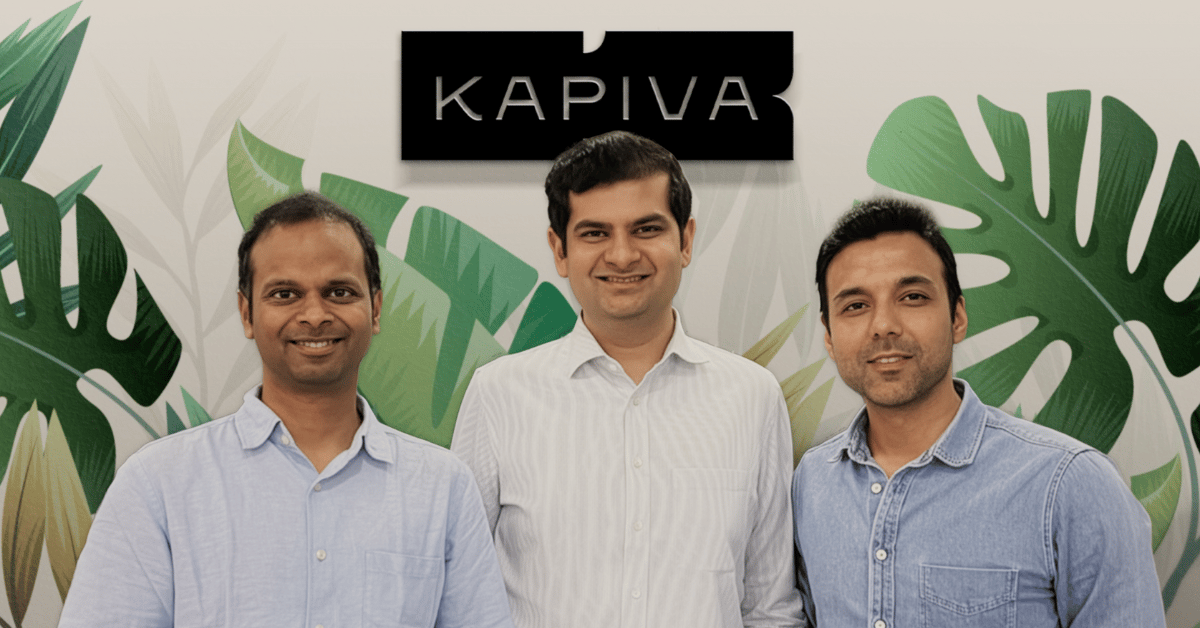
The idea, as the company frames it, is to help build an Ayurveda research ecosystem that can match global pharmaceutical standards, without losing its roots in India’s knowledge systems.
What the Kapiva Innovation fund is meant to do?
Kapiva says KIF will support projects coming out of academia, research labs and startups, across the research lifecycle, from early-stage work to programmes nearing commercialisation.
The focus areas listed include:
- Novel formulations
- Standardisation and phytochemistry
- AI applications in Ayurveda
- Pre-clinical and clinical studies
- Extraction technologies and bioactive enhancement
- Tech-enabled wellness models
In plain terms: Kapiva is trying to fund the “hard parts” of Ayurveda, measurement, repeatability, testing, so promising ideas don’t stay stuck as papers, prototypes, or claims that can’t be demonstrated.
Who can apply and what support looks like?
Applications are open to research institutions, PhD scholars, clinicians, hospitals, incubators and early-stage startups working in or adjacent to Ayurveda, plant-based therapeutics and integrative health.
Beyond capital, Kapiva says the fund will also provide mentorship, clinical infrastructure and regulatory guidance, positioning KIF as a support system that follows a project through multiple stages, not just a one-time grant or cheque.
On funding size, as per reports cheques around ₹50 lakh for early-stage research, and ₹4-6 crore for late-stage programmes.
Kapiva’s pitch: move Ayurveda from “faith-based” to “outcome-led”
Kapiva founder Ameve Sharma has positioned the fund as an attempt to shift how Ayurveda is built and judged.
“For decades, Ayurveda has been seen as either faith-based or purely traditional wisdom. We believe its future lies in being outcome-led and evidence-backed,” Sharma said, describing the fund as “a long-term bet” on that future.
Kapiva’s Chief Innovation Officer, Dr R. Govindarajan, echoed the same theme, arguing that if Ayurveda wants a seat at the table with modern medicine, it needs to accept modern discipline in testing.
How proposals will be selected?
Kapiva says shortlisted proposals will be evaluated by a panel that includes Kapiva’s R&D leadership and external domain experts. The criteria mentioned include scientific rigour, novelty, feasibility, and the potential to improve health outcomes at scale.
Kapiva’s existing R&D footprint and what it’s leaning on
The company says it already runs one of India’s advanced Ayurveda R&D programmes, including clinical trials on flagship products and a dedicated in-house research team.
Kapiva also lists collaborations with institutions such as:
- Translational Health Science and Technology Institute (THSTI) (under the Ministry of Science and Technology, Government of India)
- Manipal College of Pharmaceutical Sciences (MCOPS, MAHE)
- Manipal Hospitals
On product quality and transparency, the company notes it follows testing protocols across raw materials, packaging and finished products, adding that some Shilajit-based offerings (including Shilajit Gold Resin) carry Certificates of Analysis, with similar standards being extended across its portfolio.
Significance in the Ayurveda market right now
What stands out isn’t just the ₹50 crore headline number, it’s the intent behind it. Ayurveda in India doesn’t suffer from lack of belief or demand; it suffers from a credibility gap when claims outpace evidence. Through the explicit linking of funds to R&D, standardisation, and clinical validation, Kapiva is essentially banking on the fact that the next round of Ayurveda’s surge forward will not be decided by those making the most noise, but those whose performance is measured and maximized.
If KIF is successful in what it does, it might end up being the pipeline for disseminating the results of the research, for the money to do the research, for the mentoring of the people who do it, and for the translation of the results of the research into product or wellness platforms that can be evaluated within the language of the healthcare environment.
Also Read: Neurapexai: AI Startup Analysing Medical Reports Bags Shark Tank India Deal