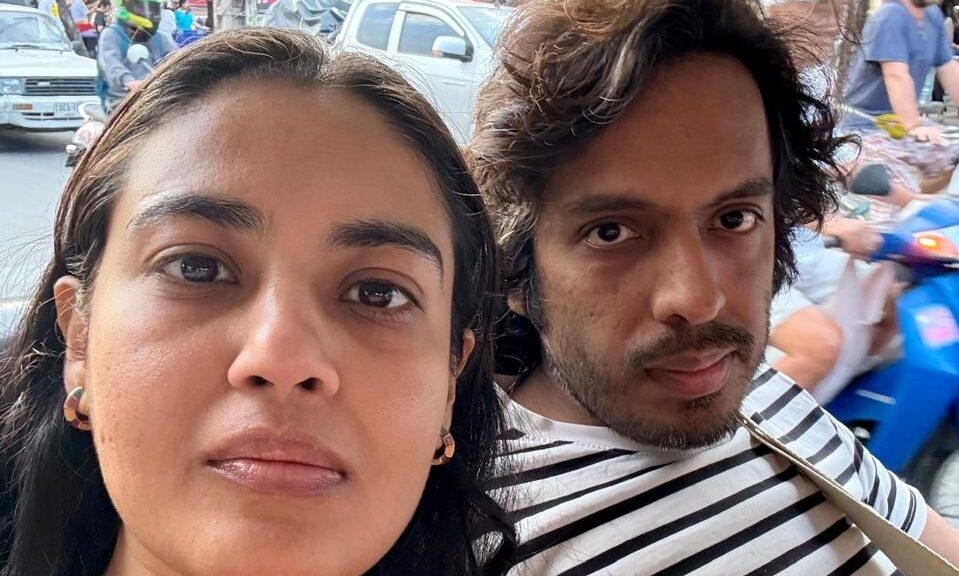
When Mumbai-based startup founder Rikki Agarwal finally packed his bags for Bangkok, it wasn’t for lower taxes, a new market, or some dramatic career pivot. It was, by his own telling, for something far more basic: the hope of a life that feels healthier, simpler and kinder to everyday living.
The co-founder and CBO of digital agency Blink Digital shared the move in a recent LinkedIn post, triggering a wave of responses from professionals who saw their own dilemmas reflected in his decision.
Five Years of Thinking By Rikki Agarwal
Agarwal writes that the relocation was the result of half a decade of reflection, not an impulsive leap. After growing up in a small town in Sikkim, he moved to Mumbai for engineering and went on to build his career and company in the city that is often seen as India’s commercial heartbeat.
Over the years, Mumbai gave him what many ambitious young professionals come seeking: opportunity, networks, and a launchpad to build something of his own. Blink Digital became part of the city’s buzzing advertising and startup ecosystem.
Yet turning 40 seems to have brought a different kind of audit, not of balance sheets, but of daily life.
In his post, Agarwal explains that he had thought about leaving for five years before acting on it. The conclusion he reached was stark: India, he felt, offered everything he needed to build a business, but “nothing” he needed to live well.
“I’m Not Leaving India Behind, I Just Want to Live Better”
Crucially, Agarwal is careful not to frame his move as an escape from India or a rejection of his home country. He describes it instead as a personal choice about where his lifestyle needs can be better met.
“I’m not leaving India behind,” he writes. “I am just choosing to live somewhere that does not punish me for wanting a healthy, simple life.”
He also clarifies what didn’t drive the decision. According to his post, the move was not about tax breaks, not about a grand reinvention, and not about turning his back on the market that helped him grow his company. It was, as he puts it, about one goal: to “live better”.
For many founders, the story runs the other way: leave a smaller town, move to Mumbai, hustle harder, and double down on the city no matter how difficult it becomes. Agarwal’s move challenges that script by suggesting there is a limit to what professional opportunity can compensate for if the basics of day-to-day life feel compromised.
A LinkedIn Post Becomes a Mirror for Urban India
What might have remained a personal life update quickly became a talking point. At the end of his post, Agarwal turns the spotlight back on his network with a simple question: if given the chance, would they leave Mumbai for a better lifestyle?
That open-ended prompt transformed the comment section into an impromptu referendum on urban living in India.
Marketing professional Animesh Misra responded by widening the frame beyond Mumbai. He argued that not just Mumbai, but Delhi, its surrounding areas and “most other cities” had become difficult to live in.
According to Misra, cleaner air alone would be reason enough for many Indians to consider leaving the country, and he described that idea as “alarming enough” to push policymakers to focus more seriously on quality of life rather than just elections and GDP numbers.
His comment captured a frustration that many city residents express privately: even as metros power economic growth, they often struggle with pollution, congestion and strained infrastructure.
“It’s the People That Make Life Better”: The Counter-Argument
But the replies also showed that not everyone shares Agarwal’s calculus.
One commenter, identified in the article as a woman responding to his post, said she would “definitely” not leave Mumbai, even if another city promised better physical surroundings. For her, the people in her life are what make a place livable.
She argued that it would not make sense to move away from her close circle just to live somewhere more comfortable. She would, as she put it, rather “crib” about Mumbai’s crushing traffic while still being around her own people than live in a city where everything appears ideal but there is no one to share it with.
Her response highlights an equally powerful reality: for many residents, Mumbai’s value lies not only in career opportunities but in the communities, families and support systems they have built over years.
Beyond One Move: A Question Cities Can’t Ignore
Agarwal’s shift to Bangkok is ultimately a personal decision by one founder, shaped by his own priorities at a particular stage of life. Yet the intensity of reactions to his LinkedIn post suggests it touched a nerve among professionals who are asking themselves similar questions about where and how they want to live.
On one side are those who feel that Indian metros, despite their energy and economic dynamism, are increasingly hard to endure on a daily basis. On the other are those who believe that relationships, familiarity and a sense of belonging can outweigh even serious urban challenges.
By framing his move not as an act of rejection but as a search for a “healthy, simple life,” Agarwal has forced a conversation that goes deeper than tax regimes or startup ecosystems. It is a conversation about what cities owe the people who build their economies and how long those people are willing to stay if the trade-off between opportunity and well-being feels too steep.
Also Read: Lab-grown diamond brand ONYA secures ₹5.5 crore pre-seed round