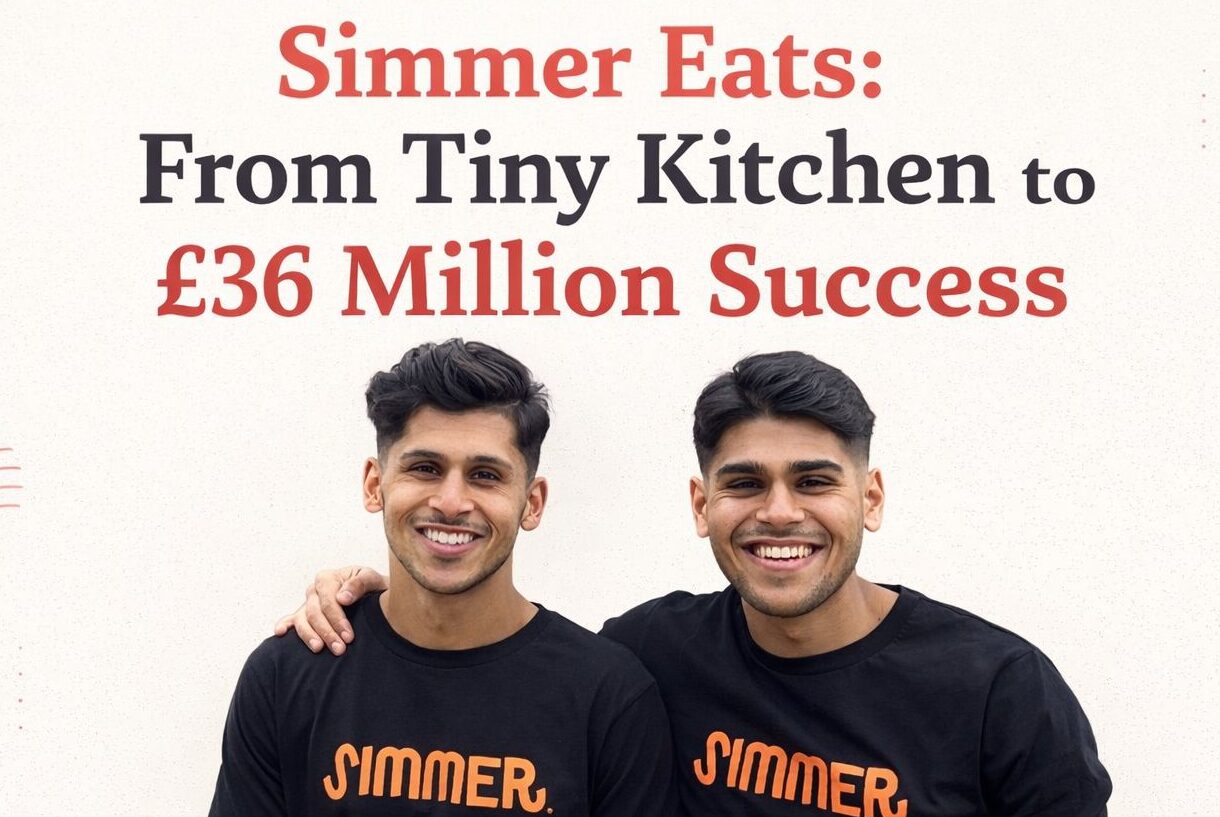
Many successful startups begin with a moment that seems small. For Simmer Eats, it wasn’t about investors or media coverage. It began in a university kitchen, with a tight grocery budget, simple tools, and a young founder making ends meet. Rather than finding quick success, Simmer Eats grew slowly through years of hard work, eventually becoming one of the UK’s most talked-about self-funded food businesses.
Brothers Simmy and Jhai Dhillon started Simmer Eats, which has become a nationwide ready-meal brand earning over £36 million in revenue. The company is still fully owned by the founders. In an industry where most businesses rely on outside funding and spend heavily, this fact stands out.
The Early Spark Behind the Idea
Simmy Dhillon never set out to start a food business. While at university, he needed a steady income, so he began cooking for friends who were tired of unhealthy takeaways and inconsistent food. People enjoyed his meals, returned for more, and spread the word.
What started as a workable fix slowly revealed a gap. There were plenty of food delivery options, but very few that combined taste, nutrition, convenience, and affordability in a way that appeared trustworthy. Simmy noticed that people weren’t merely buying food; they were buying relief from daily decision-making. As demand grew, Jhai Dhillon joined his brother. He was interested in nutrition and performance eating and helped organise the meals for growth. The brothers handled everything themselves, from cooking and packing to deliveries and customer service. Progress was slow but steady.
Turning a Side Hustle Into a Business
The move from side project to real business was gradual. Orders grew, routines improved, and the brothers reinvested every pound into the company. They avoided shortcuts. Equipment was upgraded only when needed, and they expanded only when cash flow allowed.
Simmer Eats turned into a direct-to-consumer meal brand, offering fresh, ready-to-heat meals by subscription. The idea was simple but took hard work. Meals had to taste good every time, deliveries needed to be reliable, and customers had to trust the service to order again. Instead of chasing trends, the brand focused on being consistent. This built trust, especially with professionals, athletes, and health-minded customers who cared more about reliability than the latest things.
Also Read: VoxelGrids Unveils India’s First Indigenous MRI at Chandrapur Centre
Funding the Hard Way
People often ask about Simmer Eats’ funding. The answer is simple: the company has not raised any venture capital. There are no institutional investors, angel investors, or private equity firms involved. Simmer Eats is entirely self-funded by Simmy and Jhai Dhillon. Every stage of growth was paid for with the company’s own revenue. Early profits went to better ingredients. Later, profits improved packaging, logistics, hiring, and infrastructure. The founders chose this path to keep control and avoid being forced to grow too fast.
This choice shaped the company’s culture. This decision shaped the company’s culture. Profitability mattered from the beginning. They worked hard to cut waste and build systems for long-term efficiency. Growth was steady, not fast, but it lasted. Mer As Eats grew beyond its first customers, the business became more established. Revenue increased each year, eventually passing £36 million. The team got bigger, facilities expanded, and deliveries increased across the UK. Most of this growth happened on its own. Customers shared their experiences, and influencers mentioned the brand without being asked. Social media helped, but repeat customers drove most of the growth. People kept coming back because they got their meals every week.
The company also started getting noticed by business publications and growth rankings. It was often highlighted as an example of founder-led, efficient growth in the food industry. The team invested heavily in operational discipline. Menu planning became data-driven, which helped predict demand and cut food waste. Subscription flows were improved to make ordering easy. Distribution was adjusted often to keep deliveries reliable. Simmy’s background with large tech companies influenced how Simmer Eats set up its processes. Even though the company sells food, it uses a systems-driven approach. This helped them grow without losing control or spending too much.
Where the Path Leads Heads Forward
The founders are careful about the future, not because they are afraid, but because patience has worked for them. They are thinking about new products and expanding into new markets. Automation and efficiency are still top priorities, especially as food industry costs go up.One thing hasn’t changed: Simmer Eats still grows at a pace that lets the founders protect quality, ownership, and profits.
Why This Story Matters
Simmer Eats is more than just another food startup story. It proves that you don’t always need big funding or a flashy start to get big results. Simmy and Jhai Dhillon built their company by working hard every day, reinvesting profits, and staying true to their values.
In a startup world that often focuses on funding and valuations, their story stands out for its steady approach. It shows that discipline, patience, and control can still build something lasting, even in a tough industry.
Also Read: Inside Stimuler: The Indian Startup Taking Consumer AI Global