
The Moneyview Story: It began, as many great Indian startup stories do, with a cup of coffee and a problem nobody else was solving.
In 2013, two IIT Delhi friends, Puneet Agarwal and Sanjay Aggarwal met at a café in Bengaluru, discussing how fast India was embracing the digital age.
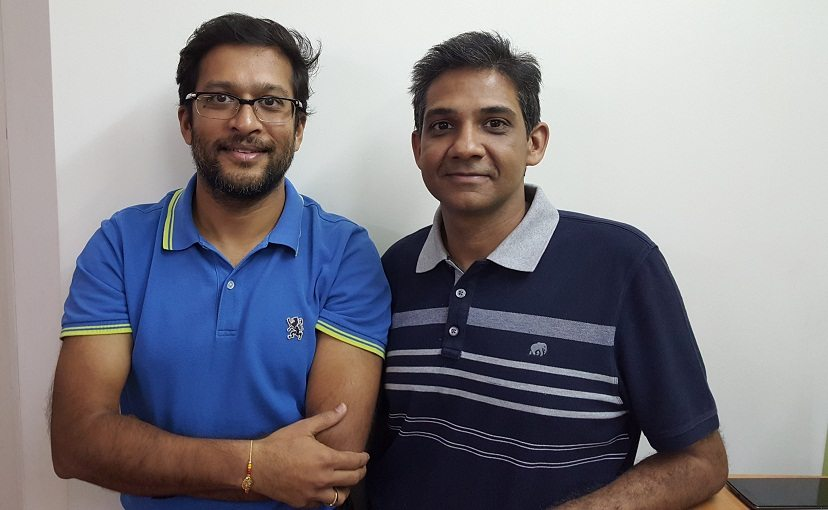
Flights, food, cabs were just a tap away. But in this convenience lay a curious irony: Indians were spending more online, while very few knew where the money was actually going. That conversation planted the seed for what would become Moneyview-one of India’s most trusted fintech platforms and a $1.2 billion unicorn by 2024.
Moneyview: The Early Struggle
When Moneyview launched in 2014, it wasn’t about loans or credit lines. It was a personal finance management app that automatically scanned SMS alerts from banks and cards to give users a clear picture of their expenses, savings, and bills. It was elegant on paper, but execution was brutal.
Users hesitated to give permission to read banking messages. Investors scoffed at the idea of “financial management via SMS.” The app crashed often, misreading transaction data, and downloads trickled in painfully slowly. At one point, the founders had to shrink their team to save costs. Salaries were delayed; bills piled up. Each “payment due” alert from their own app felt like a cruel joke.
“People thought we were mad,” a former team member recalled. “Back then, nobody believed Indians would trust a small startup with their bank messages.”
But instead of chasing investors, the founders chased feedback. They spent months understanding why users quit, fixed bugs themselves, and rebuilt the product from scratch, simpler, faster, and available in six Indian languages. Slowly, trust followed.
The Turning Point: From Tracking Money to Lending It
As the app gained traction, a deeper insight emerged. Most users weren’t interested in tracking expenses, they were struggling to access credit. For millions of Indians, especially in Tier-II and Tier-III towns, banks still saw them as “unscorable.” No credit card. No CIBIL score. No access to formal loans.
Puneet and Sanjay decided to take a risk few dared to attempt. They transformed Moneyview from a budgeting tool into a full-scale digital lending platform, one that could assess creditworthiness using alternative data instead of traditional credit reports.
Moneyview’s proprietary model began analysing smartphone metadata, banking SMS patterns, cash inflows, utility payments, and behavioural trends to determine who could be trusted with a loan. It was India’s fintech leap for the credit-invisible, gig workers, delivery partners, first-job earners, and small-town entrepreneurs who had never borrowed from a bank.
“The real India doesn’t have a CIBIL score,” Puneet later said. “We wanted to serve that Bharat.”
The risk paid off. The app’s simplicity and transparency. loans disbursed in minutes, with no hidden charges or paperwork, turned it into a financial lifeline for millions.
Growing the Right Way: Profit Before PR
By 2023, Moneyview had disbursed over ₹10,000 crore in personal loans, with over 40 million downloads on Google Play. Unlike other fintechs burning cash on customer acquisition, Moneyview was quietly building a profitable business.
In FY24, its revenue jumped 75% to ₹1,012 crore while net profit rose to ₹171 crore, according to filings around 75% of its borrowers came from non-metro cities, proving that the next financial revolution wasn’t happening in Mumbai or Delhi, it was unfolding in Madurai, Ranchi and Surat.
In 2023, during the funding winter-when all types of fintech lending slowed-Moneyview stood strong. The company’s focus on data discipline, risk modeling, and customer trust helped it lend sustainably while its peers stumbled.
In September 2024, the company entered the unicorn club, valued at $1.2 billion, after buying employee-benefits startup Jify and expanding into salary-linked financial products.
Built for Bharat: The Design of Trust
Moneyview’s success was not just technological but cultural. The founders knew that for most Indians, finance was personal and even emotional. The interface avoided jargon, the terms of credit were clearly explained, and content was published in vernacular languages to make money less intimidating.
Every design decision had an underlying message: you can trust us with your data, and we will respect your story.
To protect user information, the app used 256-bit encryption, the same standard employed by global banks. It never read OTPs or personal messages, scanning only transactional SMSes.
That commitment to privacy and simplicity made Moneyview one of the few finance apps to cross 10 million active users while maintaining a top-tier Play Store rating.
Marketing Without Noise
Unlike most startups that chase visibility through celebrity campaigns, Moneyview built its reputation without glamour. Its marketing ran on performance, Google ads, app store optimization, and region-specific digital campaigns in local languages. The messaging was direct: low documentation, quick approval, no hidden charges.
At the same time, the company quietly invested in financial education. Through blog posts, app content, and social media, it taught users about EMIs, credit health, and budgeting. “Our mission wasn’t just to lend,” Sanjay said in an interview. “It was to uplift.”
That philosophy of empowerment over hype, is what kept Moneyview relevant in a market flooded with flashy fintechs that rose fast and fell faster.
The Lesson: Persistence Over Perfection
What makes Moneyview’s story stand out in India’s crowded startup scene isn’t just its valuation or technology. It’s the journey, a decade of resilience built on rejections, layoffs, code rewrites, and unwavering belief.
From a two-person café discussion to a 1,000-crore-revenue company, Moneyview’s evolution reflects the maturing of Indian entrepreneurship itself, grounded, user-first, and quietly ambitious.
In many ways, its success is also a statement about the India it serves: ambitious, aspirational, and finally visible to its own financial system.
Behind every “overnight unicorn,” there are years of ordinary nights, debugging, rebuilding, and refusing to give up.
Moneyview is living proof that sometimes, the smartest thing a startup can do is simply keep believing when no one else does.
Also Read: How Builder.ai Used Indian Engineers to Fake an AI Revolution