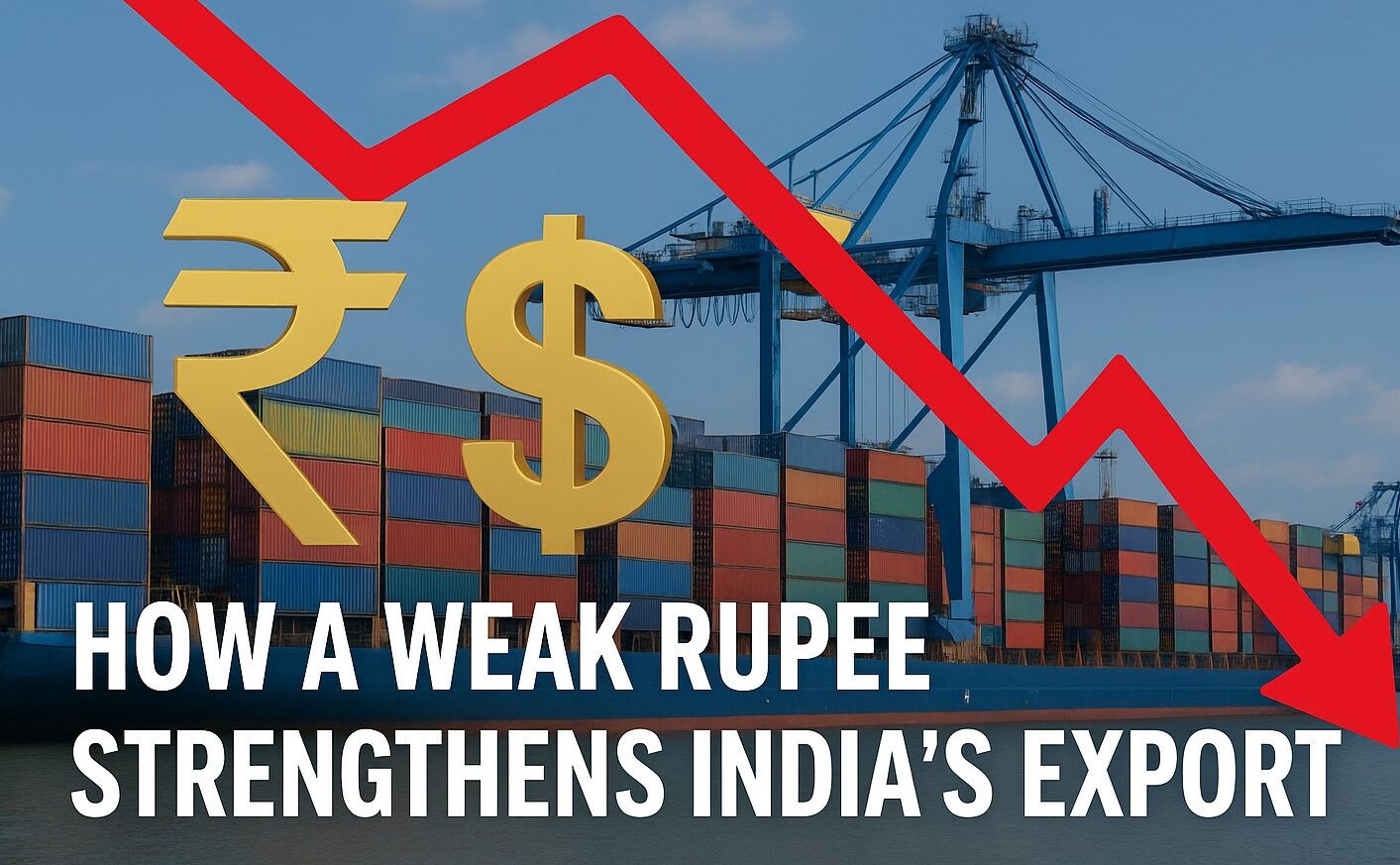
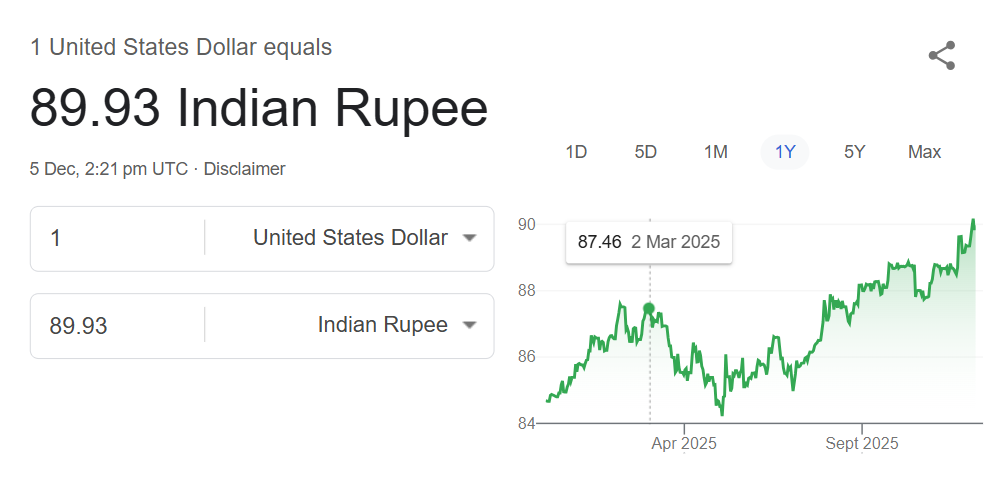
The Indian rupee has been losing its value against the U.S. dollar and has been in the range of ₹83.5-₹83.7 most of the time; thus, it is the currency that has depreciated the most out of Asia. A majority of these articles consider this development as negative. We are informed about the higher costs of imports, the escalation of inflation, and the squeeze on households.
But one crucial part of the story is often overlooked:
India’s exporters are quietly benefiting in some cases, significantly.
From chemicals to IT services, many export-focused industries are using this currency slide to sharpen their competitiveness, widen profit margins, and capture more global business. And interestingly, this outcome aligns closely with the classic idea of market adjustment described by Adam Smith.
A Weak Rupee, A Stronger Export Advantage
When the rupee depreciates, exporters earn more when converting foreign revenue back into Indian currency. For example, if a company brings in $1 million, the difference between an exchange rate of ₹82 and ₹83.5 per dollar can translate to ₹15 lakh in additional earnings without producing anything extra.
A softer rupee also makes Indian products cheaper and more attractive in global markets. This boosts demand for everything from textiles and leather goods to pharmaceuticals and IT services.
In a world where companies are actively diversifying supply chains, a cheaper currency makes India a more appealing sourcing hub.
Also Read: Cristiano Ronaldo and Perplexity Team Up to Make a Global Splash
Adam Smith: Market Equilibrium
The behaviour we’re seeing today echoes a principle rooted in economic history, the “invisible hand” and market equilibrium, proposed by Adam Smith.
His idea was simple but powerful:
- When prices shift, markets naturally adjust.
- A depreciating currency makes exports more competitive.
- Rising export demand pushes production upward.
- Eventually, supply, demand, and prices move toward a new balance.
In India’s case, the falling rupee isn’t just a financial headline, it’s a signal prompting the economy to re-balance, rewarding industries that earn in foreign currency.
Sectors Benefiting the Most
1. IT and Global Services
India’s IT and outsourcing giants earn the majority of their revenue in dollars. A weakening rupee against the dollar by even a small fraction is directly positively impacting their margins which are in rupees. Such a situation is like opening up a reserve for spending for these firms, and therefore they have the power to expand, increase, and recruit.
2. Pharmaceuticals and Chemicals
These sectors operate heavily in global markets. A weaker rupee helps them maintain competitive prices abroad while boosting domestic profitability.
3. Textile, Handicrafts, and Apparel
These industries compete with multiple Asian economies. With the rupee declining faster than some regional peers, Indian products become more attractively priced, helping small and medium exporters secure international orders.
Helping India’s Trade Balance
Although India still imports large quantities of oil, electronics, and machinery, a competitive currency supports export growth and helps cushion the trade deficit. Stronger export earnings also contribute to healthier foreign exchange reserves, which are vital for market confidence.
Not All Smooth, But Still Strategic
A weakening currency is not a good thing for a business that imports goods. Such companies are exposed to pressure, and inflationary risks still exist. But to a few firms, especially those that already have an overseas demand, this moment is a definite gain.
While worldwide demand patterns change and supply chains become less concentrated, the depreciating rupee is allowing Indian exporters to increase their global presence, get better deals, and become more powerful in the international market.
At first, the fall of the rupee may seem like a loss for India’s export sector, but in fact, it is turning out to be a strategic tailwind. The present situation is a perfect example of what economic theory predicts: markets self-correct, and changes in currency value are opening up new avenues.
Also Read: Moonrider’s $6 Mn Boost Puts Spotlight on India’s Electric Tractor Push