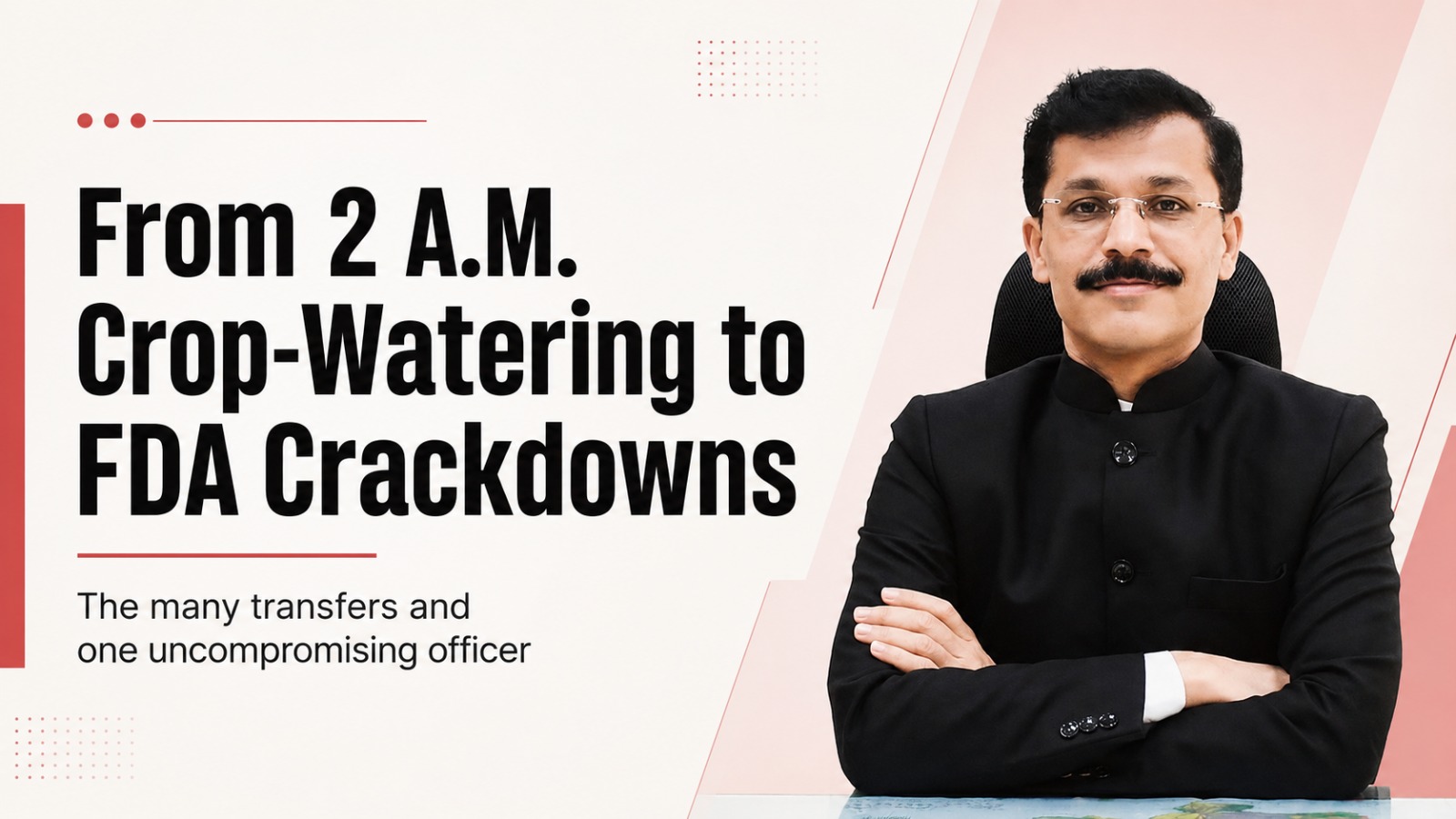
The Maharashtra cadre IAS officer Tukaram Mundhe’s career has moved through drought management, city administration, public transport, healthcare and now food and drug regulation. The departments have changed repeatedly, but his preference for field inspections, measurable compliance and rule-based action has remained remarkably consistent.
Long before Tukaram Mundhe became associated with surprise inspections, suspended licences and some of Maharashtra’s most closely watched administrative assignments, his mornings began very differently.
Growing up in Tadsonna village in Beed district, Mundhe worked on his family’s subsistence farm and helped his parents sell vegetables at the weekly market. He has recalled waking at around 2 a.m. to water crops by hand. The family lived in a mud-brick house, depended heavily on the monsoon and experienced water scarcity at close quarters. He walked barefoot to the local Zilla Parishad school.
More than two decades into his career in the Indian Administrative Service, that early encounter with scarcity offers a useful starting point for understanding an officer who has become difficult to separate from the idea of strict enforcement.
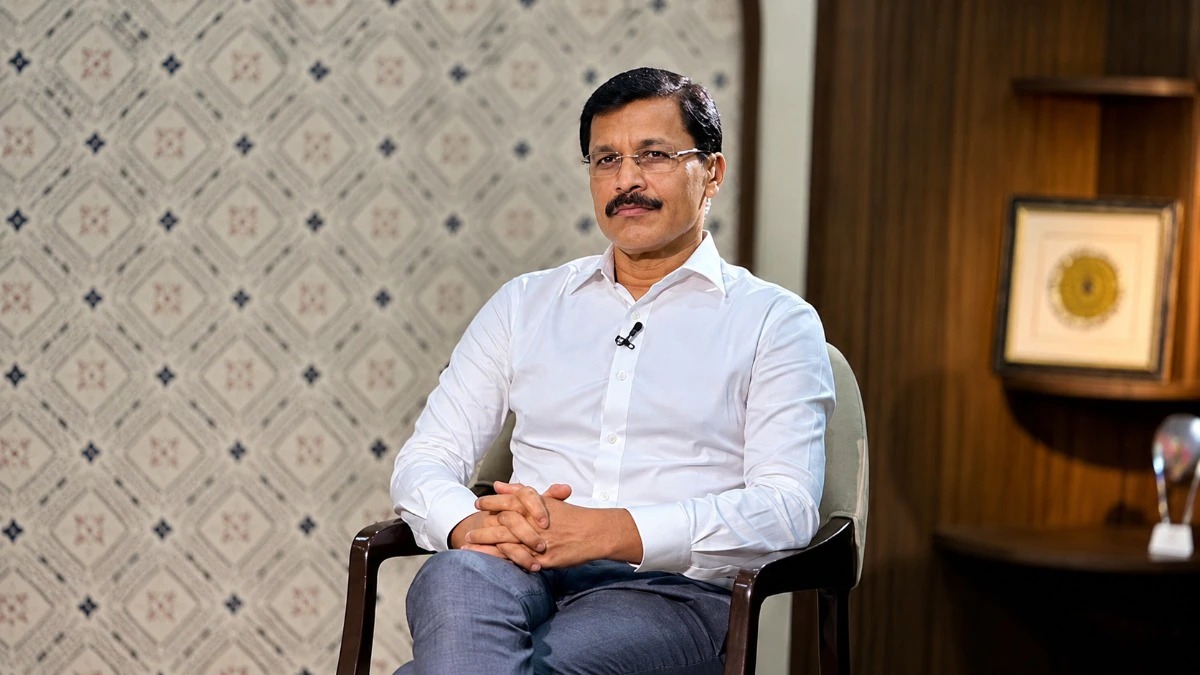
Mundhe is now Commissioner of Maharashtra’s Food and Drug Administration, a position he took over on May 25, 2026. His arrival at the regulator has been followed by inspections and enforcement action involving restaurants, food businesses, manufacturers and drug makers. Yet the attention surrounding the current crackdown is only the latest chapter in a career that has repeatedly followed a recognisable pattern: a new posting, tighter monitoring, visible intervention, resistance and, often, another transfer.
The widely reported figure is striking. Mundhe has been transferred 25 times during roughly 21 years in the service.
A childhood shaped by agriculture and scarcity
Born on June 3, 1975, Mundhe came from an agricultural family in Maharashtra’s Marathwada region.
His childhood was not simply rural in location. Farming formed part of the family’s daily economic life. Water shortages, agricultural debt and dependence on uncertain rainfall were realities he saw from inside the household rather than from an administrative file years later.
He has described watching his family deal with the consequences of systems that did not always deliver what citizens expected from them. That experience, he has said, influenced his decision to enter public administration.
Education gradually took him away from Tadsonna, although not from the concerns that had defined his early years.
He completed his bachelor’s degree at Government College of Arts and Science in Aurangabad, now Chhatrapati Sambhajinagar, in 1996 and completed an MA in Political Science from Dr Babasaheb Ambedkar Marathwada University in 1998.
He later secured an All India Rank of 20 in the Civil Services Examination and entered the 2005 batch of the IAS in the Maharashtra cadre.
His education did not stop with entry into government. Over the years, he has undertaken courses touching on leadership, financial regulation, tax analysis, revenue forecasting, fiscal policy, macroeconomic management and disaster management.
That combination of field administration and interest in financial and regulatory systems would become visible in several later assignments.
The rule behind the reputation
Mundhe’s public image is often reduced to a single description: a strict officer.
That tells only part of the story.
A more revealing explanation comes from a framework he says he developed early in his career. He evaluates administrative action against three considerations: whether it is legal, whether it is morally correct and whether it serves the public interest.
Legality is the essential condition. If an action is legal and satisfies one of the remaining two tests, he has said he is prepared to proceed.
That philosophy helps explain why his working methods can appear unusually decisive. It also helps explain why the same officer can attract enthusiastic public support in one setting while generating fierce institutional or political resistance in another.
For Mundhe, administrative delay has rarely appeared to be a preferred tool of conflict management.
Early battles and the beginning of a pattern
His first years in the service included field assignments in places such as Solapur and Nanded, where his work involved encroachment and action against illegal sand activity.
The confrontation was not without risk. During his early career, Mundhe received death threats after taking on the sand mafia. In Solapur, there was an alleged attempt to physically eliminate him. He returned to work the following day and continued with the programme.

That episode established an early version of a pattern that would reappear throughout his career. Enforcement was rarely treated as an internal administrative exercise. Decisions quickly became public, and resistance to them often became public as well.
His subsequent assignments stretched across rural development, district administration, taxation, municipal governance, public transport, healthcare, disability welfare, disaster management and regulation.
Few individual postings, however, did more to shape his public profile than Solapur and Navi Mumbai.
Solapur brought Tukaram Mundhe back to the problem he knew first
When Mundhe served as District Collector of Solapur from late 2014, water conservation became one of the defining themes of the posting.
The district’s vulnerability to drought made reducing dependence on water tankers more than an infrastructure target. Water availability affected agriculture, household life and the basic functioning of villages.
His administration’s association with water conservation efforts under Jalyukt Shivar earned him recognition and contributed to the label “Waterman of Maharashtra”.
There is an obvious arc here. A child who once woke in the middle of the night to manually water his family’s crops eventually found himself administering a drought-prone district where water security was one of the government’s most pressing challenges.
That connection does not explain every decision Mundhe has made, but it gives his Solapur chapter a significance that goes beyond another entry in a transfer record.
He received Maharashtra’s Best Collector Award for all-round excellence in district governance for 2015-16. His career has also brought recognition connected with social justice, transport innovation, urban governance, public health and water conservation.
Navi Mumbai showed both sides of the Mundhe model
As Municipal Commissioner of Navi Mumbai, Mundhe brought his enforcement-oriented approach into a far more politically visible urban setting.
He acted on illegal construction, pushed accountability within the civic machinery and scrutinised spending. Two previously approved proposals became particularly notable examples of his approach: a ₹20-crore marble statue and a ₹163-crore solar project at Morbe Dam.
Mundhe cancelled both, describing them as unnecessary, and redirected resources towards accessibility for persons with disabilities and civic infrastructure.
Yet one of the initiatives residents remember most required no large capital project at all.
Every Sunday, through his “Walk with the Commissioner” initiative, citizens could join him on a morning walk and directly raise complaints, suggestions and local problems.
It was an unusually direct way of collapsing the distance between a municipal commissioner’s office and the street.
It also contributed to tensions with elected representatives.
Corporators across political parties opposed him and called a bandh, while citizens mobilised in the opposite direction. An online petition seeking to stop his transfer collected more than 6,000 signatures. He was eventually transferred in 2017.
The episode captured a tension that has followed Mundhe across assignments. A style designed to make administration more immediate for citizens can simultaneously make institutional negotiations more difficult.
From buses to health centres
At Pune Mahanagar Parivahan Mahamandal Limited, his attention shifted from streets and municipal finances to public transport.
During his tenure, technology including vehicle-location and fare-collection systems was used to monitor buses and operational performance. Mundhe said in a 2017 interview that early and late starts, which could previously stretch to around an hour, were brought down to roughly five to seven minutes. Monthly trip cancellations, he said, fell from around 4,000 to 5,000 to about 1,000.
The underlying administrative instinct was familiar: measure performance more closely, identify non-compliance and intervene.
That could also mean decisions with immediate consequences for employees. During his PMPML tenure, 158 contract drivers were sacked for chronic absenteeism, prompting union opposition and political reaction.
A similar approach surfaced when he moved into public health administration.
In 2022, Mundhe ordered midnight inspections of Primary Health Centres, used biometric attendance as an accountability tool and initiated action involving doctors accused of operating private clinics during government working hours.
Again, the posting was short. He was transferred in 2023.
Twenty-five transfers, but one recurring argument
Frequent transfers are now inseparable from any account of Mundhe’s career.
The figure most commonly reported is 25 transfers over 21 years, with reports also noting that he has not completed a full standard tenure in any posting. The exact way individual assignments are counted can vary, but there is little dispute about the larger pattern: his postings have generally been unusually brief.

Why this happens is more complicated than either admirers or critics sometimes suggest.
Supporters see the transfers as evidence of an officer repeatedly running into powerful interests because he refuses to dilute enforcement. Critics argue that an uncompromising administrative style can itself create avoidable friction and leave limited room for negotiation within institutions that depend on coordination among officials, elected representatives, employees and regulated businesses.
Both sides are reacting to the same characteristic.
Mundhe does not appear to regard accommodation as an administrative virtue when he believes rules are being violated.
That can produce quick results. It can also produce equally quick confrontation.
The FDA is the same philosophy on a larger stage
The Maharashtra Food and Drug Administration gives that philosophy an unusually direct connection to everyday life.
Mundhe took charge on May 25, 2026. Since then, the regulator’s enforcement activity has put restaurants, wholesalers, retailers, manufacturers and other businesses under scrutiny.
In Mumbai, establishments including Noor Mohammadi Hotel, Shalimar Restaurant, K Rustom & Co, the Cricket Club of India, Willingdon Sports Club and Juhu Gymkhana have faced temporary shutdowns or licence suspensions after inspections flagged issues ranging from pest infestation and sanitation problems to improper storage and compliance deficiencies.
The drive has extended beyond restaurants.
On August 12, the FDA launched inspections covering 434 licensed Ayurvedic drug manufacturing units. The exercise resulted in show-cause notices to 135 manufacturers and permanent licence cancellations for 10 units over serious violations. Reported deficiencies included missing qualified technical staff, inadequate quality-control facilities, absent testing equipment, hygiene problems and incomplete manufacturing records.
The scale of regulation means the consequences are different from a municipal posting. Food and drug compliance reaches into restaurants, shops, factories, pharmacies and households throughout the state.
It also increases scrutiny of how enforcement powers are used.
The Bombay High Court has cautioned Mundhe against disproportionate action, using the expression “using a sword to kill a mosquito”. At the same time, his campaign has received public support from those who see strict enforcement as overdue.
That tension is important. A complete profile of Mundhe cannot simply celebrate toughness or dismiss it. The more useful question is whether forceful administration remains proportionate, legally sound and effective after the immediate headlines fade.
That standard is particularly relevant for an officer whose own philosophy places legality at the centre of decision-making.
The consistency behind an unusually unsettled career
There is an irony in Tukaram Mundhe’s record.
Few senior bureaucratic careers appear less stable when measured by postings. Yet few appear more consistent when measured by administrative style.
The subject changes. In one job it is water. In another it is property tax, buses, attendance, illegal construction, healthcare delivery or food hygiene.
The method changes far less.
Inspect personally. Measure what can be measured. Demand attendance and compliance. Act when rules are breached. Give citizens a direct route into the administration. Accept confrontation when enforcement produces it.
That formula has brought awards, public campaigns in his support, political opposition, union disputes, judicial scrutiny and an extraordinary succession of transfers.
Now, at 51 and more than two decades into the IAS, Mundhe is applying the same instincts to a department whose work can reach almost every kitchen and medicine cabinet in Maharashtra.
Whether his FDA tenure lasts long enough to become an exception to his transfer history remains unknown.
What is already clear is that the latest posting has not required Tukaram Mundhe to reinvent himself.
For an officer who once woke at 2 a.m. because crops needed water, the job has changed many times.
The insistence on showing up where the problem is has not.
Also Read: Why Is Ilja Dragunov Leaving WWE After His U.S. Title Run?