Urban Pigeons: From Familiar Sight to Hidden Threat
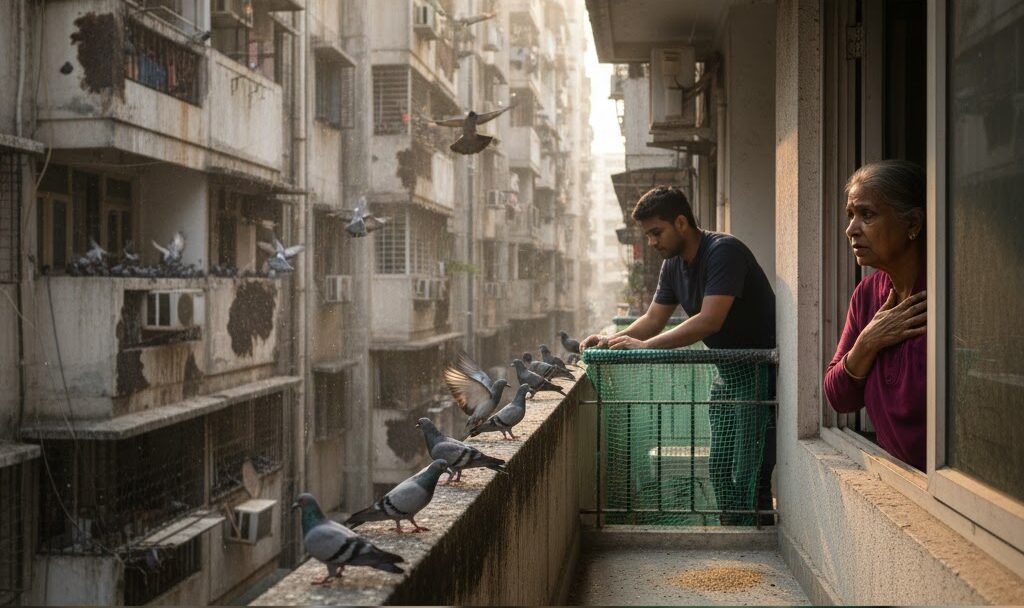
Pigeons have been around in Indian cities for a long time, in parks, town squares, and on the balcony. Now, however, there are concerns about their numbers and health hazards. Medical experts are raising the alarm over increasing cases of Hypersensitivity Pneumonitis (HP), also known as ‘Pigeon Lung Disease’, which is lung disease from continued exposure to dried pigeon droppings and dried pigeon feathers.
In urban centers like Mumbai, Delhi, Jaipur, and Coimbatore, residents are increasingly reporting respiratory problems, and doctors caution that unless preventive measures are taken, cases may rise further.
A Personal Tragedy Highlights the Danger
The severity of the disease is not just theoretical. In January 2019, Sheetal Vijay Shinde, daughter of ex-Pune corporator Sham Mankar, died of lung fibrosis from an infection that originated from the droppings of pigeons. The infection occurred when dried and powdered droppings of pigeons entered her house and caused permanent pulmonary damage.
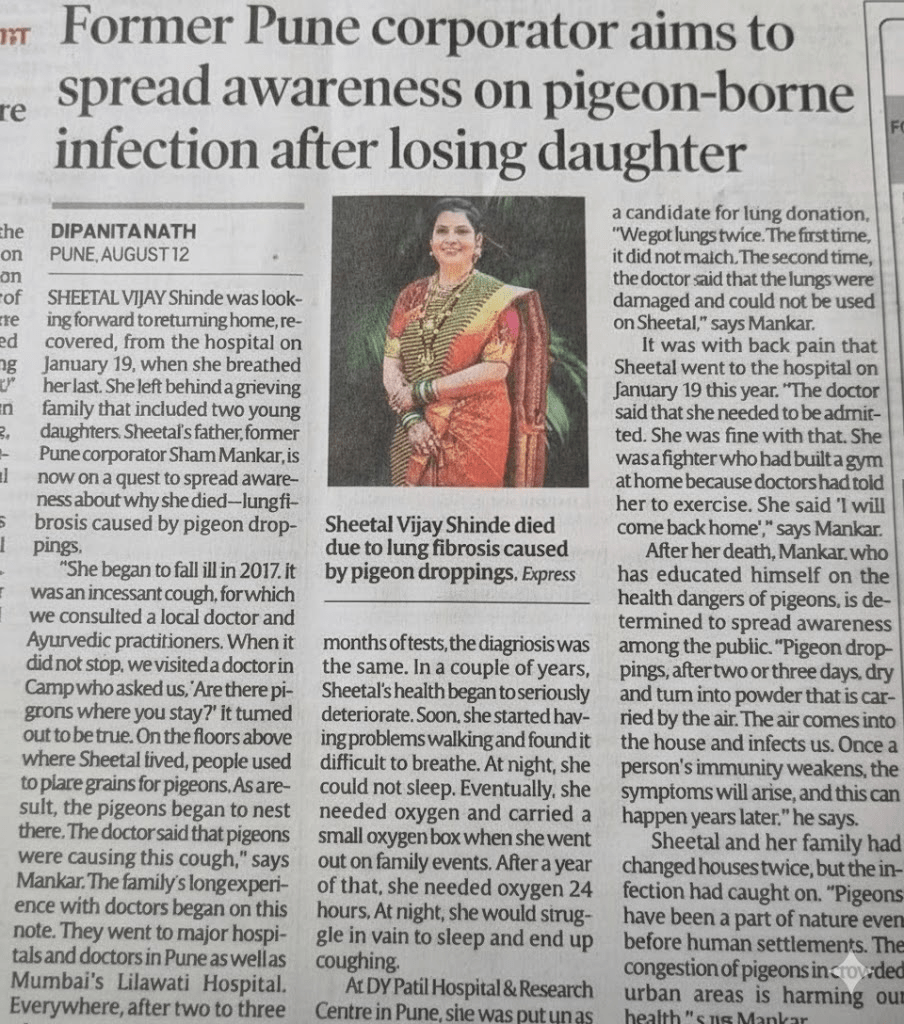
This heartbreaking case underscores the potential danger of urban pigeon populations and how seemingly harmless birds can pose a real threat to human health when their droppings accumulate in residential spaces. It also serves as a stark warning for residents in cities where pigeons are abundant.
Understanding Pigeon Lung Disease
Hypersensitivity Pneumonitis is an immune-mediated lung disease caused by inhalation of particles derived from pigeon droppings and feathers. Symptoms in the beginning are often subtle and resemble asthma or allergies, and can include cough that does not go away, shortness of breath, fatigue, and chest pain. Acute exposure can feel like flu, but repeated inhalation can lead to chronic inflammation and pulmonary fibrosis, sometimes necessitating oxygen therapy or even lung transplants.
Doctors emphasize that HP is not limited to occupational exposure, anyone living in pigeon-infested areas, particularly children, the elderly, or people with pre-existing respiratory conditions, can be at risk.
Also Read: Buy a Tesla or 12 WagonRs? The Math May Surprise You
Why Urban Habits Amplify the Risk
Pigeon related lung disease arises from several factors. Many people will feed pigeons in a public place, a park, or on their balcony contributing to the creation of large flocks of birds. Bird droppings, feathers, and other particulate material build up over time which create a significant amount of allergenic and fungal spores. Environmental conditions such as high humidity, poor ventilation in the home, and wet corners of buildings increase the risk even more. In contrast, those same factors have changed a pigeon from a harmless part of city living to a potential health risk.
Beyond Lung Disease: Hidden Dangers
Pigeon droppings can harbor fungal spores such as Histoplasma and Cryptococcus, which can cause severe infections in immunocompromised individuals. Even healthy residents may experience worsening asthma or severe allergic reactions from constant exposure to pigeon dust.
Cases like Sheetal Vijay Shinde’s demonstrate how serious and life-threatening these infections can be, particularly when exposure occurs in enclosed spaces.
Municipal Action and Community Responsibility
Cities are beginning to address this emerging issue. Some city officials have put out advisories that ask residents to avoid feeding any pigeons, and requesting that citizens keep the area cleaner. Structural measures, along with the advisories, recommending solutions like bird netting, installing spikes on ledges, or sealing up areas of buildings to prevent nesting in and around determined thresholds of people’s homes.
Official sources express that the management of pigeon-related diseases will require cohesiveness from the overall community, with awareness campaigns being important in working to inform the community of the implications of pigeon overpopulation.
Practical Steps for Residents
Health experts recommend the following precautions:
- Stop feeding pigeons in residential or public areas.
- Wear masks and gloves when cleaning pigeon droppings.
- Dampen droppings before cleaning to prevent dust from becoming airborne.
- Seal droppings in plastic bags before disposal.
- Close cracks and gaps in buildings to prevent pigeons from nesting indoors.
- Consult a doctor promptly if experiencing persistent cough, breathlessness, or flu-like symptoms.
Implementing these measures can greatly reduce the risk of lung infections and chronic respiratory illness.
A Wake-Up Call for Urban Communities
The sad example of Sheetal Vijay Shinde illustrates how Pigeon Lung Disease pulls back the curtain on the tenuous balance between wildlife in urban environments and human health. It has gone from a nuisance at best to a serious public health threat.
In order to prevent any additional cases, residents, healthcare providers, and local governments will need to work together. But cities can protect residents from this silent but deadly health threat through measures to prevent cases, public education, and responsible management of resident pigeon populations.
Also Read: Where Science Meets Self-Care: Discover The Wellness Co.