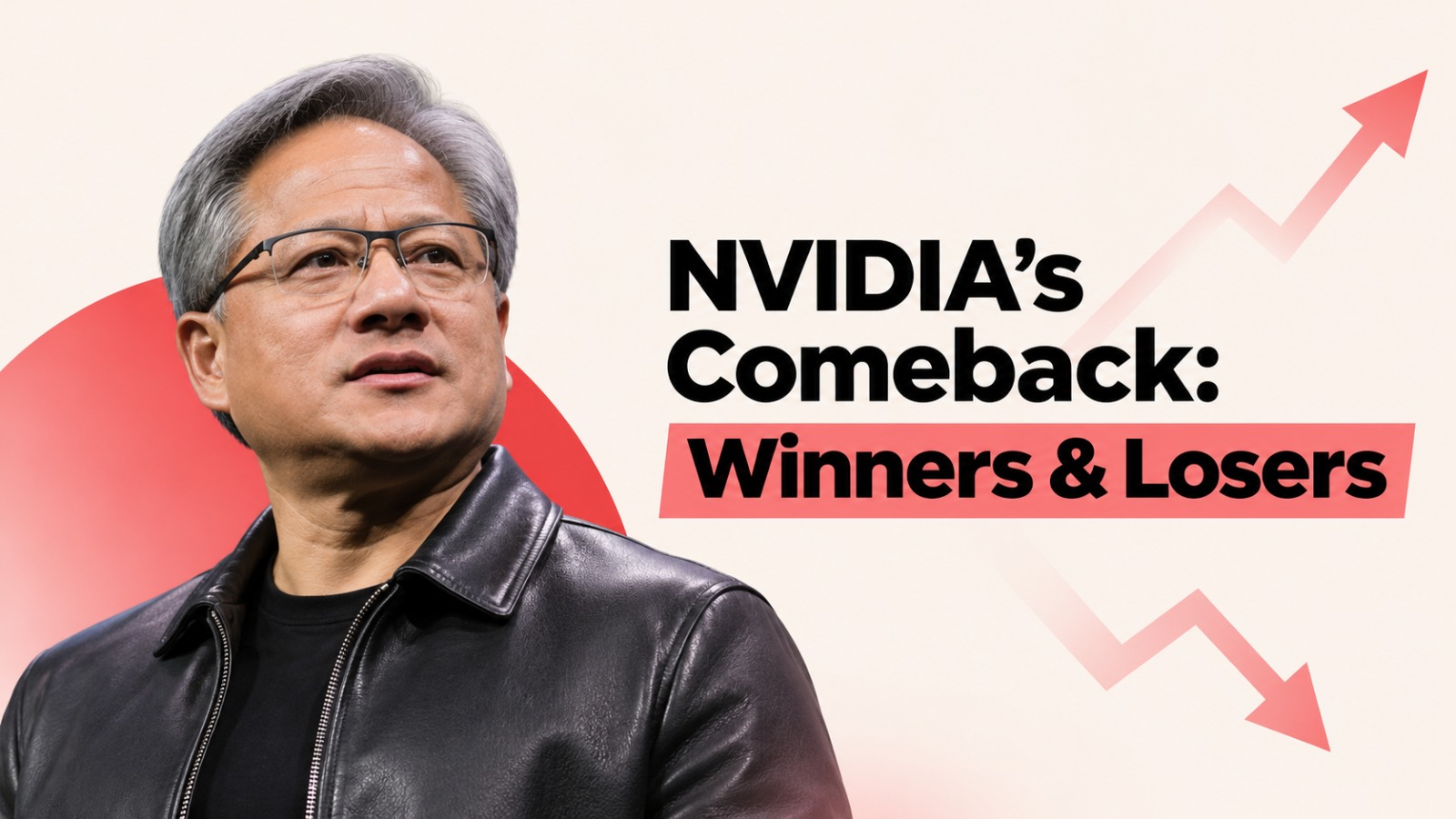
Jensen Huang’s return as Nvidia CEO after just 11 days away from the company has reshaped the fortunes of investors, semiconductor manufacturers and political stakeholders, while raising fresh questions about corporate governance and Washington’s influence over the technology industry.
Nvidia reinstated Huang as its president, chief executive officer and board director on November 23, reversing its earlier decision to accept his resignation. The board’s unanimous decision followed discussions with Huang and input from senior US government officials.
The comeback followed Huang’s November 12 resignation amid revelations about extramarital relationships, including one involving a woman suspected by US intelligence agencies of having links to Chinese intelligence. The controversy also brought renewed attention to Nvidia’s business relationships, semiconductor exports to China and the national security implications of advanced AI chips.
Markets responded strongly to the leadership reversal. Nvidia shares jumped 31.5% on November 23, adding approximately $950 billion to its market capitalisation in a single trading session. The rally also lifted several companies connected to the AI infrastructure supply chain.
Here is a closer look at the biggest winners and losers from Huang’s return.
The Winners
1. Jensen Huang
Huang emerged as the most immediate beneficiary of the reversal. His reinstatement restored his positions as Nvidia’s president, CEO and board director, ending an 11-day leadership disruption at the company he co-founded.
His return also reinforced his position as one of the most influential executives in the technology industry. Despite the controversy surrounding his personal relationships and questions about national security, the board ultimately decided that he remained the right person to lead Nvidia.
The market reaction further strengthened his financial position. Nvidia’s 31.5% share-price jump significantly increased the value of his stake in the company, making the reinstatement a major financial development for the billionaire executive.
2. Nvidia Shareholders, Including Donald Trump
Nvidia investors were among the clearest winners. The company’s shares had come under pressure following Huang’s resignation, as uncertainty surrounding its leadership added to concerns about the future of the AI chipmaker.
The November 23 rally reversed much of that immediate pessimism. Nvidia’s market capitalisation climbed to nearly $3.98 trillion, creating substantial gains for shareholders.
US President Donald Trump was also among the potential beneficiaries. He had publicly supported Huang’s return and acknowledged intervening with Nvidia’s board. Financial disclosures cited in the reporting showed that Trump held Nvidia shares valued between $13 million and $62 million.
The combination of his financial exposure and involvement in the reinstatement also raised questions about potential conflicts of interest.
3. AI Infrastructure Companies and Semiconductor Suppliers
The companies operating around Nvidia’s AI ecosystem also benefited from the leadership announcement. Nvidia’s chips are central to the infrastructure used by major cloud providers and AI developers, making continuity at the company important for businesses dependent on its technology and supply chain.
Several companies recorded substantial gains:
- Cloud and server infrastructure: CoreWeave and Nebius reportedly gained as much as 30%, while Dell Technologies rose 20.5%.
- Asian semiconductor companies: Taiwan Semiconductor Manufacturing Company (TSMC) gained 9.9%, adding approximately $158 billion in market value. SK Hynix advanced 11.7%, while Foxconn rose nearly 10%.
- Memory and storage suppliers: Micron Technology climbed 19%, while SanDisk gained 22%.
- Optical networking: Lumentum advanced 18.2%.
These movements reflected renewed investor confidence in Nvidia’s leadership continuity and the wider AI infrastructure business.
4. Advocates of Continued Access to the Chinese Semiconductor Market
Huang’s return also benefits advocates of a less restrictive approach to semiconductor exports.
He has consistently argued against aggressive restrictions on selling advanced chips to China, warning that export bans could push Chinese customers towards domestic competitors and weaken American companies’ market positions.
His return keeps an influential industry voice in Nvidia’s leadership at a time when Washington continues to debate how much access China should have to advanced computing technology.
However, the reinstatement does not mean that export restrictions will be relaxed. The controversy surrounding Nvidia’s China business remains under scrutiny, and the US government continues to examine potential violations of export controls.
The Losers
1. Nvidia’s Board of Directors
Nvidia’s board faces one of the biggest credibility challenges following the episode.
The 11-member board had initially accepted Huang’s resignation. Chairman Harvey Jones subsequently told investors that the company did not intend to reinstate him.
However, the board reversed that position within days and unanimously restored Huang to his previous roles.
The decision has raised questions about the board’s independence, particularly because the company acknowledged receiving input from senior US government officials before reaching its conclusion.
The reversal also came while investigations into the controversy remained ongoing. This has placed additional pressure on directors to explain how they evaluated the risks and why their position changed so quickly.
2. Rival Chipmakers AMD, Broadcom and Alphabet
Nvidia’s competitors had an opportunity to benefit from uncertainty surrounding Huang’s departure.
During his absence, investors considered whether major cloud providers might accelerate efforts to diversify their AI chip requirements rather than remain heavily dependent on Nvidia.
Companies such as AMD, Broadcom and Alphabet, which develops its own tensor processing units (TPUs), stood to benefit from that potential shift.
However, Huang’s reinstatement restored confidence in Nvidia’s leadership and reduced some of the uncertainty that had supported the rival companies’ investment case.
The immediate market reaction favoured Nvidia, with its shares rising much more sharply than those of several competitors. The longer-term implications for competing chipmakers will depend on whether customers continue diversifying their AI infrastructure.
3. China Hawks and Critics Within the Trump Administration
Huang’s return exposed divisions within the US administration over how to approach Nvidia and its business dealings with China.
Treasury Secretary Scott Bessent had criticised Nvidia’s alleged chip sales and called for an outside CEO, arguing that the company needed stronger leadership oversight.
Secretary of State Marco Rubio was also identified as a prominent critic of Huang, with concerns surrounding Nvidia’s potential influence on US-China technology policy.
Trump’s intervention and the board’s subsequent reversal weakened the position of those advocating a tougher approach towards Huang.
Nevertheless, the administration’s wider concerns about semiconductor exports remain. The US Commerce Department’s decision to place Megaspeed on its trade blacklist following the reinstatement demonstrates that the national security questions have not disappeared.
4. External CEO Candidates and Executive Search Firms
Nvidia’s search for potential successors also became unnecessary, at least for the immediate future.
Following Huang’s resignation, the company had begun considering leadership alternatives, including internal and external candidates. Executive search firms involved in identifying potential replacements were therefore part of what could have become one of the technology industry’s most significant CEO searches.
Huang’s reinstatement brought that process to an abrupt end, restoring the company’s co-founder to its top position rather than moving forward with an outside appointment.
Nvidia’s Leadership Crisis Is Over, but the Bigger Questions Remain
Huang’s return has provided immediate relief to Nvidia investors and companies dependent on its AI technology. The extraordinary market rally demonstrated how strongly investors associate the company’s future with its co-founder’s leadership.
However, the financial recovery does not resolve the questions surrounding Nvidia’s corporate governance, its relationship with China or the involvement of political leaders in a major private company’s leadership decision.
The investigations into the controversy remain ongoing, while the board’s abrupt reversal has placed its independence under greater scrutiny.
For Nvidia, the immediate challenge is to restore confidence beyond the stock market. Huang’s reinstatement may have ended the leadership uncertainty, but the company still faces questions about oversight, national security and the concentration of power around one executive.
Also Read: Palo Alto Networks to Acquire AI Startup Applied Compute for $4.5 Billion