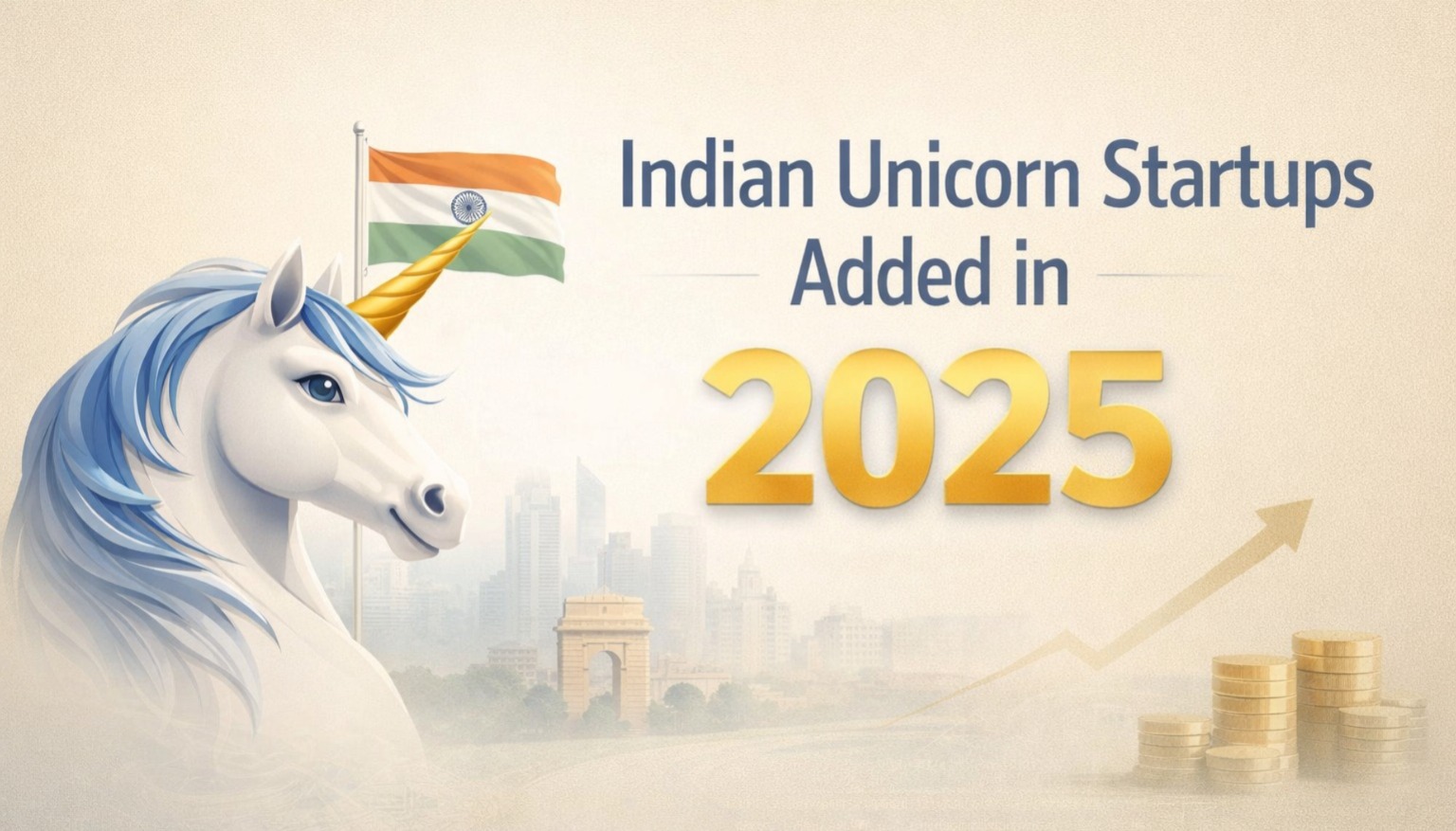
India’s startup ecosystem closed 2025 with 123 Indian unicorn Startups, reflecting a phase of consolidation rather than acceleration. The count, based on a single verified industry dataset, shows that seven startups crossed the $1-billion valuation mark during the year, the same number as in 2024, signalling stability in deal-making amid cautious capital flows.
Though the funding cycles have started to slow down globally, India maintains the third position in terms of the most unicorn companies after the United States and China. This reinforces the fact that the country creates scaled digital businesses that ultimately proves long-term strength despite tightened valuation discipline.
A Concentrated Geography, Once Again
- India’s unicorn distribution is strictly urban.
- Bengaluru maintains its lead with 52 unicorns, thus holding its ground as the startup capital of the country.
- Next come Gurugram and Mumbai, with each having its 20 unicorns, including fintech, ecommerce, and B2B platforms.
This is significant because it emphasizes that it is already an established pattern that access to capital, talent, and enterprise customers is dominated by and favors only a few urban hubs.
Consumer and Commerce Still Lead
Sectoral distribution shows a familiar trend:
- Consumer-focused startups form the largest group, with 58 unicorns
- Retail and commerce platforms follow closely
- Enterprise and fintech infrastructure remains a steady contributor
While newer themes like deep tech and climate tech are emerging, unicorn creation in 2025 continued to favour businesses with proven revenue visibility and large addressable markets.
2025: Fewer Bets, Clearer Conviction
The seven unicorns added this year reflect a selective funding environment. Instead of aggressive valuation jumps, most companies crossed the billion-dollar mark on the back of:
- Scaled operating history
- Category leadership
- Strong institutional backing
Notably, no sudden spikes or speculative entries define this list, an indicator of maturity rather than slowdown.
7 Indian Unicorn Startups Added in 2025
Raise
Mumbai-based investment technology platform focused on digital financial products. It became the latest unicorn of 2025 after a growth funding round pushed its valuation beyond $1 billion.
AI.TECH
An AI services company with Indian origins and global operations. Its unicorn status reflects rising enterprise demand for applied artificial intelligence solutions.
Navi
A Bengaluru-headquartered financial services company offering lending and digital financial products, backed by a large existing user base and tech-led underwriting.
Jumbotail
A B2B commerce and grocery supply platform serving kirana stores, known for building scale in India’s fragmented retail ecosystem.
Drools
A consumer brand in the pet care segment, reflecting the rise of organised pet food and animal nutrition markets in India.
JSW One MSME
A B2B commerce platform focused on manufacturing and construction inputs, serving small and medium enterprises as part of the JSW Group’s digital expansion.
Juspay
A payments infrastructure company powering transactions for major digital platforms, recognised for its role in India’s backend fintech stack.
India’s unicorn journey in 2025 was not about speed, it was about selectivity. With valuations stabilising and investors prioritising fundamentals, the ecosystem appears to be transitioning from rapid expansion to sustainable scale.
Major Indian startups that have attained unicorn status include
Flipkart, Ola, Paytm, Zomato, Swiggy, Byju’s, OYO, Udaan, Dream11, PolicyBazaar, Delhivery, Razorpay, InMobi, PhonePe, CRED, Lenskart, Meesho, Pine Labs, Nykaa, BharatPe, Zerodha, Groww, MakeMyTrip, BigBasket, Unacademy, ShareChat, MX Player, Cars24, Infra.Market, OfBusiness, Livspace, Ather Energy, Ola Electric, Rebel Foods, Eruditus, PharmEasy, Innovaccer, Licious, UpGrad, Moglix, CoinDCX, CoinSwitch, Freshworks, Chargebee, Druva, Icertis, Zenoti, BrowserStack, HighRadius, MindTickle, Juspay, Jumbotail, Drools, JSW One MSME, Navi, Raise and several others across fintech, consumer internet, SaaS, commerce, logistics, and deep-tech segments.
At 123 unicorns, India’s startup economy remains one of the world’s deepest and most resilient. The pace may have steadied, but the pipeline and the ambition, remains intact.
Also Read: Microshifting: The Future of Work Women Quietly Pioneered