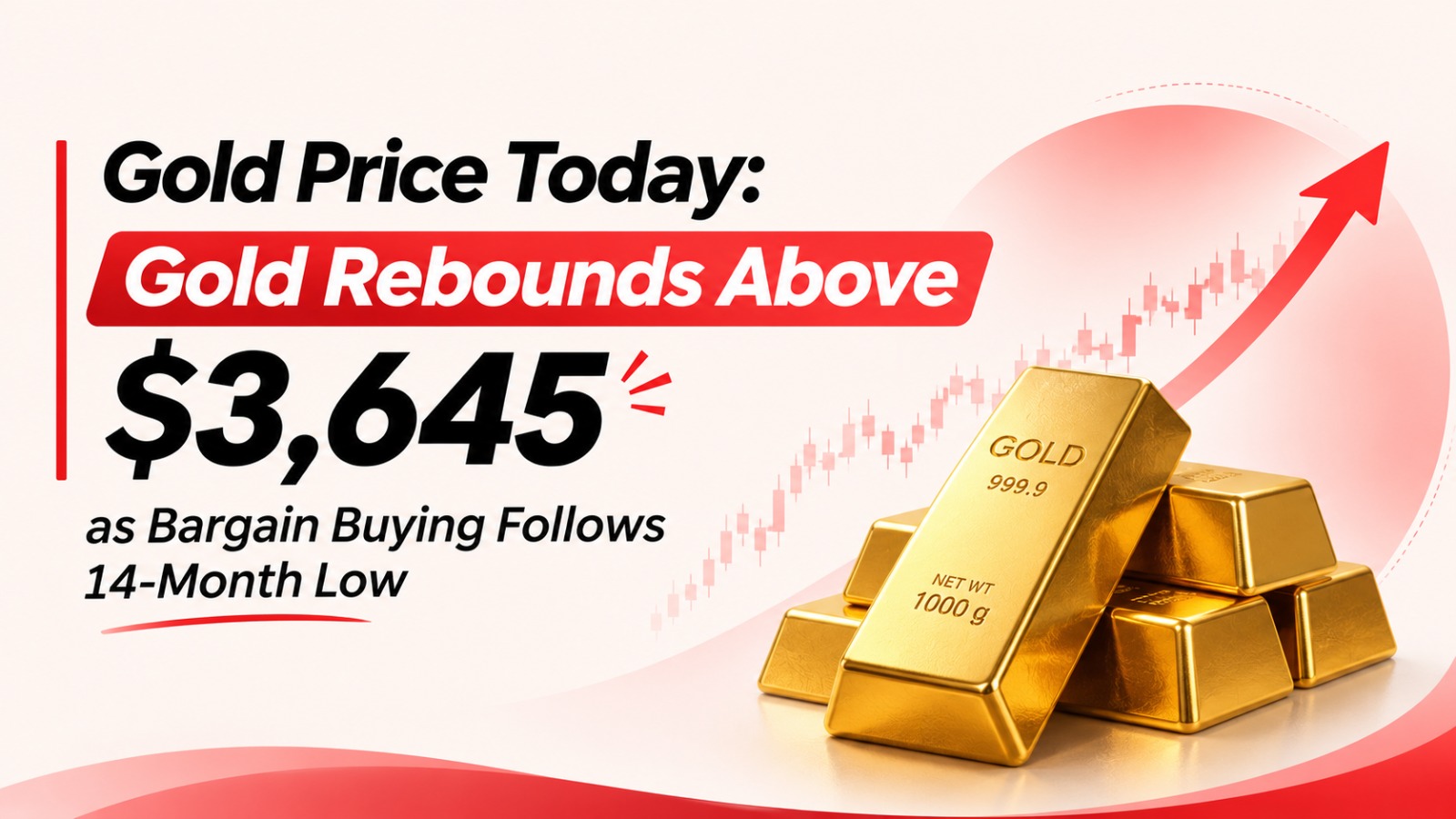
Gold prices extended their recovery on Tuesday as investors returned to the precious metal following last week’s sharp selloff, which pushed bullion to a 14-month low. Bargain buying supported prices, while investors also turned their attention to upcoming US inflation data for indications of the Federal Reserve’s next interest rate decision.
Spot gold gained 0.4% to $3,645.29 per ounce, while US gold futures for December delivery slipped 0.2% to $3,644.70. Spot silver also advanced 1.2% to $43.55 per ounce.
The latest gains followed a 2.7% rally in the previous trading session. Despite the recovery, gold remains under pressure from last week’s nearly 9% decline, which dragged prices to their lowest level in more than a year.
Gold Recovers as Investors Return to Bullion
The recovery in precious metals came alongside a strong rebound in global equity markets. Technology stocks rallied sharply after Nvidia reinstated Jensen Huang as its president and chief executive officer, helping Wall Street record its strongest single-day performance since April 2025.
Gold’s recent decline was partly driven by investors selling bullion to cover losses in other parts of their portfolios during the technology stock selloff. Persistent inflation concerns and hawkish signals from Federal Reserve officials also contributed to the pressure.
New York Federal Reserve President John Williams said on Monday that persistently elevated inflation continued to warrant a tighter monetary policy stance. However, he indicated that the pace of future interest rate increases would depend on incoming economic data.
Chinese Gold Demand Provides Additional Support
Demand from China has also emerged as a supporting factor for gold prices. The country’s gold imports have reached a record $209 billion so far this year, reflecting an unprecedented buying spree.
The increased imports are also helping contain China’s trade surplus with major trading partners, including the European Union.
Strong Chinese demand has provided another source of support for bullion as investors assess the impact of global economic conditions and monetary policy decisions on precious metals.
US Inflation Data in Focus
Investors are now awaiting the US Personal Consumption Expenditures (PCE) Price Index, scheduled for release on Wednesday. The indicator is the Federal Reserve’s preferred measure of inflation and could provide fresh direction for interest rate expectations.
Market expectations currently point towards a 25-basis-point interest rate increase at the Fed’s December policy meeting. According to CME’s FedWatch tool, the probability of this move stands at 95%, while the likelihood of a larger 50-basis-point increase is estimated at 4.9%.
Interest rate decisions remain particularly important for gold because the metal does not generate interest income. Higher interest rates increase the opportunity cost of holding gold, potentially making it less attractive compared with interest-bearing investments.
For now, bargain buying and strong demand have helped bullion recover from its recent lows. However, the upcoming US inflation reading and the Federal Reserve’s policy outlook remain key factors that investors will monitor for the next direction in gold prices.
Also Read: Gold Prices Crash 32% From January Peak to ₹1.22 Lakh, Recovery May Take Years