Search engine optimisation (SEO) expert Marie Haynes has questioned the growing focus on Generative Engine Optimisation (GEO), arguing that businesses may be overlooking the greater commercial value of Google Search while concentrating on visibility across AI chatbots.
In an analysis published on October 21, 2026, Haynes examined 12 months of Google Analytics 4 (GA4) data from 100 websites of different sizes, covering more than 145 million sessions. The findings showed that traffic from ChatGPT amounted to just 0.62% of the volume generated by Google Organic Search. When referrals from other large language model (LLM) tools were included, the combined figure rose to 0.73%.
The findings challenge the growing emphasis on tracking brand mentions and citations in AI platforms, particularly when these tools continue to account for a relatively small share of website traffic in the dataset.
Google Organic Search Continues to Outpace AI Referrals
Haynes’ analysis found a substantial difference between the traffic generated by Google Organic Search and AI-powered platforms. While businesses are increasingly interested in how often their content appears in ChatGPT responses and other AI-generated answers, the data suggests that conventional organic search remains a much larger source of website visits.
The conversion figures, however, present a more nuanced picture.
Among the 100 websites examined, 55 were tracking conversions in GA4. ChatGPT visitors converted at a rate of 13.8%, compared with 3.02% for Google Organic Search visitors.
This means the conversion rate for ChatGPT traffic was more than four times that of Google Organic visitors. Despite this difference, Google accounted for 96.5% of the total conversions across the channels analysed.
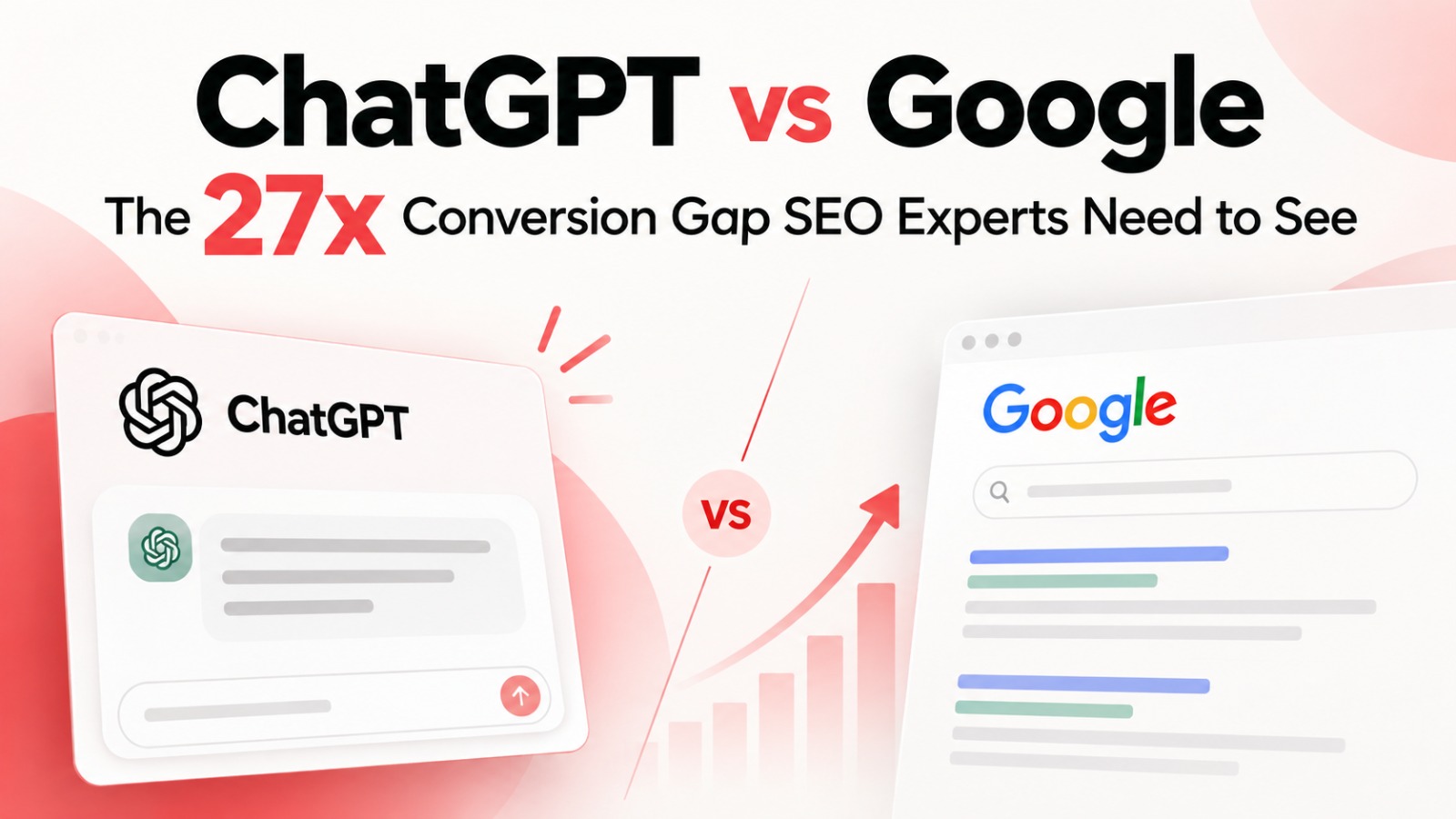
Haynes also reported that Google Organic Search generated 27 times more conversions than all LLM platforms combined in the dataset.
The distinction is important for businesses deciding where to invest their SEO budgets. A channel may attract visitors who are more likely to convert, but its overall contribution can remain limited if it sends significantly fewer people to a website.
ChatGPT Referral Growth Has Slowed, According to the Analysis
The findings also challenge earlier expectations that referrals from AI chatbots would continue growing exponentially until they overtook traditional search traffic.
Haynes said her analysis of the 100 websites showed that the exponential growth in ChatGPT referral sessions ended around August 2025, coinciding with the release of GPT-5. She reported that ChatGPT had been sending fewer visitors to websites since that point.
The trend raises questions about how quickly AI chatbot usage translates into visits to external websites. While people may increasingly use AI tools to find information, product recommendations or answers, not every interaction results in a click to a publisher or business website.
For SEO professionals, the figures suggest that AI visibility should be evaluated alongside measurable business outcomes rather than treated as an independent indicator of success.
The findings are based on a sample of 100 websites and should not automatically be applied to every industry or business. Referral patterns can differ depending on the type of website, its audience and the purpose of its content.
Why Haynes Believes Google Is Still Central to AI Search
Haynes’ argument is not that artificial intelligence is having little impact on search. Instead, she believes the industry is focusing too heavily on visitors arriving directly from AI chatbots while overlooking the growing use of AI within Google itself.
Google’s AI Overviews and AI Mode are changing how people discover information through the search engine. Users can increasingly interact with AI-generated answers without necessarily visiting the websites that supply the underlying information.
This creates a challenge for publishers that have traditionally relied on informational content to attract organic traffic. Even when a website helps answer a search query, the user may not click through to read the full article.
However, Haynes argues that Google remains a critical discovery channel for people looking to engage with businesses.
She also highlighted a measurement problem within the SEO industry. Search rankings and visibility reports do not necessarily show whether a website is generating meaningful commercial results. Google Search Console provides useful performance information, but businesses still need to connect their search activity with outcomes such as enquiries, purchases and other key events.
In her sample, 45 of the 100 websites were not tracking any key events.
Haynes encouraged businesses to establish meaningful conversion metrics and focus on improving user satisfaction rather than simply optimising content to gain visibility in AI systems.
Agentic Search Could Change How Customers Buy Products
Looking beyond conventional search, Haynes identified agentic search as an area that businesses and SEO professionals should begin preparing for.
In an agentic web, AI systems could move beyond presenting information and links to help users complete tasks, compare products, manage transactions and interact with services.
She referred to Google’s Universal Cart as one example of this shift. The feature brings products from multiple retailers into a unified checkout experience within Google Wallet, with support for monitoring price changes, promotions and restocks. This could allow shoppers to purchase products without visiting each retailer’s website individually.
For businesses, Haynes highlighted the importance of understanding Google Merchant Center, where accurate product information could help retailers prepare for emerging shopping experiences.
She also pointed to the Universal Commerce Protocol (UCP), an initiative associated with Google, Shopify and Stripe. The protocol is designed to help AI agents discover products and facilitate purchases across compatible systems while allowing merchants to remain the sellers of record.
If such experiences become more widely adopted, product discovery and transactions could increasingly happen within AI-powered interfaces rather than through traditional website visits.
That would create new technical considerations for SEO professionals, including how product availability, pricing, options and other information are presented to AI agents.
WebMCP and Intelligent Eyewear Could Expand Search Beyond Screens
Haynes also discussed WebMCP, a developing technology that allows websites to expose interactive capabilities, such as forms, calculators and booking tools, for AI agents to use.
She cautioned that it may be too early for most businesses to invest heavily in WebMCP-enabled tools, although experimentation could help them understand how agents might interact with their services.
Another area she highlighted was Google’s Intelligent Eyewear initiative, which includes Gemini-powered devices built around Android XR.
Such devices could introduce new ways for consumers to search for information and interact with businesses in their surroundings. For example, a user might seek help with a household repair, receive guidance while preparing a recipe or identify a product they want to purchase.
These possibilities remain part of a developing technology landscape, but they illustrate how search could expand beyond conventional text queries and browser-based results.
SEO Strategies May Need to Shift From Visibility to Business Results
Haynes’ central argument is that businesses should not abandon AI search optimisation, but should reconsider how much attention and money they devote to it compared with channels that already produce measurable results.
Her analysis suggests that Google Organic Search continues to deliver substantially more traffic and conversions than AI chatbot referrals across the websites examined. At the same time, emerging technologies such as agentic commerce, WebMCP and intelligent eyewear could change how people discover businesses and complete purchases in the coming years.
For now, the practical challenge for SEO professionals is to measure what matters. Tracking conversions, improving customer experience and maintaining accurate product information may offer more immediate value than concentrating exclusively on AI mentions.
As search evolves, businesses will need to prepare for new ways of reaching customers without losing sight of the channels that currently drive their results.
Also Read: Samsung Galaxy S27 Ultra May Get 1.28mm Bezels as Four-Phone Lineup Takes Shape