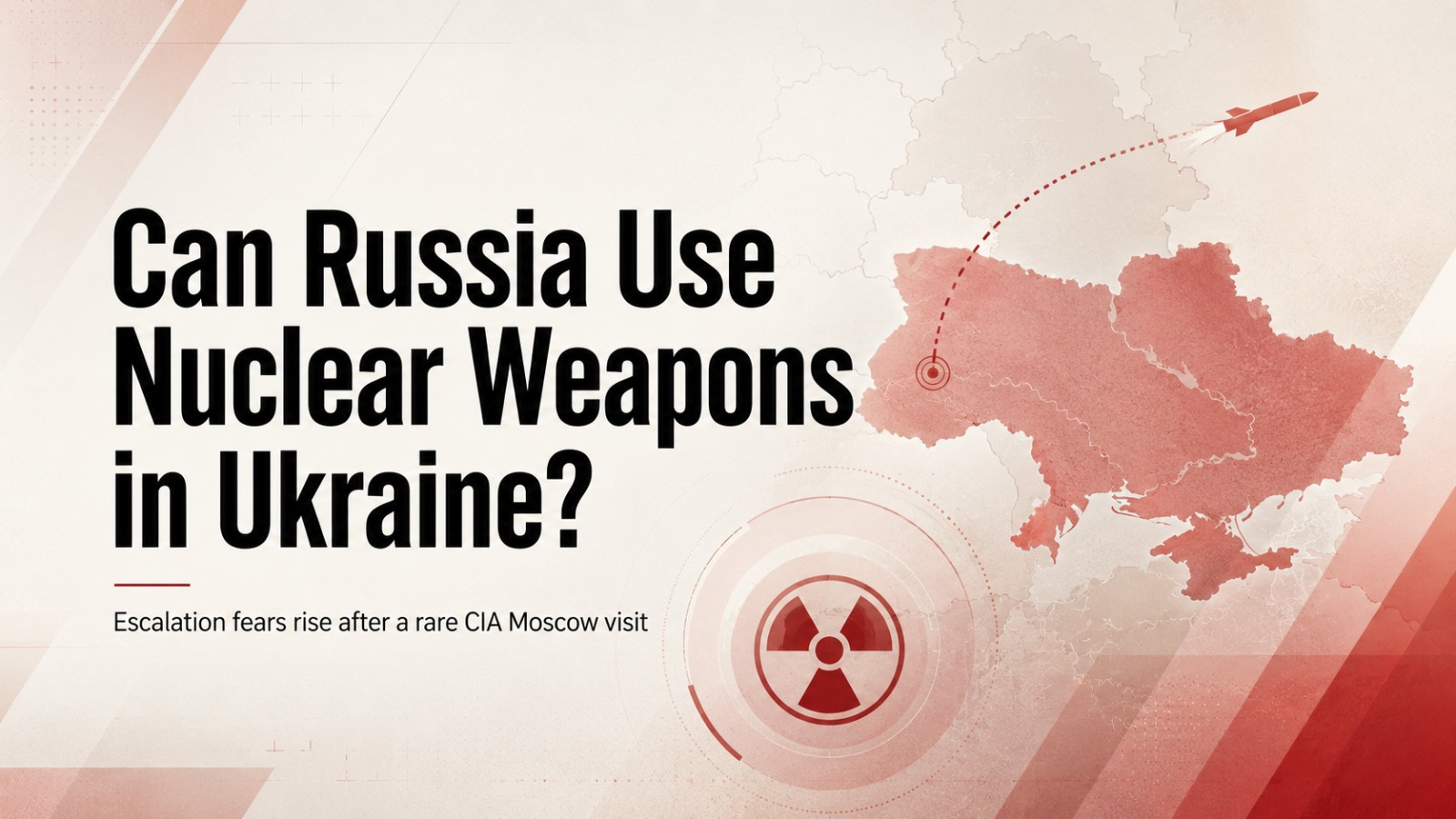
Concerns over a possible escalation in the Russia-Ukraine war have intensified after reports that CIA Director John Ratcliffe made an unannounced trip to Moscow, with neither Washington nor Moscow publicly explaining the purpose of the unusual face-to-face contact.
Fresh uncertainty is surrounding the direction of the war in Ukraine amid reports that Vladimir Putin may be considering a sharper escalation after peace efforts reached a dead end.
People described as close to the Kremlin told Bloomberg that Putin was intent on a new escalation as attacks on Russian oil and gas infrastructure, ports and military sites continued. The reporting has raised fears that any further step could include consideration of tactical nuclear weapons, although no official Russian announcement confirming such a plan is cited.
Rare CIA visit adds another layer of uncertainty
One of the more unusual developments came with the reported visit of CIA Director John Ratcliffe to Moscow.
Ratcliffe travelled to the Russian capital for previously unannounced talks, according to the report. The purpose of the visit was not officially disclosed by either Washington or Moscow, and direct meetings between officials from the two countries were described as relatively rare.
Ratcliffe is thought to have warned Putin against testing NATO’s resolve through a limited attack in the Baltics. The available account does not establish publicly what was actually discussed behind closed doors, making the timing of the trip significant but its precise diplomatic meaning uncertain.
The Moscow visit therefore stands out not because it confirms an impending Russian move, but because it occurred at a moment when concerns about escalation were already increasing.
Pressure grows as Russian infrastructure comes under attack
Russia has been facing what the report describes as mounting and unprecedented attacks against oil and gas infrastructure, ports and military facilities. Those attacks form part of the backdrop to claims that the Kremlin may be considering how to intensify the conflict.
The report suggests that, if Russia were to cross the nuclear threshold, tactical nuclear weapons would be the more likely category under consideration. It describes such weapons as less powerful than the atomic bombs used against Hiroshima and Nagasaki at the end of the Second World War.
There is, however, no confirmation in the material that a weapon has been selected, that an operational order has been issued, or that a nuclear strike is imminent.
Nuclear rhetoric has already become part of the wider confrontation
The anxiety surrounding the latest reports is also being shaped by years of increasingly severe nuclear rhetoric connected to the conflict.
Kremlin has repeatedly issued threats against NATO countries, while Russian television figures have also directed warnings toward the United States and the United Kingdom.
One of the starkest examples came from Russian television figure Dmitry Kiselyov, who warned that the deployment of NATO troops to Ukraine with the aim of inflicting a “strategic defeat” on Russia could trigger a far wider military response.
Kiselyov referred to several Russian missile systems, including Sarmat, Yars and Avangard, and claimed that American decision-making centres and military launchers were already being targeted. He also made explicit threats against France and the British Isles.
Those remarks are statements by a Russian media figure, not evidence that the Russian government has ordered such attacks. They nevertheless illustrate the extreme language that has accompanied the war and helped keep nuclear risk at the centre of international concern.
Drone activity and NATO tensions add to the wider picture
Reports point to concerns over Russian drone and covert UAV activity involving the UK and Europe.
Findings from the International Institute for Strategic Studies alleges that vessels linked to Putin’s shadow fleet were used to send drones into Britain and Europe, with airports, military bases and nuclear sites among the targets identified in the report.
Taken together, those claims, the reported Moscow meeting and the deadlock surrounding peace efforts have created an atmosphere in which even limited signs of escalation are receiving heightened scrutiny.
Also Read: Why the PS5 Might Not Run GTA 6 at 60 FPS: The CPU Bottleneck Explained