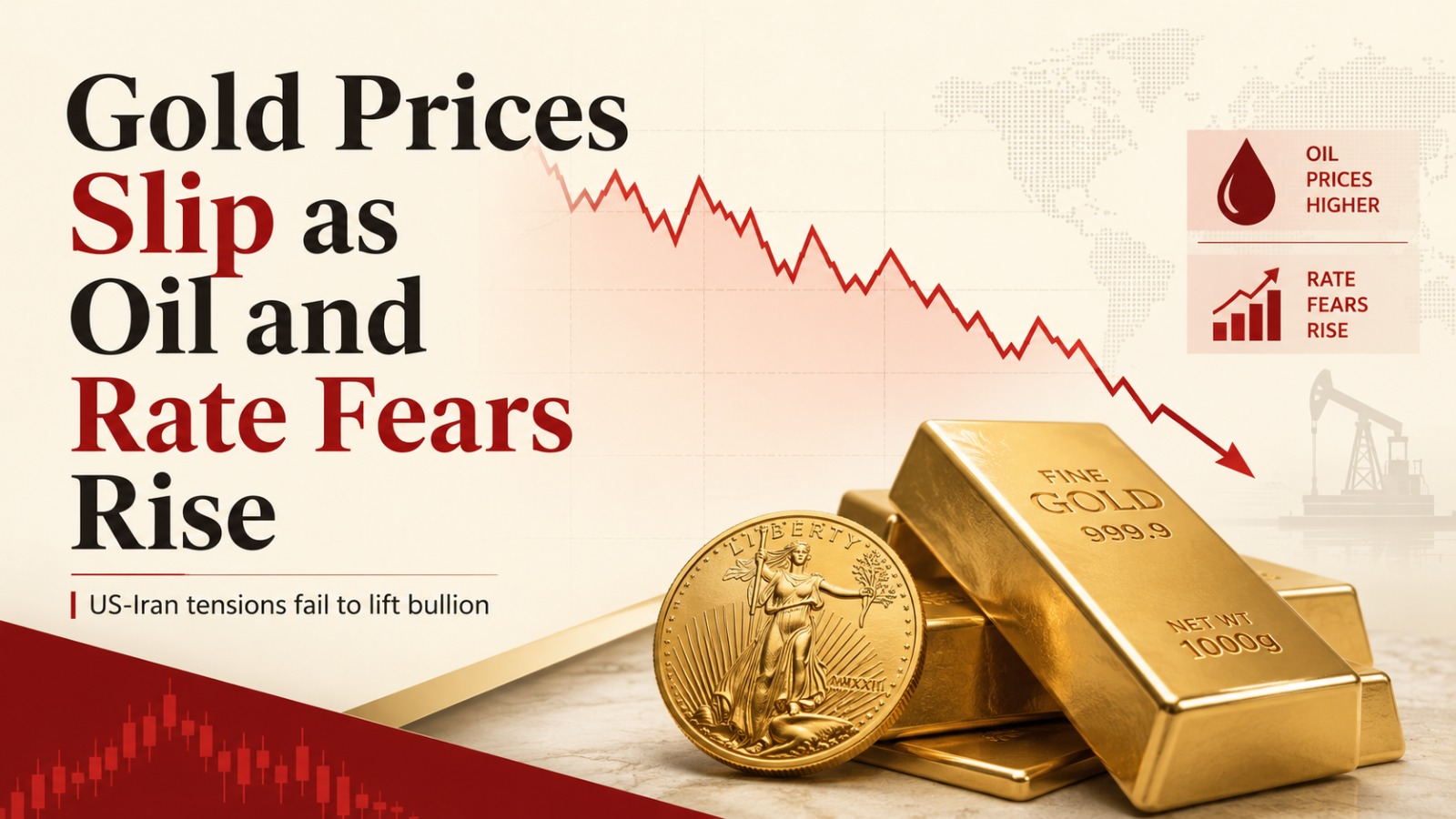
Gold Prices weakened on Thursday, even as renewed US-Iran tensions unsettled global markets, with investors focusing less on the metal’s safe-haven appeal and more on the inflation and interest-rate risks triggered by higher crude oil prices.
The move puzzled some investors because gold normally benefits during geopolitical shocks. This time, however, the latest flare-up in the Middle East pushed oil prices higher, reviving concerns that inflation could stay sticky and force the US Federal Reserve to keep rates elevated for longer.
That shift matters for bullion. Gold does not pay interest, so when bond yields and cash returns look more attractive, the cost of holding the metal rises. In simple terms, the very crisis that might usually support gold is also feeding the rate anxiety that can pressure it.
Spot gold slipped around 0.4% to near $4,060 an ounce in early trade, after touching its lowest level in more than a week. US gold futures for August delivery also declined. The weakness followed comments from US President Donald Trump that an interim agreement to end the Iran conflict was “over”, while fresh US military action was reported in the region.
The pressure was not limited to geopolitics. Recent Federal Reserve minutes added to the cautious tone, showing policymakers were concerned that price increases were becoming broader. That has made traders more careful about assuming early or aggressive rate cuts.
Bank of America has also cut its 2026 average gold forecast by 14% to $4,360 an ounce, reflecting the near-term impact of a hawkish Fed outlook. The bank continues to see longer-term upside once the tightening cycle ends, but for now, gold bulls appear to be facing resistance from the dollar, crude oil and US rate expectations.
In India, the technical picture remains mixed but not broken. MCX gold has been trading in a consolidation range for the last two weeks, keeping the near-term tone sideways. Abhilash Koikkara, Head of Forex and Commodities at Nuvama Professional Clients Group spoke to TOI, He sees ₹1,40,000 as the key support level for MCX gold. A close below that mark could weaken the current bullish setup, while dips near the zone may still attract buyers.
The immediate resistance for MCX gold is placed at ₹1,50,000. The current market price cited in the outlook was ₹1,43,040, with a target of ₹1,50,000 and stop loss at ₹1,40,000.
Silver is moving in a similar pattern. MCX silver has also been consolidating, with the broader trend still positive. The key support level is ₹2,10,000, while ₹2,40,000 is seen as the next meaningful resistance. A move above that level could open the path toward ₹2,54,000. The current market price cited was ₹2,24,400, with a target of ₹2,54,000 and stop loss at ₹2,10,000.
Outside India, silver also eased, while platinum and palladium edged higher, showing that precious metals are not moving as one uniform block. Each metal is now reacting to its own mix of policy signals, supply conditions and demand pressures.
For gold, the central question is no longer only whether geopolitical risk is rising. It is whether that risk pushes inflation and rates high enough to overpower safe-haven demand. For now, traders appear to be choosing caution.
The longer-term support for gold has not disappeared. Reserve buying and global uncertainty continue to offer a floor. But in the short run, the market is sending a clear message: when oil shocks turn into rate worries, gold can lose its shine even in a crisis.
Also Read: ‘Honeymoon suite’ in First AC coach sparks Railways inquiry after video goes viral