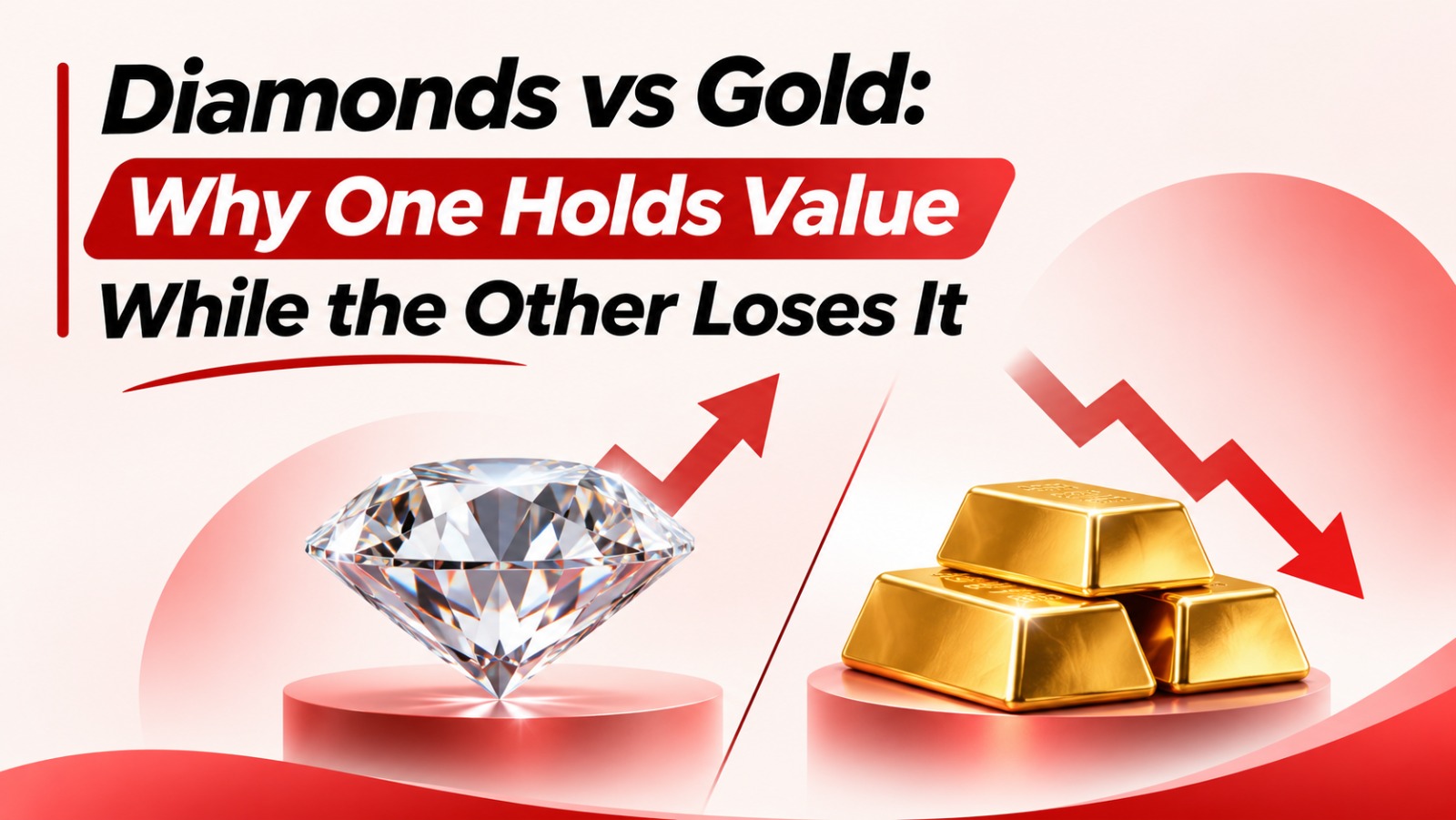
Diamonds have long been associated with wealth, luxury and lasting value. However, their high retail prices rarely translate into strong resale returns. A sharp decline in diamond prices, combined with the growing popularity of lab-grown alternatives, is putting pressure on the traditional diamond market and challenging the perception that diamonds are a reliable store of wealth.
Market data shows that the diamond price index has fallen from around 8,500 to nearly 3,500, reaching its lowest level this century. The decline is particularly notable because it has occurred without a major global recession or a significant geopolitical shock.
For consumers, the gap between the purchase price and resale value remains one of the biggest drawbacks of owning diamond jewellery. Unlike gold, diamonds do not have a widely accepted daily market rate that allows buyers to easily track their value.
Why Diamonds Are Expensive at Retail but Difficult to Sell
The price of a diamond involves more than the cost of the stone itself. Branding, marketing expenses, retailer margins and jewellery-making charges all contribute to the final purchase price.
This makes diamond pricing less transparent than gold pricing. Two diamonds with similar characteristics can carry significantly different price tags depending on the retailer and brand selling them.
The problem becomes more apparent when owners try to sell their jewellery. Many jewellers either do not offer buyback facilities for diamonds or provide resale prices considerably below the original purchase amount.
Gold, by comparison, has an established pricing mechanism and a more liquid resale market. Its value can be tracked through market-linked rates, making it easier for consumers to understand what they might receive when selling it.
The difference between the buying and selling prices makes diamonds a less attractive option for people purchasing jewellery primarily to generate financial returns.
Lab-Grown Diamonds Are Changing Consumer Preferences
The growing availability of lab-grown diamonds is another major factor putting pressure on the natural diamond industry.
Lab-grown diamonds are chemically, physically and optically identical to natural diamonds. Their primary distinction is their method of production. Natural diamonds take millions of years to form underground, while lab-grown alternatives can be manufactured in controlled environments in approximately 14 hours.
Production costs have also declined significantly. The cost of producing lab-grown diamonds has fallen by nearly 90% since 2015, with some stones now costing less than $300 to manufacture.
Their increasing affordability has helped them gain a significant share of the jewellery market. Lab-grown diamonds now account for approximately 45% of engagement ring sales in the United States.
This shift is challenging the pricing power of natural diamonds. Consumers can purchase visually and physically comparable stones at substantially lower prices, making expensive natural diamonds harder to justify for buyers who prioritise appearance and affordability.
The Traditional Diamond Pricing Model Faces Pressure
For decades, the natural diamond industry’s pricing structure benefited from controlled supply and extensive marketing. These factors helped establish diamonds as rare, desirable luxury products and reinforced their association with long-term value.
However, the availability of lab-grown alternatives has introduced a different dynamic. When consumers can access comparable stones at lower prices, the perceived scarcity and premium attached to natural diamonds face greater scrutiny.
Younger buyers are also becoming more conscious of how much they spend on traditional jewellery, adding to the pressure on the established market.
The changing preference does not necessarily mean natural diamonds have lost their appeal as luxury purchases. However, it raises questions about whether their retail prices can continue to command the same premium when more affordable alternatives are readily available.
Gold and Diamonds Serve Different Financial Purposes
The contrast between gold and diamonds becomes clearer when their investment characteristics are compared.
Gold prices are cited at around $4,814, with the metal gaining more than 100% over the preceding two years. Its established pricing system, liquidity and widespread acceptance make it easier to buy and sell across markets.
Diamonds lack the same level of pricing transparency and resale liquidity. Their value can depend heavily on individual characteristics, retailer policies and the availability of potential buyers.
This difference explains why gold is often considered a store of value, while diamonds are primarily purchased for their aesthetic, emotional and luxury appeal.
For consumers, the distinction is important. A diamond ring may carry considerable personal significance, but that does not mean its resale price will reflect the amount originally spent on it.
As lab-grown diamonds become more accessible and natural diamond prices face continued pressure, buyers may need to rethink their expectations. Diamonds can still be meaningful purchases, but treating them as financial investments is a different proposition altogether.
Also Read: Adani Airports Raises $300 Million from 360 ONE Asset at $18 Billion Valuation