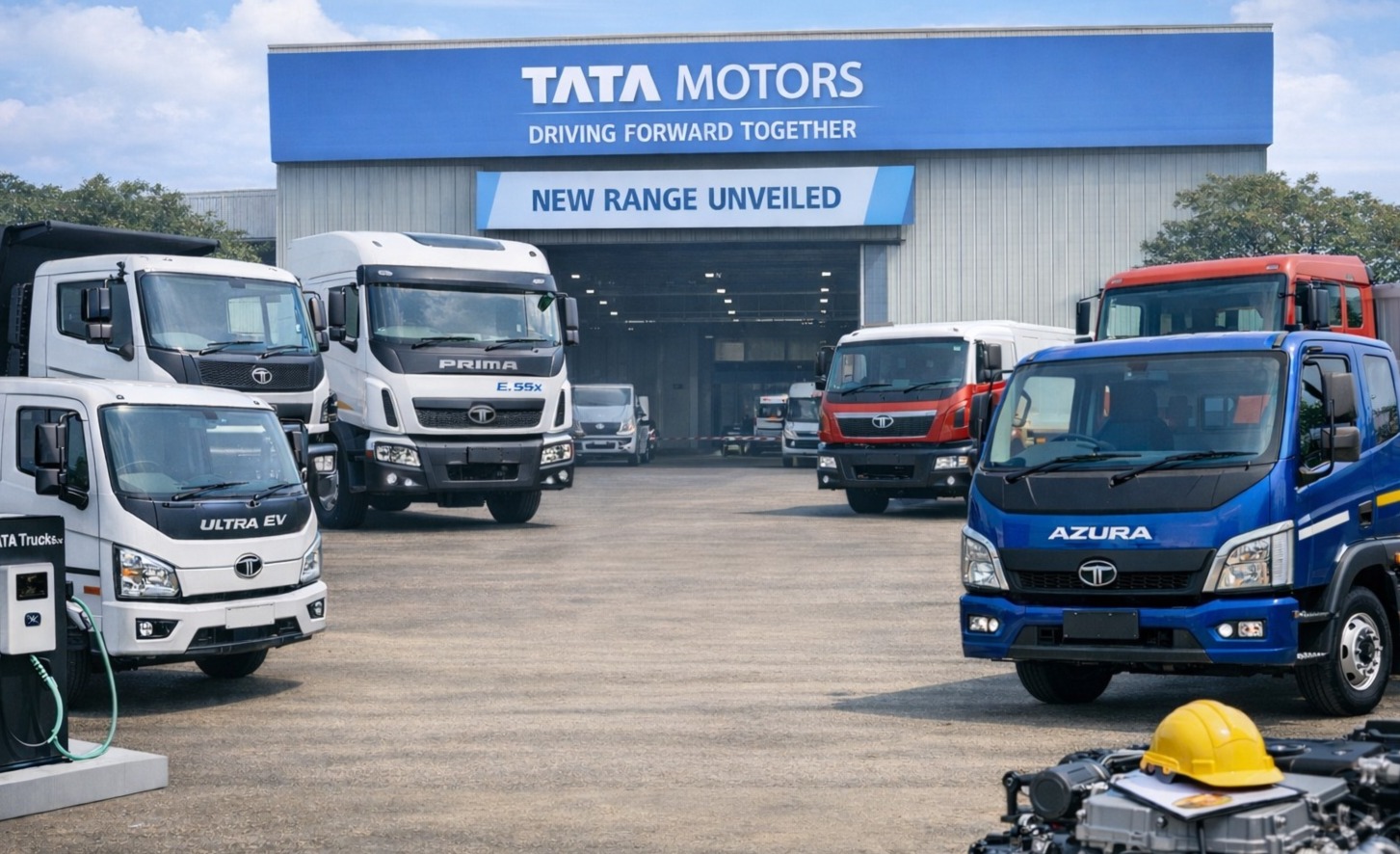
Tata Motors has unveiled an expanded portfolio of 17 new diesel and electric trucks across multiple segments, signalling a strong push to consolidate its leadership in India’s commercial vehicle market. The rollout comes amid a visible recovery in the sector following GST 2.0 rate rationalisation and reflects the company’s focus on cleaner mobility, higher safety standards, and improved fleet profitability.
Industry recovery sets the backdrop for expansion
The latest product offensive is closely tied to the recent rebound in commercial vehicle demand. Industry-wide registrations rose by 25.8 percent between the second and third quarters, indicating renewed momentum after a prolonged slowdown. During the same period, Tata Motors recorded volume growth of 29.4 percent, allowing it to increase its overall market share to 35.7 percent. In the heavy commercial vehicle category, the company’s dominance remained pronounced, with a market share of 56.7 percent.
While the growth trend is encouraging, Tata Motors’ management has indicated that sustained performance over the next six to seven months will be crucial to confirm the start of a durable upcycle. The current launch is designed to position the company strongly if demand continues to build across freight, infrastructure, and logistics sectors.
Also Read: Emergent raises $70 million as vibe coding changes how software is built.
Azura series strengthens presence in ILMCV space
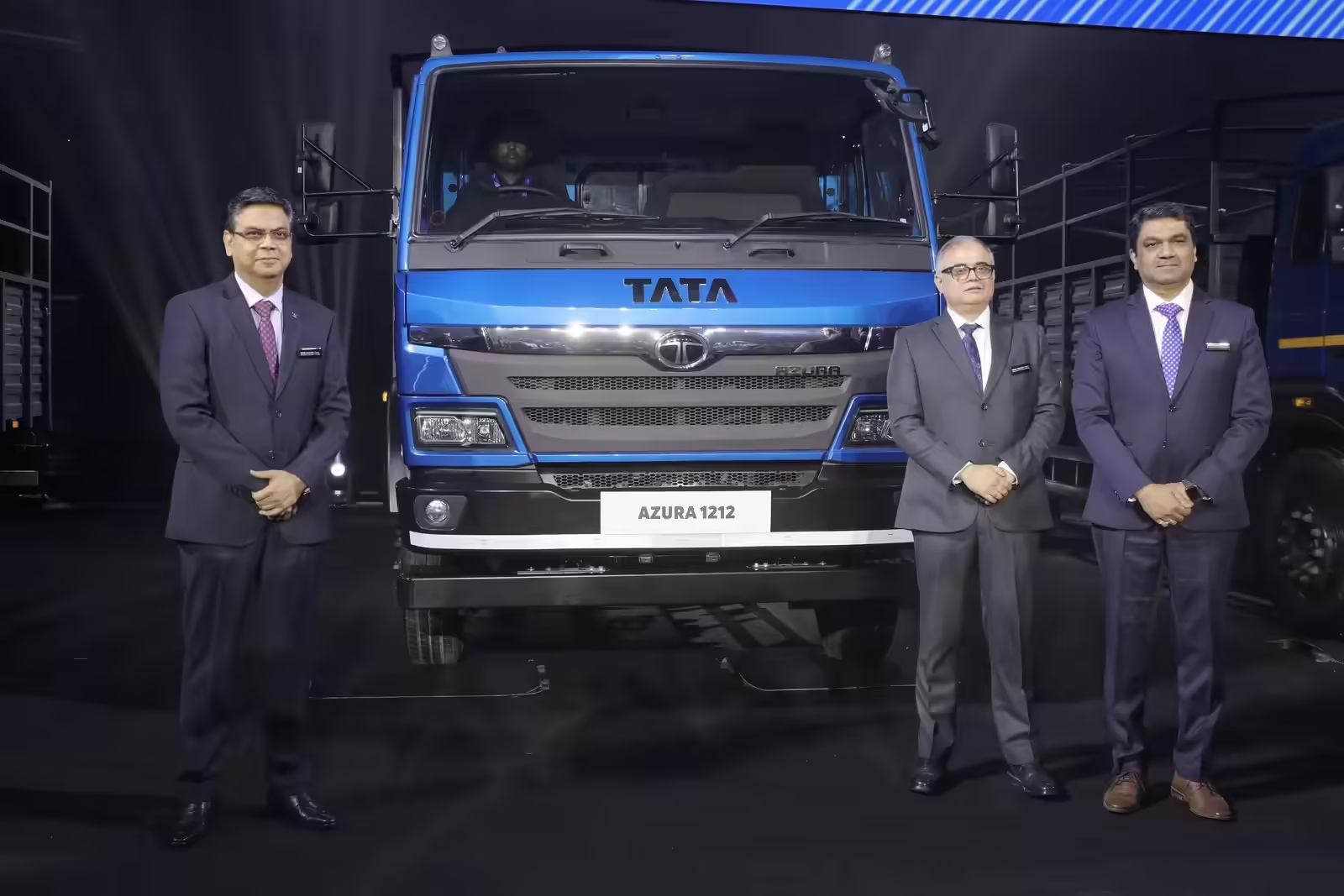
A key highlight of the new lineup is the introduction of the Azura series, which marks Tata Motors’ fresh push in the intermediate and light commercial vehicle segment ranging from 7 to 19 tonnes. The series is powered by a new 3.6-litre diesel engine and is aimed at a wide set of applications, including e-commerce logistics, FMCG distribution, and the transport of construction materials.
The Azura trucks feature a redesigned walkthrough cabin focused on driver comfort and day-long usability. Improvements in ergonomics, in-cabin storage, and ease of movement are intended to reduce fatigue and enhance productivity. In a segment where uptime and reliability directly influence operating margins, Tata Motors is positioning the Azura range as a balance of performance, comfort, and cost efficiency.
Electric mobility takes centre stage
Electric trucks form the core of Tata Motors’ product expansion, with the company unveiling its widest zero-emission truck portfolio to date under the Tata Trucks.ev brand. Built on the modular I-MOEV architecture, the electric range spans payloads from 7 tonnes to 55 tonnes, covering urban delivery, regional haulage, long-distance freight, mining, and construction use cases.
The lineup includes Ultra electric trucks designed for city and near-city operations, the Prima E.55S targeted at long-haul applications, and the Prima E.28K tipper developed for demanding mining and infrastructure environments. High localisation levels have been built into the development process, aligning with cost efficiency goals and supply chain resilience. The electric trucks are supported by a growing ecosystem that includes charging infrastructure, financing solutions, and the Sampoorna Seva 2.0 service platform to ease adoption for fleet operators.
Raising the bar on crash safety standards
Safety has emerged as a central pillar of Tata Motors’ commercial vehicle strategy. With the latest upgrades, the entire truck portfolio now complies with ECE R29 03 European crash safety norms. This makes Tata Motors the only Indian manufacturer to meet these standards across multiple truck segments.
The reinforced cabins are engineered to offer enhanced protection during frontal, rollover, and side-impact scenarios. In addition, the trucks are equipped with up to 23 active safety features, including adaptive cruise control, lane departure warning systems, and collision mitigation technologies. Real-time vehicle and driver monitoring through the Fleet Edge digital platform further strengthens safety oversight and operational discipline.
Efficiency improvements target lower operating costs
Beyond safety and electrification, Tata Motors has focused on improving efficiency and payload economics in its diesel portfolio. Engineering refinements have increased payload capacity by up to 1.8 tonnes in select models, while fuel efficiency gains of up to 7 percent have been achieved in certain variants. These improvements are aimed at directly enhancing operator profitability in a cost-sensitive market.
Upgraded drivetrains, including the advanced 6.7-litre Cummins engine, are designed to deliver better performance with lower total cost of ownership. The Fleet Edge Priority platform complements these gains by offering predictive maintenance, real-time vehicle health monitoring, and trip optimisation tools, helping fleet owners maximise uptime and asset utilisation.
Through this comprehensive launch, Tata Motors is aligning its commercial vehicle strategy with the evolving demands of India’s freight ecosystem, combining market recovery momentum with technology-led differentiation and long-term sustainability goals.
Also Read: Whizzo Secures $15 Million Series A to Accelerate Global Expansion and Advanced Textiles