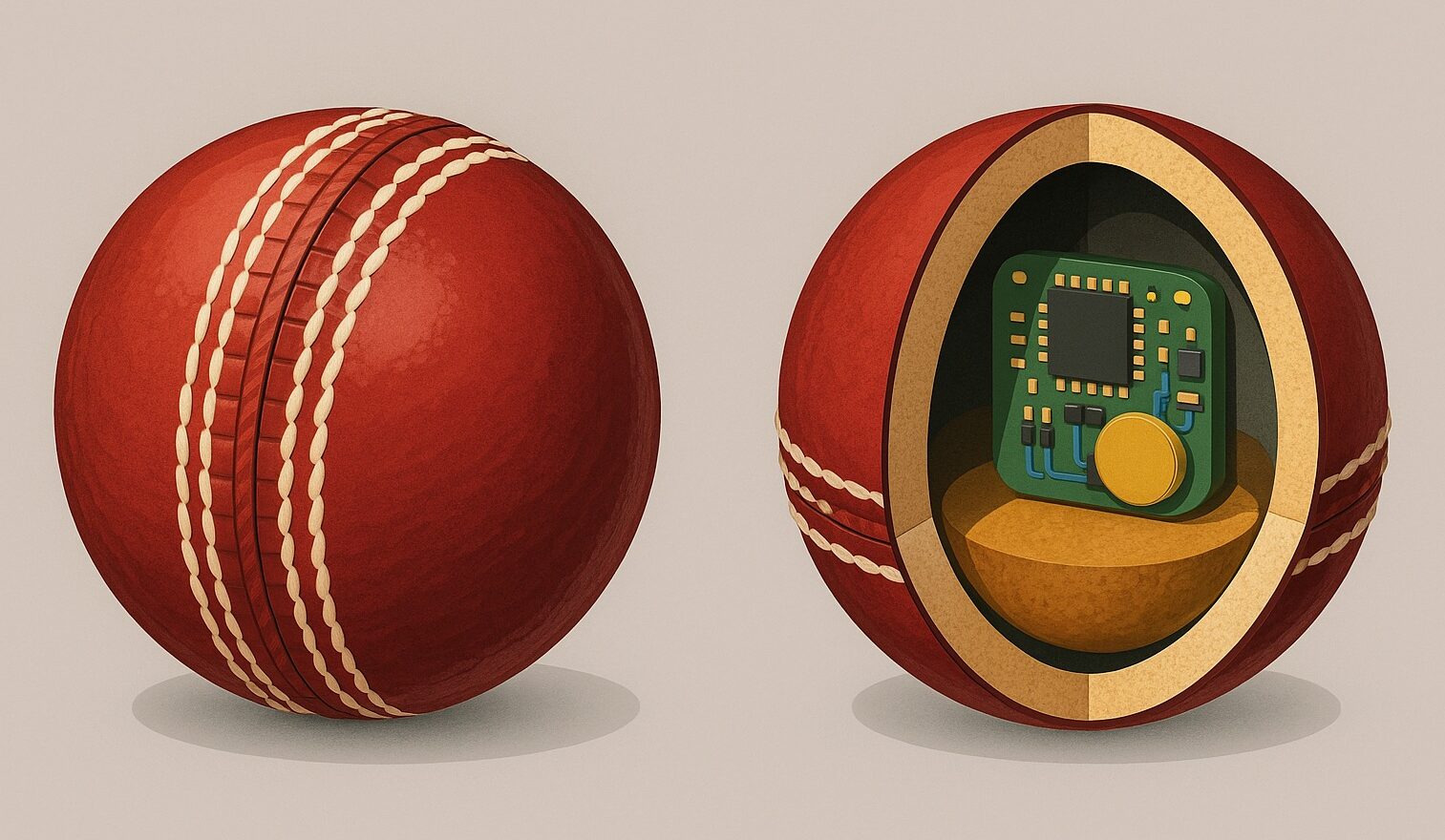
A wave of innovation is approaching the pitch, and much of the early conversation has been shaped by sports tech entrepreneur Siddharth Gajera, whose recent post frames the smart cricket ball as a turning point for performance analysis, officiating, and integrity in the game. He notes that while some posts credit a “German company,” a leading effort in this space is the Australian collaboration between Kookaburra and Sportcor, a correction that helps keep the debate grounded in facts shared so far.
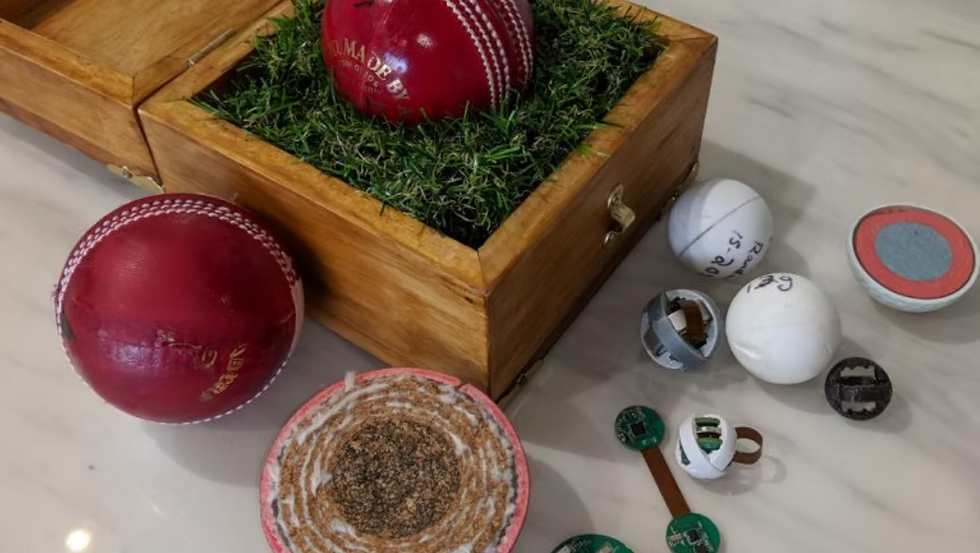
What is a smart cricket ball really?
At its core, the smart ball embeds sensors that can relay real-time readings, speed, spin (RPM), seam angle, and trajectory. Instead of relying solely on broadcast tools or post-match breakdowns, this is data from the ball itself, captured as the delivery happens. The effect: a single object becomes both equipment and instrument, turning every ball into a data point.
Why it matters: three dimensions of impact
1) Real-time analytics for coaching
For coaches and analysts, a smart ball could deliver live, granular feedback on a bowler’s release and evolution over spells, think seam presentation, RPM trends, and pace drops. That shortens the loop between trial and correction, helping refine run-ups, grips, and wrist positions with evidence rather than instinct alone.
2) Sharper, faster officiating
Because the ball is the source of truth, it could assist in no-ball detection and enhance ball-tracking for decision reviews. That doesn’t remove the umpire; it strengthens the decision framework with objective, on-the-spot information, potentially speeding up calls that currently require multiple replays.
3) Integrity and tamper alerts
With embedded sensors, a smart ball can register anomalies consistent with tampering, raising flags before damage to the contest is done. Cricket’s long battle with fairness stands to gain from a tool that can’t “look away.”
The state of play clearing the fog
Early commentary sometimes attributes breakthroughs to a “German company,” but as Gajera points out, the prominent initiative publicly associated with this concept is the Kookaburra–Sportcor collaboration in Australia. That’s important context: it keeps credit aligned with the work described so far and avoids muddying the waters around origin claims. Regardless of provenance, the essential idea remains the same, ball-native data enabling better cricket.
Will it change how we watch and play?
Almost certainly. Imagine broadcast graphics that don’t just show outcome, but cause, how much the seam tilted at release, how the revs built drift, and why a particular yorker dipped late. For players, that’s insight to train smarter. For spectators, that’s storytelling with substance.
It’s a fair worry, and it echoes every technological shift in sport. The counterpoint is that a smart ball doesn’t bowl the over, it records it. Skill, nerve, and craft remain human; the numbers are simply a clearer mirror. If anything, transparent data may deepen appreciation for the subtle arts, why one wrist-position beats another, how micro-adjustments unlock late movement.
Sensible guardrails
If and when smart balls enter competitive play at scale, stakeholders will still need clarity on:
- Data access and privacy: who sees what, and when.
- Standardization: consistent ball specifications and approved data protocols.
- Role definition: tech as assistive, not determinative, in officiating.
These aren’t barriers; they’re the homework that turns promise into practice.
Far from erasing the human element, it could showcase it more clearly than ever, every wobble, every rev, every late dip, measured from the only place that truly knows: the ball.
Also Read: What Startups Often Get Wrong About Building, And How to Fix It