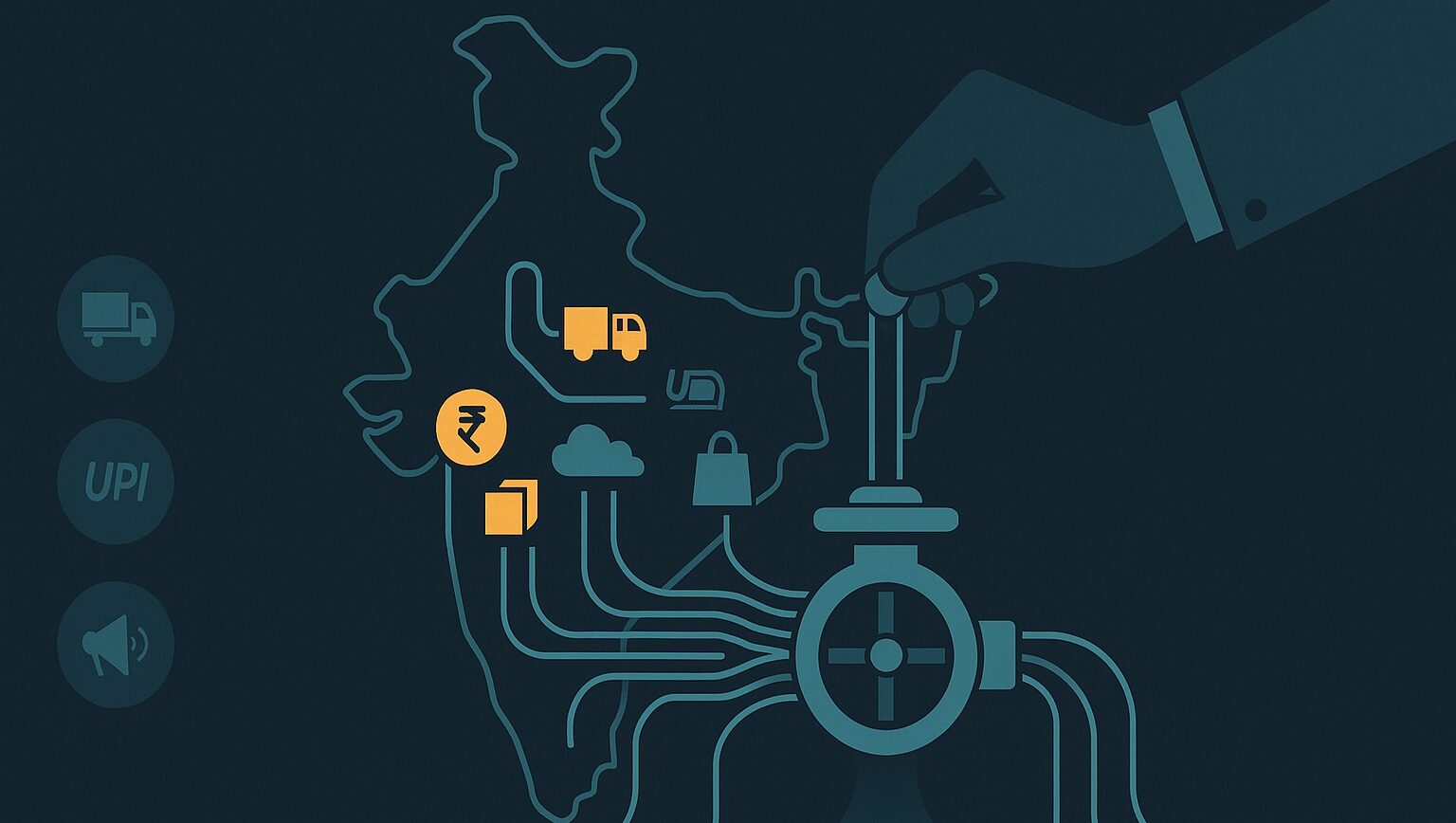
India loves to count unicorn startups. Every funding round and every billion-dollar valuation makes headlines. But beneath the glamour lies a quieter story: the rails that actually carry startup growth, payments, logistics, cloud, even OTP delivery, are controlled by a handful of players. These are the silent monopolies that don’t sell to consumers directly but tax every founder trying to build the next big thing.
1. Payments: UPI’s Open Highway, Few Tolls
UPI was designed as an open, zero-MDR network. In practice, two apps dominate customer transactions. Startups quickly learn that if one app hiccups, conversions fall instantly. Gateways such as Razorpay, PayU, and Cashfree further concentrate flows.
The Reserve Bank of India’s compliance actions in 2023–24 showed how fragile this layer can be. When a single gateway faced scrutiny, thousands of merchants scrambled. NPCI’s monthly UPI statistics confirm app-level concentration, one or two players consistently control more than 70% of traffic.
Lesson: Always integrate two payment gateways and track failure codes by app, not just aggregate success rates.
2. Ads: Two Giants Sell You Your Users
Customer acquisition costs are the heartbeat of any startup, but most of that spend goes to two global advertising giants. If an auction algorithm changes or a policy shifts, CAC balloons overnight.
GroupM and DEXA reports show that over 80% of India’s digital ad spend flows through a duopoly. Founders often discover too late that their budgets are essentially hostage to the same two dashboards.
Lesson: Treat CAC like currency risk, hedge it. Build at least one non-auction channel such as affiliates, retail media, or community.
3. Logistics: Few Backbones, Many Dependents
For D2C brands, last-mile delivery is the make-or-break layer. Delhivery, Xpressbees, and India Post dominate national coverage. Aggregators like Shiprocket add flexibility, but under the hood, the same large backbones carry most parcels.
Returns (RTO) quietly destroy margins, and surcharges rise during festive spikes. Delhivery’s annual report shows steady growth in volume share, underscoring how dependent sellers are on a handful of carriers.
Lesson: Split lanes by PIN code across multiple providers. Monitor RTO patterns weekly.
4. OTPs: One-Time Pinch
An OTP is often the last step before conversion. Yet, A2P messaging in India is concentrated among a few enterprise vendors, listed firms like Tanla Platforms and Route Mobile handle billions of messages. TRAI’s DLT framework tightened compliance, raising switching costs.
A single vendor outage can freeze thousands of sign-ups in real time. Startups that don’t dual-route OTPs discover this the hard way during peak campaigns.
Lesson: Use two vendors, add WhatsApp or email fallbacks, and monitor delivery rates by minute, not by day.
5. Quick Commerce & Food: Dinner Belongs to Two Apps
Zomato and Swiggy now own not just restaurant discovery but, through Blinkit and Instamart, quick commerce delivery too. For small F&B brands, that duopoly sets take rates and visibility.
Zomato’s FY24 report revealed Blinkit overtook restaurant food in revenue growth. Sellers complain that once platform take rates cross 25-30%, margins collapse unless they build direct channels.
Lesson: Don’t let your unit economics depend on platform goodwill. Push subscriptions and direct orders early.
6. Cloud: The Gravity Well
At launch, credits from AWS, Azure, or GCP make infra look cheap. But egress fees and managed services later trap startups. Migrating workloads mid-scale often costs more than staying put.
With most developer talent orbiting the same three hyperscalers, switching pain only grows. Indian alternatives exist in storage and CDN, but adoption is still niche.
Lesson: Keep infra portable. Audit egress fees quarterly and design workloads that can move.
7. KYC & Data Pipes: Licensed Bottlenecks
In fintech, KYC and data pipes are intentionally concentrated. Aadhaar eKYC, CKYC, and account aggregators are tightly regulated. Only a handful of NBFC-AAs, like CAMSfinserv or Finvu are licensed.
This builds trust but also fragility: if one AA or CKYC node slows down, onboarding halts across the ecosystem. RBI and Sahamati dashboards make this dependence visible.
Lesson: Always design a fallback, PAN+video KYC, multiple AA integrations, or hybrid onboarding.
More than Just Irritants
- Add an invisible tax: small fees, delays, or surcharges that pile up across layers.
- Concentrate systemic risk: when one provider sneezes, a whole sector catches a cold.
- Escape public debate: policy and media focus on unicorn valuations, not vendor concentration.
What a Healthier Map Could Look Like
- Interoperability by default: like NPCI’s share-cap rules for UPI apps.
- Procurement that rewards redundancy: VCs should push founders to dual-vendor critical services.
- Public dashboards: if regulators published uptime or failure rates by provider, startups could price risk better.
- Support local challengers: adopting credible Indian infra alternatives gives bargaining power back to startups.
Every founder dreams of building a moat. But if your payments, logistics, ads, or OTPs depend on just two vendors, you don’t have a moat, you have a lease. India’s startup story is booming, but unless we confront these silent monopolies, the innovation tax will keep rising.