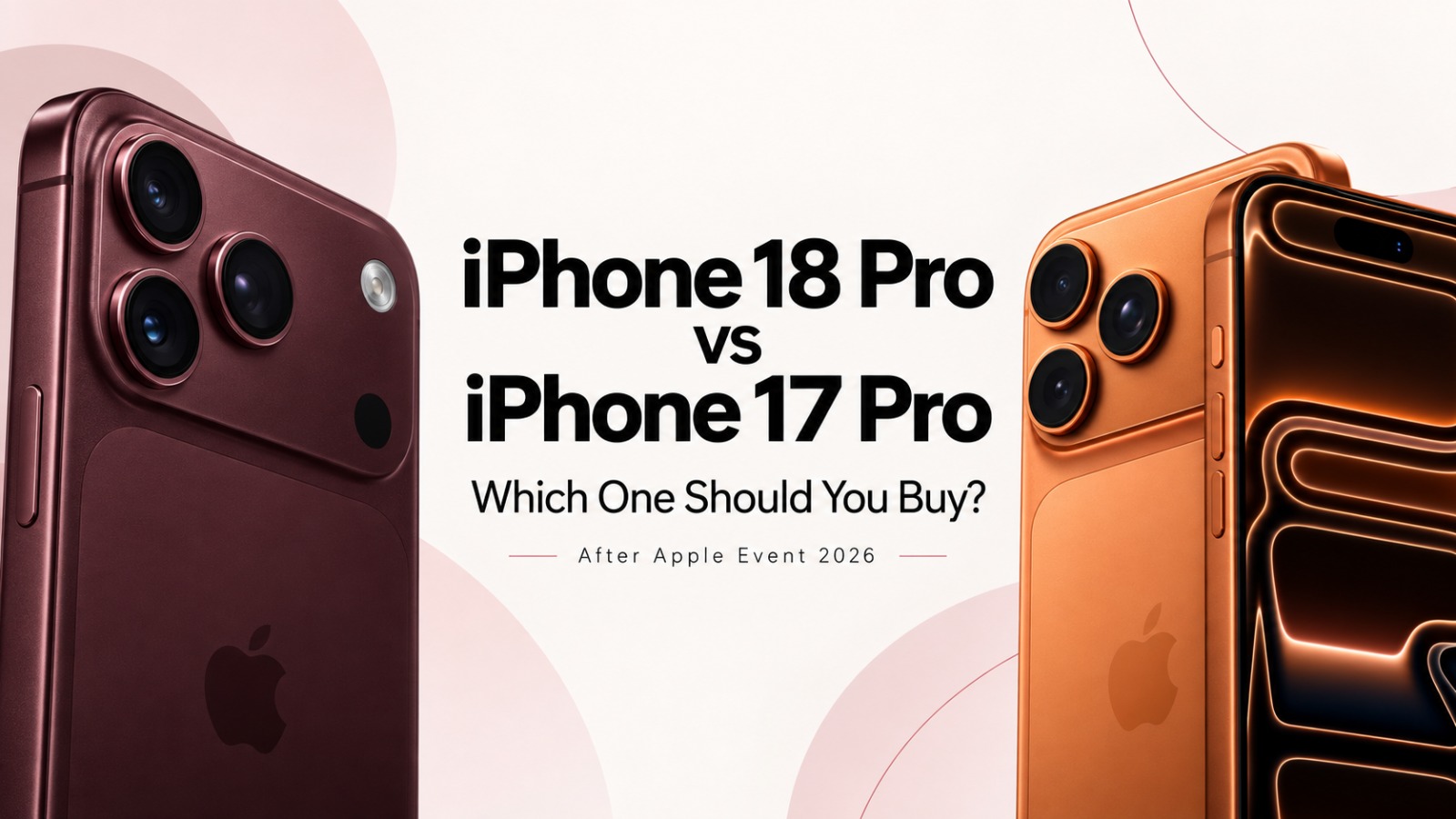
Apple’s iPhone 18 Pro arrives with a familiar upgrade question attached to it: are the new camera controls, faster chip and efficiency gains enough to justify paying another $100 over the iPhone 17 Pro?
The answer is not particularly simple this year.
Apple introduced the iPhone 18 lineup at its annual iPhone event on September 9, alongside its first foldable iPhone, new AirPods and the Apple Watch Series 12. The iPhone 18 Pro is the newer and more capable device on paper, but the iPhone 17 Pro remains a credible alternative for buyers who care more about value than having the latest hardware.
The price difference puts that choice into perspective. The 256GB iPhone 17 Pro is priced at $1,099, while the iPhone 18 Pro starts at $1,199. That makes the decision a direct $100 trade-off between a proven one-year-old flagship and Apple’s latest Pro model.
iPhone 18 Pro puts more control in the camera
One of the clearest hardware changes comes from the camera system.
The iPhone 18 Pro has a 48MP Fusion main camera with variable aperture. The system allows the aperture to be adjusted manually through a rotor mechanism, giving photographers more control over depth of field while retaining low-light capability.
Apple has also expanded manual photographic controls beyond aperture. The iPhone 18 Pro allows users to adjust shutter speed, which can affect motion blur and image stability, while additional controls let photographers change the texture and grain of images.
For someone who regularly shoots photos or video on an iPhone, these changes could be more meaningful than the usual year-to-year camera update. They give users more direct control over how a photograph is captured rather than relying entirely on automatic processing.
A20 Pro brings the biggest performance argument
The other major reason to consider the iPhone 18 Pro is inside the phone.
Apple’s A20 Pro chip includes a seven-core GPU and a 32-core neural engine. Its packaging takes inspiration from Apple’s M-series chips, while the processor connects directly to the phone’s thermal chamber in an effort to improve efficiency. The neural engine is described as delivering twice the AI processing power of the A19 Pro.
The iPhone 18 Pro is also reported to deliver 40% faster performance than the iPhone 17 Pro and provide 24 hours of use on a single charge.
Those figures make the A20 Pro one of the most substantial distinctions between the two generations. Whether that performance difference will feel equally significant during normal daily use is something that will become clearer as the new phone reaches more users.
The iPhone 17 Pro already has a year of real-world testing behind it
The iPhone 17 Pro has one advantage its successor cannot immediately match: a full year of use and testing.
In ZDNET’s 30-minute general usage battery test, which included 10 minutes each of social media, gaming and Google Meet video calling, the iPhone 17 Pro retained 97% battery.
In a separate one-hour video playback test, the iPhone 17 Pro retained 95% battery, while the iPhone 17 Pro Max retained 97%.
That track record matters for buyers who would rather choose a device with established performance than make a purchase largely on launch specifications.
Resale value gives the older Pro another argument
An unusually interesting part of the comparison is depreciation.
Figures cited from UK reseller Compare and Recycle show that the iPhone 17 Pro lost an average of 40.8% of its resale value during its first year. The standard iPhone 17 recorded a 40.6% decline. By comparison, the 2TB iPhone 17 Pro Max posted a 58.4% first-year loss, while the iPhone Air fell 60.4%.
Earlier generations had shown a less favourable pattern. The iPhone 13 lost 40% of its resale value after a year, while the iPhone 14, iPhone 15 and iPhone 16 each declined by more than 50% in their first year.
There is no equivalent first-year resale figure for the iPhone 18 Pro yet, making depreciation one area where the newer model remains an unknown.
Apple is also changing the look, but not dramatically
The iPhone 18 Pro will be available in Deep Black, Silver, Glacier and Burgundy. Glacier carries a light-blue finish, while Burgundy introduces a deeper red tone. Apple has also matched the rear aluminium finish to the colour of the chassis.
These changes give the latest generation a distinct visual identity, although colour alone is unlikely to settle the upgrade decision for most existing Pro users.
So, is the iPhone 18 Pro worth the extra $100?
For someone already using an iPhone 17 Pro, the case for upgrading rests primarily on three areas: manual camera controls, the A20 Pro processor and the latest efficiency improvements.
The differences are real, but they do not make the iPhone 17 Pro suddenly outdated. ZDNET’s assessment describes the iPhone 18 Pro improvements in performance, battery efficiency and camera capability as moderate, while suggesting the display, overall design and everyday experience will remain broadly similar.
That leaves the iPhone 17 Pro in an interesting position. It costs $100 less, has a year of battery testing behind it and has recorded a 40.8% first-year resale decline. The iPhone 18 Pro, meanwhile, offers the more ambitious camera system and substantially newer processing hardware.
For photographers and buyers who specifically want the A20 Pro, the additional $100 has a clear purpose. For users who are satisfied with the iPhone 17 Pro’s performance, the older flagship still has a strong case for staying exactly where it is.