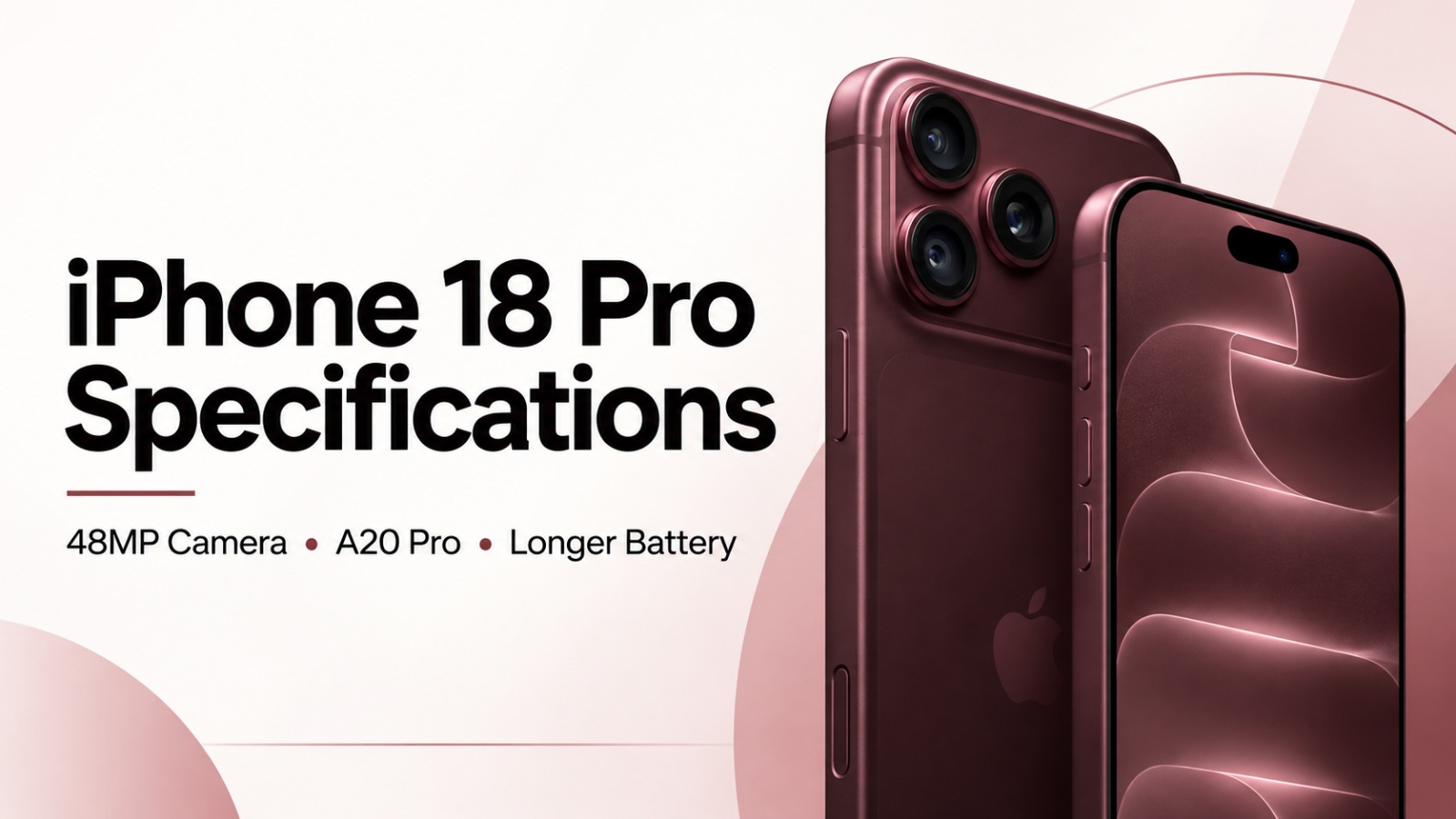
Apple has taken the wraps off the iPhone 18 Pro and iPhone 18 Pro Max, and this year’s specifications point to changes in areas that are easier to quantify than a simple design refresh. The biggest additions include a 48MP main camera with a physical variable aperture, the new A20 Pro processor, a redesigned thermal system, a smaller Dynamic Island and new battery configurations.
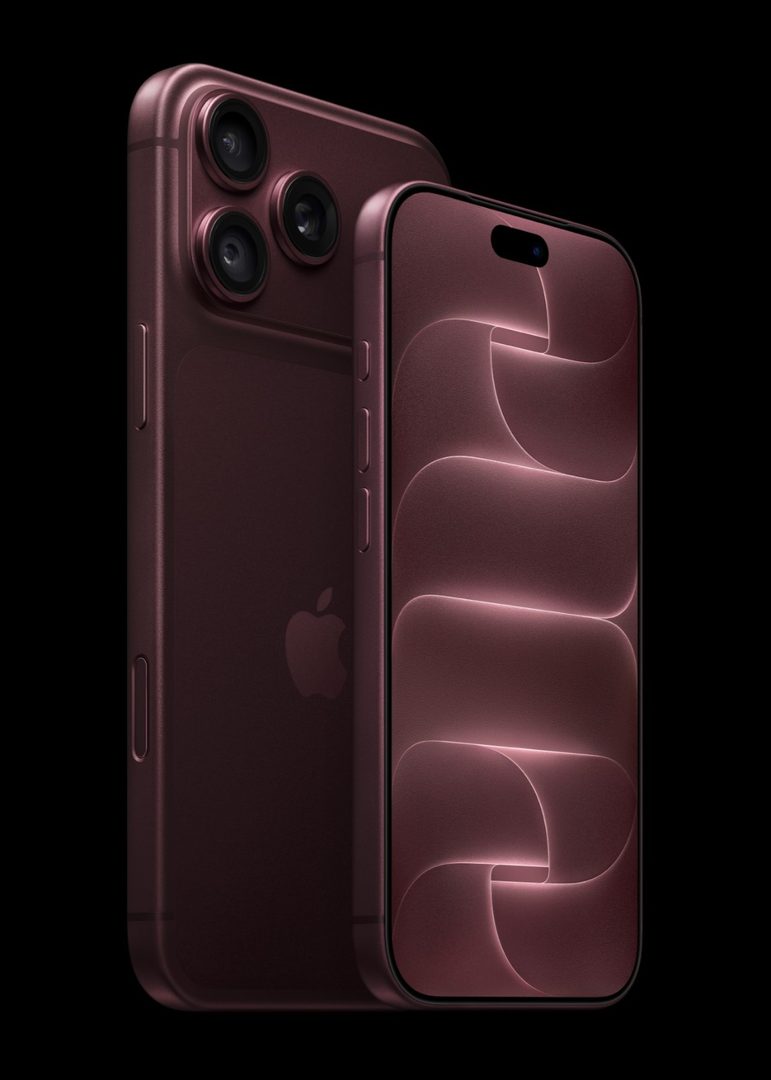
The camera is particularly unusual. Instead of relying only on computational photography to alter the look of a shot, Apple has fitted the iPhone 18 Pro’s main camera with six laser-cut aperture blades that physically move between different aperture settings. It is the first time Apple has brought aperture control to an iPhone.
iPhone 18 Pro specifications at a glance
| Specification | iPhone 18 Pro details |
|---|---|
| Processor | A20 Pro |
| CPU | 6-core CPU |
| GPU | 7-core GPU |
| Neural Engine | Dual 16-core Neural Engine, 32 cores in total |
| Main camera | 48MP Fusion Main camera |
| Aperture | Variable aperture with four manually selectable settings |
| Connectivity | Wi-Fi 7, Bluetooth 6, Thread |
| Cellular modem | Apple C2 modem |
| Software | iOS 27 |
| AI | Apple Intelligence and Siri AI beta |
| Storage | 256GB, 512GB, 1TB, 2TB |
| Colours | Burgundy, Glacier, Silver, Black |
| Video playback | Up to 36 hours on eSIM-only iPhone 18 Pro |
| Starting price in US | $1,199 |
The camera gets a physical variable aperture
The headline camera specification is still 48MP, but the more important change sits inside the lens.
Apple says the Fusion Main camera now uses a variable aperture controlled by six laser-cut blades and a new rotor mechanism. The system can automatically adjust the aperture depending on depth of field and available light. Users who want more control can manually choose between four aperture settings inside the Camera app.
At its widest, the main camera can open to f/1.48, which Apple says helps with low-light photography. The company also says the new sensor and computational imaging pipeline improve detail, including in group photographs where people farther from the camera can otherwise fall out of focus.
The Camera app is also getting a new Pro controls interface. It allows manual adjustment of aperture, shutter speed and white balance, while a histogram can be used to check exposure. That makes the iPhone 18 Pro’s camera upgrade as much about control as image resolution.
For video, Apple says Cinematic effects can be applied after recording to footage captured at up to 60fps. Time-lapse video can now be recorded in 4K with Dolby Vision HDR, while Audio Mix gets updated algorithms and the ability to isolate music.
Apple Reference Image adds a new authenticity layer
One of the less obvious iPhone 18 Pro specifications could end up being significant for photographers and journalists.
Apple has introduced Apple Reference Image, an opt-in feature that uses the main camera sensor to sign the data it captures. In Reference mode, signed sensor data is processed into what Apple describes as an unalterable reference image. That reference can then be viewed beside the finished photograph to help determine whether changes have been made.
Apple also plans support for the SynthID standard later this year to help identify some AI-generated or AI-edited imagery.
There are regional restrictions. Apple says Reference Image capture will not be available at launch in the European Union, while the feature will not initially be available in China because of regulatory requirements.
A20 Pro moves to a 2nm process
At the heart of both Pro models is Apple’s new A20 Pro.
Apple says the chip is built using a 2-nanometre process and offers 50 percent more memory bandwidth than the A19 Pro. It combines a six-core CPU with a seven-core GPU, with Apple claiming GPU performance of up to 40 percent faster than the previous A19 Pro.
AI processing gets its own substantial hardware upgrade. A20 Pro includes a Dual 16-core Neural Engine, giving it 32 cores in total. Apple says this provides twice the AI processing power of A19 Pro and is intended for on-device AI workloads as well as computational photography.
These are Apple’s own performance comparisons rather than independent benchmark results.
New vapor chamber targets sustained performance
Apple has also changed how heat moves away from the processor.
The A20 Pro package positions the silicon die alongside the memory rather than placing the memory directly in the chip’s thermal path. The processor can then connect directly to a redesigned vapor chamber.
Apple says the chamber uses new materials and has three times the surface area of the system used in the iPhone 17 Pro. The company claims the combination can deliver up to a 40 percent improvement in sustained performance over the previous generation.
Wi-Fi 7, Bluetooth 6 and Apple’s C2 modem
Wireless hardware has also been refreshed.
The iPhone 18 Pro models use Apple’s N1 networking chip, which supports Wi-Fi 7, Bluetooth 6 and Thread. Cellular connectivity is handled by the new C2 modem system.
Apple says C2 provides faster upload speeds than C1X while using 15 percent less energy. The modem also supports mmWave in the United States.
Smaller Dynamic Island, but it can show more
Apple has reduced the size of the Dynamic Island while changing what it can display.
The redesigned version can show up to three Live Activities simultaneously, while continuing to house the technology required for Face ID authentication.
That is a relatively small specification on paper, but it suggests Apple is trying to use the space for more information rather than simply shrinking it.
iPhone 18 Pro battery life and charging
Battery figures vary depending on the model and SIM configuration.
Apple says the eSIM-only iPhone 18 Pro can provide up to 36 hours of video playback, while the eSIM-only iPhone 18 Pro Max reaches up to 45 hours.
The difference matters because eSIM-only versions use space previously occupied by the physical SIM hardware for a larger battery. Apple says this adds two hours of video playback compared with configurations that retain the physical SIM arrangement.
For charging, Apple claims the iPhone 18 Pro can reach 50 percent in around 15 minutes using wired charging. Wireless charging can reach 50 percent in around 30 minutes under Apple’s stated test conditions.
Apple’s testing notes specify that its wired fast-charge test used a 60W-capable USB-C connection and compatible power adapter, while the required charging accessories are sold separately. Actual charging times can vary.
iOS 27 and Siri AI
The iPhone 18 Pro ships with iOS 27, which brings Apple Intelligence and the new Siri AI experience.
Siri AI is launching in beta and can use personal context across areas such as messages, email and photos. Apple also describes onscreen awareness, the ability to act on content displayed on the phone, and a Siri mode inside the Camera app.
Apple says Siri AI will initially be available in English, with French, Japanese, Korean, Portuguese and Spanish support scheduled for October. Some features and regional availability will differ, and Siri AI will not initially be available in the EU on iOS.
Storage, colours, price and release date
Apple is offering the iPhone 18 Pro and iPhone 18 Pro Max in 256GB, 512GB, 1TB and 2TB storage options.
Both models come in four finishes: burgundy, glacier, silver and black. The iPhone 18 Pro starts at $1,199 in the US, while the iPhone 18 Pro Max starts at $1,299.
Pre-orders begin on September 12, with general availability starting September 18 in more than 65 countries and regions, including India, the US, UK, Australia, Canada, Japan and the UAE. A further 20 countries and regions will get the phones from September 25.
Taken together, the iPhone 18 Pro specifications show Apple putting much of this generation’s hardware work into the camera, processor and thermal system rather than relying on a single headline feature. The six-blade variable aperture is the clearest example. It gives the camera a physical mechanism for changing how light enters the lens, while the A20 Pro, new vapor chamber and larger eSIM-only battery configurations address performance and endurance from different directions.
Also Read: Apple Event 2026 LIVE: iPhone 18 Pro Launch, Price, Features and Biggest Announcements