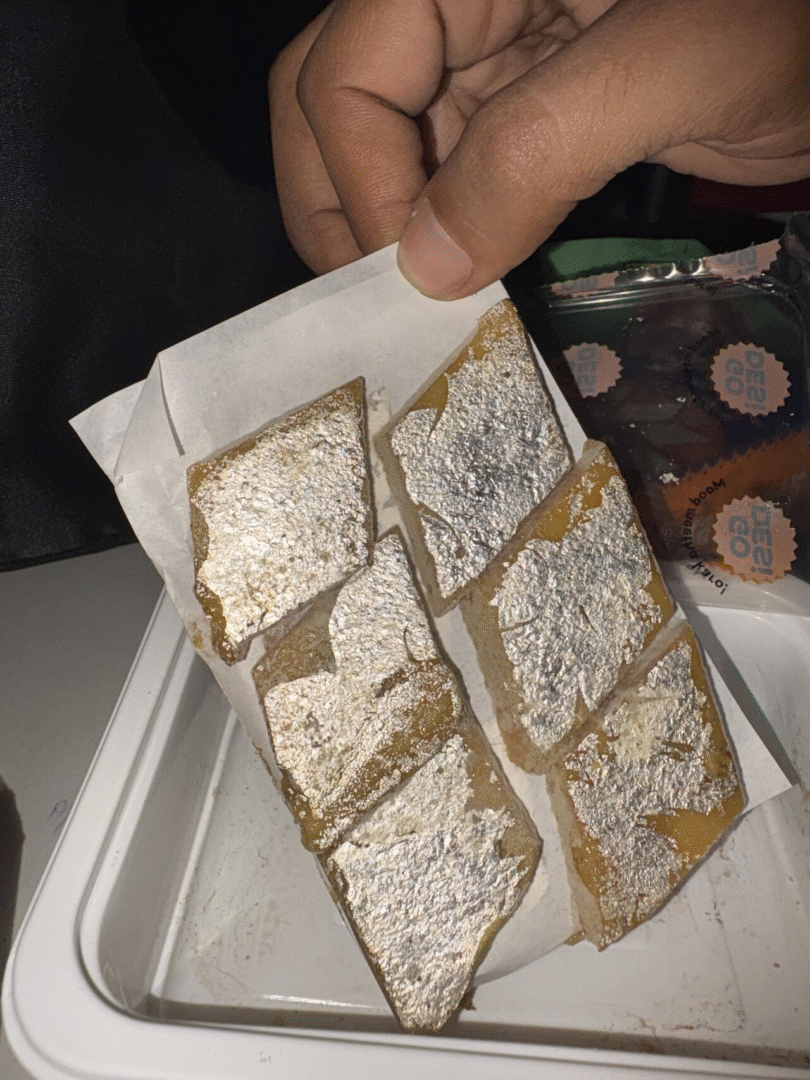
Blinkit, one of India’s fastest-growing quick-commerce platforms, intended to spread festive goodwill with complimentary Diwali sweets for its customers. But for Subhodeep N., a ₹12,000+ order turned into a nightmare when the gifted sweets were fungal-infected.
As an alternative to a direct explanation of what went wrong, Blinkit is said to have given a ₹50 token of compensation, a gesture that was generally called insulting and tone-deaf. A great number of people think that it is not just an error but rather the indication of a company whose main interest is profit rather than people.
Also Read: Underneat.in’s Costly Pause: Why a ₹70 Lakh Loss Became a Trust-Building Bet
Public Outcry: Customers Call Out Negligence
Several LinkedIn users and customers joined the outrage, highlighting a pattern of carelessness:
- S K R Chandran wrote:
- “Blinkit has made a record of most faulty and worst product deliveries. Must be honored with Worst B2C award… their main motto is loot people as much as possible with value to customers. If any Donald Trump award existed, its photocopy must be given to Blinkit.”
- Amitesh Pandey commented:
- “Aaj Insan apahij ho chuka hai apne hi खाने-पीने ki chijen dibba band companiyon se khareed raha hai aur apne sehat ke sath khilvad kar raha hai… jitni bhi food companies hain ya delivery companies hai, un sabhi ka yahi hal hai… product ke naam per sirf logon ko murkh banate hain aur inka kuch bhi kaam nahin hai.”
- Yaman Mamgain added:
- “I have seen many people not trust Blinkit with expensive purchases. I would highly suggest the UX team to look into this matter.”
- Sankalp Shrie said:
- “₹12,000 worth of Q-com purchase. That’s huge ticket size 👏 and being treated like this is seriously Blinkit.”
- Amar Naskar added:
- “Waww, yeh kaam to sirf ekhi kar sakta hai Blinkit.”
- Amit Patil noted:
- “Blinkit in the pursuit of profit, the company forgets the health of the public. As far as the government is concerned, all this happens in front of their eyes but the government also does nothing… This is the condition not only of Blinkit but almost all food companies.”
- Vikram S. shared:
- “Today same happened to me also.”
The overwhelming consensus suggests that customer health, satisfaction, and trust are secondary to sales and profit margins.
Blinkit Responds, But Is It Genuine?
After public outrage, Blinkit issued a LinkedIn statement:
“Hi Subhodeep, we sincerely apologize for the experience you’ve had. We truly regret that the complimentary sweets you received were not up to standard. We completely understand how disappointing this must have been. Please help us with your registered mobile number/order ID.”
Critics argue that the apology does little to address the real problem:
- No explanation for systemic quality control failures.
- No action plan to prevent future incidents.
- Comes after public backlash, not proactively.
Many see this as classic corporate damage control, words aimed at protecting the brand while avoiding real accountability.
High-Value Orders, Low Respect
Subhodeep’s order of over ₹12,000 is an example of how the profit margin is still the main concern of Blinkit, rather than the people. Just to be clear, even these big-ticket customers are literally thrown away as if they are of no value, with very little recompense for a severe quality failure.

This event is just one of the many reasons that the company is increasingly being perceived as one that prioritizes short-term sales over long-term trust and considers customers as its lowest priority.
Public Health and Systemic Negligence
Experts warn that such incidents pose broader public health risks. When profit is prioritized over safety, consumers are left vulnerable.
Amit Patil’s observation resonates: “In pursuit of profit, companies forget the health of the public”, a reality that, according to many, applies not only to Blinkit but across India’s quick-commerce and packaged food industry.
Rising Outrage: More Customers Report Expired Sweets
The controversy surrounding Blinkit’s product quality is widening as more customers share similar experiences online. Deepti Singh, another dissatisfied customer, recently took to LinkedIn to reveal that she too received expired sweets through the platform, echoing earlier complaints from other users. Her post quickly gained attention, drawing comments that reflected growing frustration among Blinkit’s customers.
Sandeep Jain strongly criticized the company, calling it the “worst ever” when it comes to maintaining product quality and customer trust. Echoing his sentiments, Sagar Dogra added, “Everyone is receiving these kinds of products. Wassup Blinkit?” The comment section soon filled with others sharing similar grievances, suggesting that this isn’t an isolated incident but a pattern of negligence that cuts across multiple orders.
What began as a few customer complaints has now snowballed into a public relations crisis, with consumers questioning Blinkit’s food safety checks, vendor accountability, and ethical responsibility. The recurring nature of these complaints indicates that Blinkit’s festive gifting initiative may have backfired, transforming a campaign meant to spread joy into a symbol of corporate carelessness and eroding consumer trust.
Corporate Ethics in Question
Despite offering a public apology, Blinkit is struggling with a major credibility problem. Both customers and people following the industry are not convinced that the company cares about quality, empathy, or culture, but rather that it just uses these kinds of festivals to attract more customers.
On this Diwali, the sugar controversy of Blinkit is a story that warns the audience about the dastardly nature of corporate greed in the profit chase, it says that most of the times, the ones who suffer are people and trust.
Also Read: E-Commerce Startup Meesho Gears Up for Blockbuster ₹4,250 Crore IPO