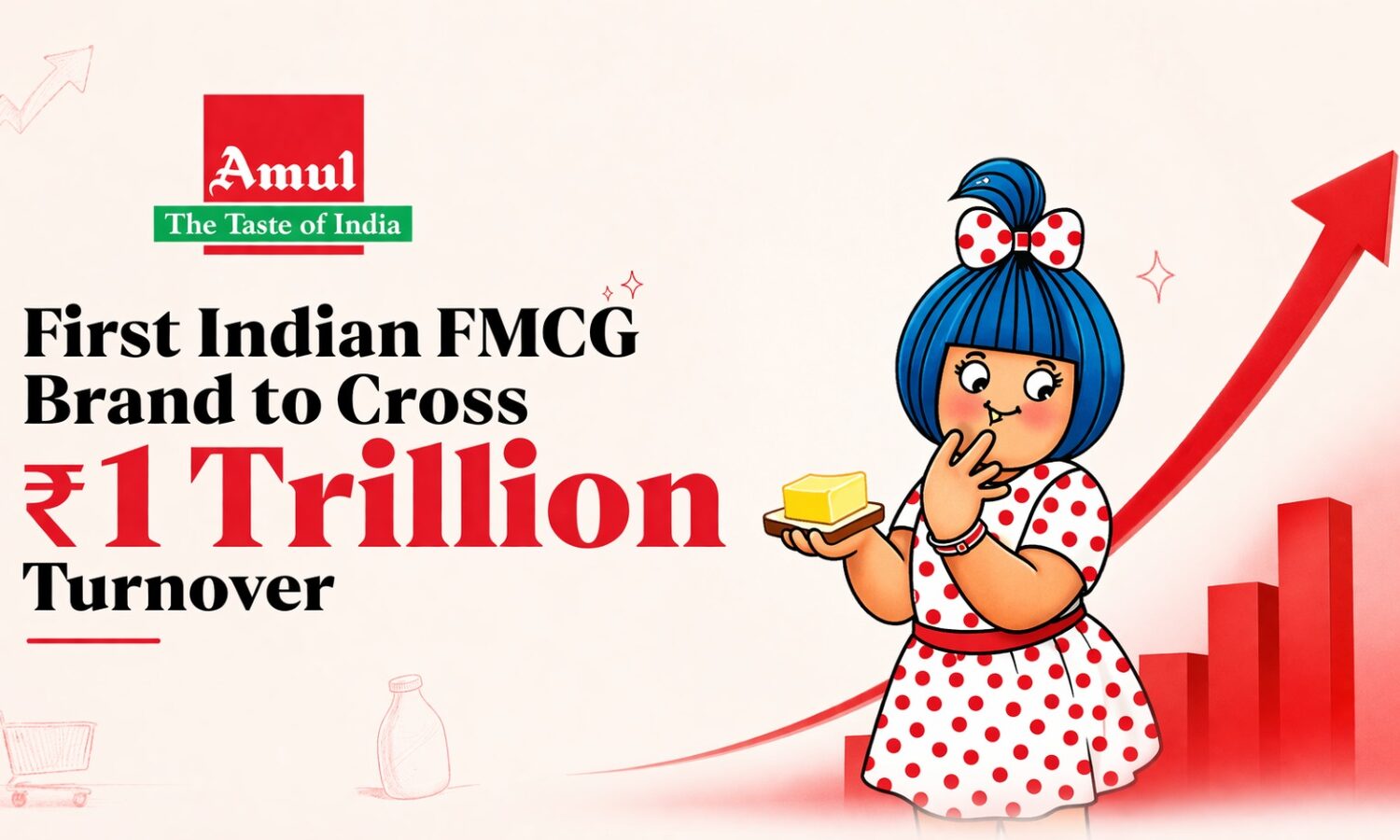
Amul has achieved a historic milestone by becoming the first Indian fast-moving consumer goods company to surpass ₹1 trillion in turnover. The achievement marks a significant moment not only for the brand but also for India’s broader FMCG landscape. The growth comes alongside a strong financial performance in FY26, with the company reporting an 11 percent year-on-year increase in turnover.
The scale of this milestone highlights Amul’s deep market penetration and consistent demand across product categories. It also reflects the steady rise of homegrown brands in a sector long dominated by multinational corporations.
Revenue Growth Reflects Strong Market Demand
Gujarat Cooperative Milk Marketing Federation, the marketing federation behind the Amul brand, reported sales of ₹73,450 crore for the financial year. This represents a growth of 11.4 percent compared to the previous year. The difference between GCMMF’s reported revenue and the overall turnover figure is attributed to the cooperative structure under which Amul operates.
District-level dairy unions and associated businesses such as cattle feed operations are not fully accounted for in GCMMF’s standalone revenue. As a result, the broader turnover figure offers a more comprehensive view of the economic activity generated by the Amul ecosystem.
Also Read: Anduril Secures $20 Billion U.S. Army Contract, Spotlight Turns to AI Defense Ecosystem
Expanding Reach Across India and Global Markets
Amul’s growth has been driven by a combination of deeper domestic penetration and expanding international operations. Within India, the company has focused on strengthening its distribution network, particularly in smaller towns with populations exceeding 5,000. This targeted expansion has allowed the brand to tap into previously underserved markets while reinforcing its presence in established regions.
At the same time, Amul has continued to build its global footprint. The company has expanded fresh milk sales into markets in Europe and the United States, signaling its ambition to compete beyond traditional export categories. Currently, the brand operates in more than 50 countries, reflecting a steady push toward global recognition.
The company has also outlined plans to enter 10 additional markets across Africa and Southeast Asia within the next year. This dual focus on domestic and international markets has helped diversify revenue streams while strengthening brand visibility worldwide.
Cooperative Structure at the Core of Success
A key factor behind Amul’s sustained growth is its cooperative model, which remains central to its operations. The network includes 18 district-level unions and approximately 3.6 million farmers. This structure enables efficient procurement, production, and distribution while ensuring that benefits are shared across the value chain.
The cooperative model allows for localized decision-making at the district level while maintaining the strength of a unified national brand. This balance has helped Amul remain agile in responding to regional demand patterns without compromising on scale.
The direct involvement of millions of farmers also ensures a stable supply chain and reinforces the brand’s connection to its rural base. This integration has been instrumental in maintaining product quality and consistency, which in turn supports consumer trust.
Sustained Growth Backed by Trust and Scale
Amul’s latest milestone is a result of consistent execution across multiple fronts, including supply chain management, product availability, and market expansion. The brand’s ability to combine scale with grassroots participation has set it apart in a competitive industry.
Consumer trust has played a crucial role in this journey. Over the years, Amul has built a strong reputation for quality and affordability, which continues to drive demand across urban and rural markets alike. At the same time, its expanding global presence reflects growing acceptance of Indian dairy products in international markets.
With a robust cooperative network, expanding distribution, and increasing global reach, Amul’s achievement underscores the strength of India’s dairy sector and the potential of cooperative-led growth models in the FMCG space.
Also Read: Seema Ahuja Signs Off from Biocon After Over 15 Years