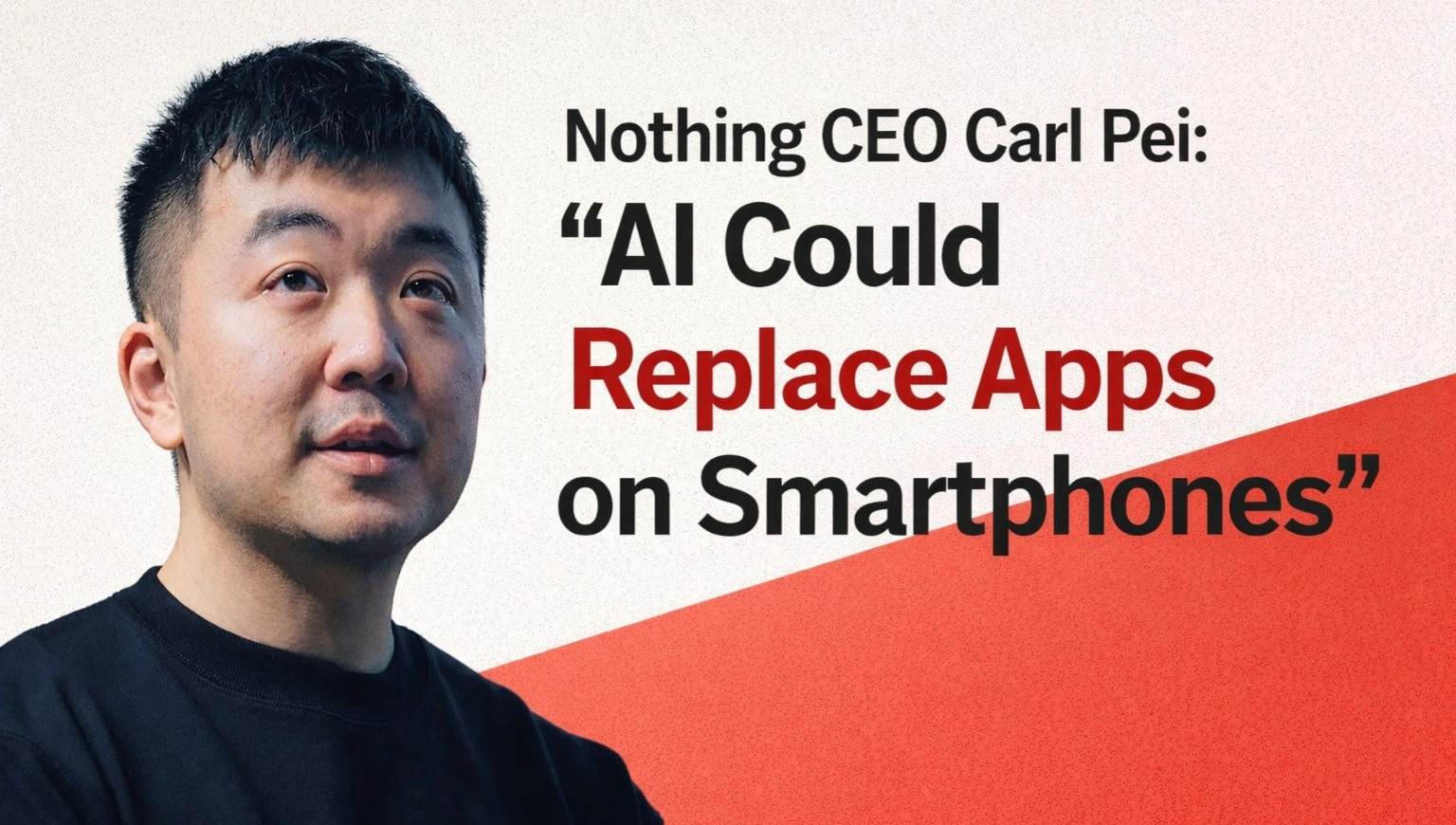
Carl Pei is not pitching a better camera or a faster processor this time. The Nothing CEO is making a bigger argument: that the smartphone itself may be headed for a fundamental reset.
Pei suggested that apps, long the basic building blocks of the smartphone experience, may eventually lose their central place as artificial intelligence becomes more deeply embedded in software.
The idea is striking because it goes beyond the now-familiar promise of AI features layered on top of existing phones. Pei’s argument is more disruptive. He is not saying apps will simply become smarter. He is saying the app-centric model itself could be challenged.
Pei said at SXSW, that “apps are going to disappear,” and warned that startups whose core value is tied mainly to an app could face disruption . That is a pointed message for a tech industry that has spent more than a decade building businesses around app downloads, app stores and screen-based engagement.
What Pei appears to be questioning is the design logic of the modern smartphone. As the report notes, he described the current structure of phones as largely unchanged for years: lock screens, home screens, app stores and separate full-screen apps that users move through one by one. In his view, that system is beginning to look dated.
His criticism is rooted in usability. Even simple real-world tasks, he argued, often require people to jump between multiple apps. That friction, in his telling, is where AI could begin to rewrite the rules. Instead of asking users to open, search, compare, switch and confirm across different interfaces, AI-led systems could increasingly interpret what a user wants and complete the task on their behalf.
Pei believes the first step in that shift will be basic AI assistance, such as handling straightforward requests like booking tickets. But he also appeared unimpressed by that stage, describing it as only an early and limited version of what is possible.
The more meaningful leap, he suggested, would come when software starts learning user behaviour over time, understanding preferences, offering suggestions proactively and acting without constant manual prompting.
That is where Pei’s vision becomes more ambitious. He described a future in which a phone or operating system knows the user well enough to infer intention and take action accordingly. He said that the future should be a system that understands intention and “just do it for you”.
This is not just a prediction about product design. It is also a statement about platform power. If AI becomes the primary interface between the user and the device, then the role of traditional apps could shrink. The phone would no longer function mainly as a folder of destinations. It would become an agent-like layer that decides, recommends and executes.
Pei also made another distinction that matters. As cited in the report, he argued that the future is not about AI agents merely using the same human-facing interfaces people use today. Instead, he said, new interfaces would need to be created for agents themselves. That suggests the coming shift, if it happens, may require deeper changes to software architecture, not just prettier AI assistants sitting on top of old systems.
For founders, product teams and investors, the message is hard to ignore: if AI becomes the layer through which intent is captured and executed, then the value of being “just an app” may not be enough in the years ahead.
For now, what Pei has offered is a thesis, not a timeline. But it is a thesis that cuts to the heart of how the smartphone business has worked for nearly two decades. And if he is even partly right, the next major battle in consumer tech may not be over who builds the best app, but over who builds the system users no longer need to think about at all.
Also Read: Pronto in Gurgaon: The Human Touch Behind a Laundry Service