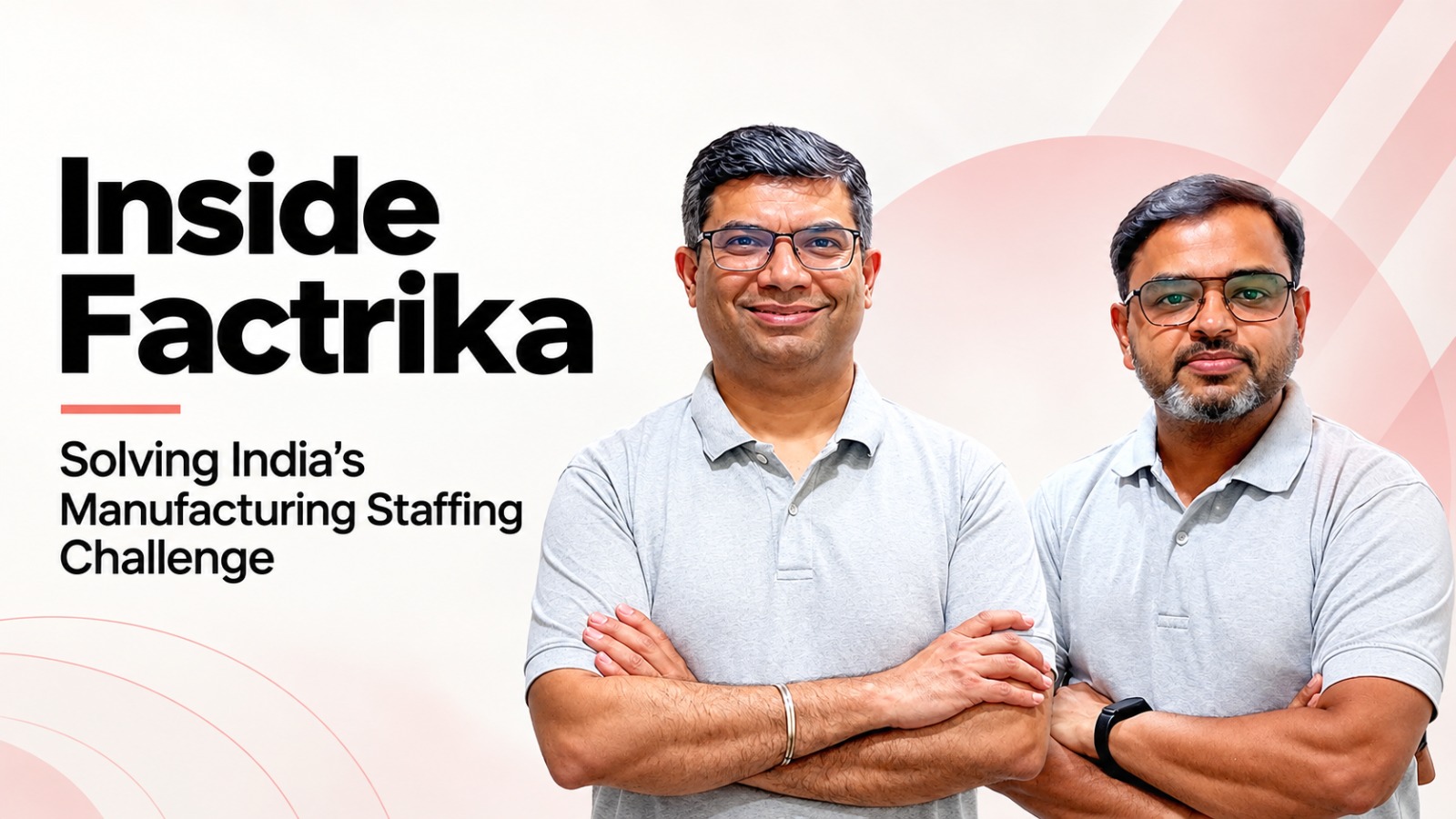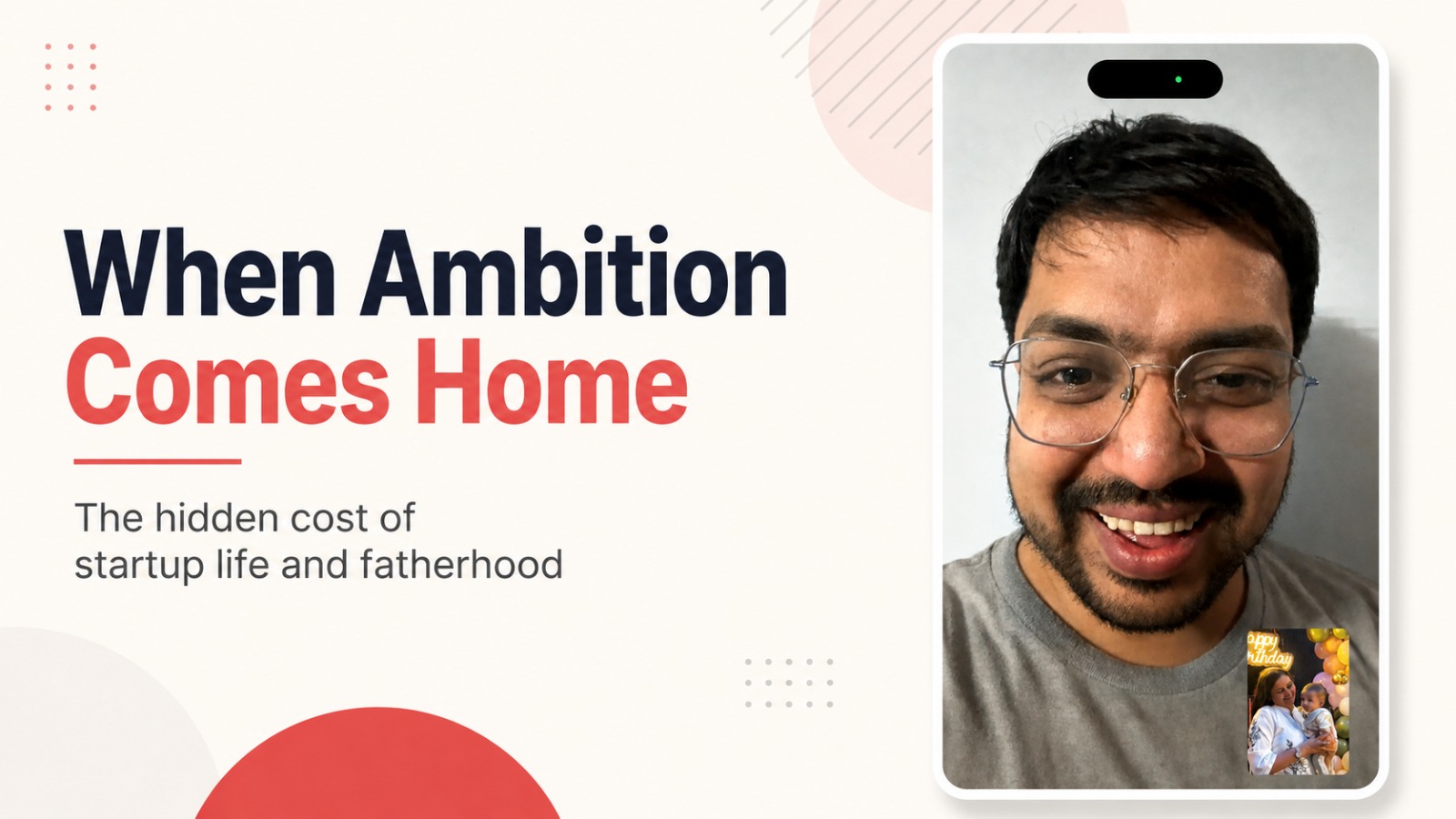
Fibr AI CEO Ankur Goyal has opened up about a deeply personal side of entrepreneurship: missing the early months of his son’s life while building a company across cities, conferences, and time zones.
In the polished language of startups, sacrifice is often packaged as hustle. Founders talk about late nights, missed weekends, investor meetings, customer calls, and the pressure to keep moving. But every once in a while, someone says the quieter part out loud.
For Ankur (AJ) Goyal, CEO of Fibr AI, that moment came after he returned home and realised his six-month-old son did not recognise him.
Goyal became a father six months ago. Soon after, work took him away for several months. March and April were packed with conferences, city-to-city travel, conversations with marketers, pipeline building, and the constant forward motion that comes with running a company.
At home, the situation was not simple either. His wife and newborn son were with him in the US, without a strong support system around them. With a three-month-old baby and no family nearby, Goyal made what he believed was the practical decision. He took his wife and son back to India so she could have family support, and then returned to the United States to continue building the business.
The decision may have made sense on paper. Emotionally, it came with a cost he is now speaking about openly.
For the next few months, Goyal watched his son grow through a phone screen. First smiles, first sounds, the small changes that mark the beginning of a child’s life, all came to him through what he described as a “6 inch window.” He would catch those moments in short gaps between meetings, across time zones, whenever work allowed him a few minutes.
Then he finally returned.
His son looked at him like a stranger.
It took three days before the child allowed his father to hold him.
That detail sits at the heart of Goyal’s post because it captures something rarely discussed in the founder journey. The loss is not always dramatic. Sometimes it is silent. Sometimes it is a child needing time to learn your face again.
Goyal does not frame this as regret. He does not say entrepreneurship was the wrong choice. In fact, he is careful to say the opposite. His point is not that ambition should be abandoned, but that people should speak more honestly about what ambition can demand from a family.
“I’m not saying entrepreneurship was the wrong call,” he wrote. “I’m saying it has a cost.”
The price he paid was one that was deeply personal to him. A baby coming up on a screen. A father trying to make himself present within the short windows of digital connection. A baby too young to comprehend absence but old enough to hesitate before his dad’s return.
Goyal also reflected on how this gap can widen with time. At six months, a baby may forget and remember quickly. But children do not stay six months old. The three days it took for his son to reconnect with him may become longer in the future if absence becomes routine. That is the fear he names without dressing it up.
“The gap grows with the child,” he wrote.
It is a line that many working parents, not just founders, may understand. But in entrepreneurship, this pressure often comes wrapped in glory. Founders are repeatedly told to go all in. To push harder. To give everything to the company. Yet, as Goyal’s post asks, what does “everything” actually include?
Sometimes, it includes missing the first months of your child’s life.
Sometimes, it includes watching your own baby learn your face again.
That is the part of startup life that does not usually appear in pitch decks, conference panels, or keynote speeches. It is not a metric. It does not fit into a growth chart. It cannot be added to a slide about revenue, users, or market size. But it is real.
Goyal’s note stands out because it refuses to turn the experience into either a motivational speech or a complaint. It is not a rejection of ambition. It is not a romanticisation of struggle. It is a founder admitting that building something comes with consequences that are often absorbed quietly by families.
The strongest part of his reflection is its balance. He accepts the practical reason behind his decision. His wife needed support. Their newborn needed care. Family in India could offer what they did not have in the US at that moment. He also accepts the professional reality: he had to keep moving, meeting people, building pipeline, and doing the work expected of a founder.
But he does not let practicality erase emotion.
That is what gives the post its weight. Goyal is not asking for sympathy. He is asking for honesty.
He argues that more founders need to talk about this side of the journey so others entering entrepreneurship understand what they may be signing up for. The hard parts are not limited to stress, money, hiring, sales, or product challenges. They also include emotional distance, missed family milestones, and the guilt that follows.
“Ambition is real,” he wrote. “So is the kid who doesn’t know your face yet.”
The post also marks the beginning of a new personal series from Goyal. He said he will share something every Sunday from “this side of the journey,” focusing on hardships, personal learning, and the parts of founder life that do not make it into public-facing success narratives. He also admitted that this is not only for others, but for his own sanity too.
That honesty may be the most important part of the message. In a culture where founders are often expected to appear endlessly driven and emotionally unbreakable, Goyal’s post makes room for a more human version of entrepreneurship. One where success and guilt can exist together. One where ambition and fatherhood can collide. One where building a company does not make someone immune to the ache of being missed, or worse, not being recognised.
His invitation at the end is simple: if the story resonates, reach out and share yours.
For founders, especially those raising families while building companies, the message is not that there is one correct answer. It is that silence makes the journey lonelier. Talking about the cost may not remove it, but it can help people carry it with more awareness.
And perhaps that is where the real conversation begins.
Not in the conference hall. Not in the investor room. Not in the pitch deck.
But in the quiet moment when a father comes home, holds out his arms, and waits for his child to remember him.