In the rush to automate everything with artificial intelligence, most startups are chasing a future where software replaces people. Monaco, a newly launched AI-native sales startup, is taking a more grounded path: let AI do the heavy lifting, but keep humans where relationships matter most.
The company has now stepped out of stealth mode after securing $35 million in funding across seed and Series A rounds, positioning itself as one of the most closely watched new entrants in enterprise sales technology.
But Monaco’s story is less about funding headlines and more about who’s building it and why they believe sales software needs to be rebuilt from scratch.
A founder returning to his roots
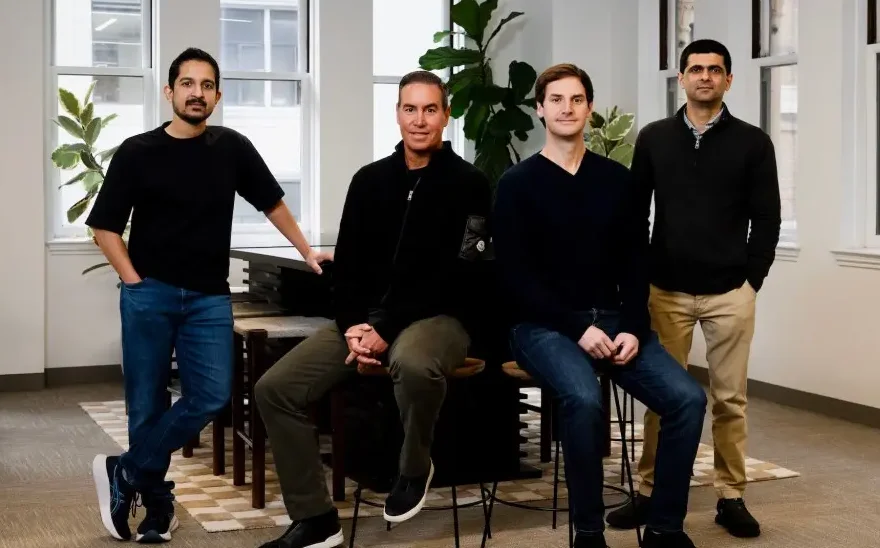
Monaco is co-founded by Sam Blond, a former Founders Fund investor and long-time sales operator who has spent much of his career scaling high-growth companies. After a stint in venture capital, Blond decided he preferred operating over investing and returned to the world he knows best: sales execution.
He is joined by his brother Brian Blond, partner at Human Capital, along with seasoned enterprise software leaders Abishek Viswanathan, previously Chief Product Officer at Apollo and Qualtrics, and Malay Desai, former Senior Vice President of Engineering at revenue platform Clari.
Together, the founding team blends product, engineering, and frontline sales expertise, an unusual combination in a market often dominated by pure software founders.
Why sales software needs reinvention
Modern sales teams juggle multiple tools: CRM systems, prospecting databases, email sequencing platforms, meeting note tools, analytics dashboards, and more. Despite heavy spending, much of the work remains repetitive and manual.
Monaco’s thesis is simple: AI should eliminate the busywork, not replace salespeople.
The startup is building what it describes as an AI-native sales platform that combines:
- A next-generation CRM,
- A prospect database similar in utility to legacy providers,
- AI agents capable of running outreach campaigns,
- Automated follow-up generation,
- Meeting note capture and workflow automation,
- Intelligent sequencing that moves prospects toward scheduled meetings.
Instead of sales representatives spending hours researching accounts and sending cold emails, Monaco’s system aims to orchestrate these workflows automatically.
Humans still close the deal
Where Monaco differs from many AI sales startups is its refusal to fully automate customer interaction.
Rather than using AI avatars or synthetic sales representatives, Monaco keeps human sales professionals in the loop. These operators supervise AI outputs, intervene when nuance is required, and handle actual customer conversations.
The logic is pragmatic: sales still depends on trust, relationships, and judgment, areas where automation struggles.
Monaco’s approach blends software automation with real human oversight, aiming to reduce friction without stripping away the human element.
Heavyweight backing signals investor confidence
The funding rounds were led by Founders Fund, with participation from Human Capital and prominent technology investors including Patrick and John Collison of Stripe, Garry Tan of Y Combinator, and Neil Mehta of Greenoaks.
Investor interest reflects a broader industry belief that AI will reshape enterprise software and that sales technology remains ripe for disruption.
Monaco: Entering a crowded battlefield
Monaco’s challenge, however, is formidable. The sales tech landscape already includes giants like Salesforce alongside a fast-growing ecosystem of AI-powered sales automation startups.
To succeed, Monaco must convince companies to replace entrenched systems and trust a young platform with mission-critical revenue operations.
Yet early-stage companies, especially startups, may find Monaco’s all-in-one approach attractive, particularly if it reduces tool sprawl and lowers hiring pressure on sales teams.
Perhaps Monaco’s biggest differentiator is philosophical. At a time when many founders promise total automation, Monaco’s team argues that AI should augment human capability, not eliminate it.
If the company’s bet pays off, Monaco could help define a future where sales teams operate with AI as a partner rather than a replacement.
For now, the startup begins its public journey with strong funding, a credible founding team, and a clear narrative: build smarter sales software, but keep humans in charge of relationships.
Whether Monaco becomes the next major sales platform remains to be seen, but its launch marks another step in the rapid evolution of how companies sell in the AI age.
Also Read: Ethera raises ₹25 crore from BlueStone