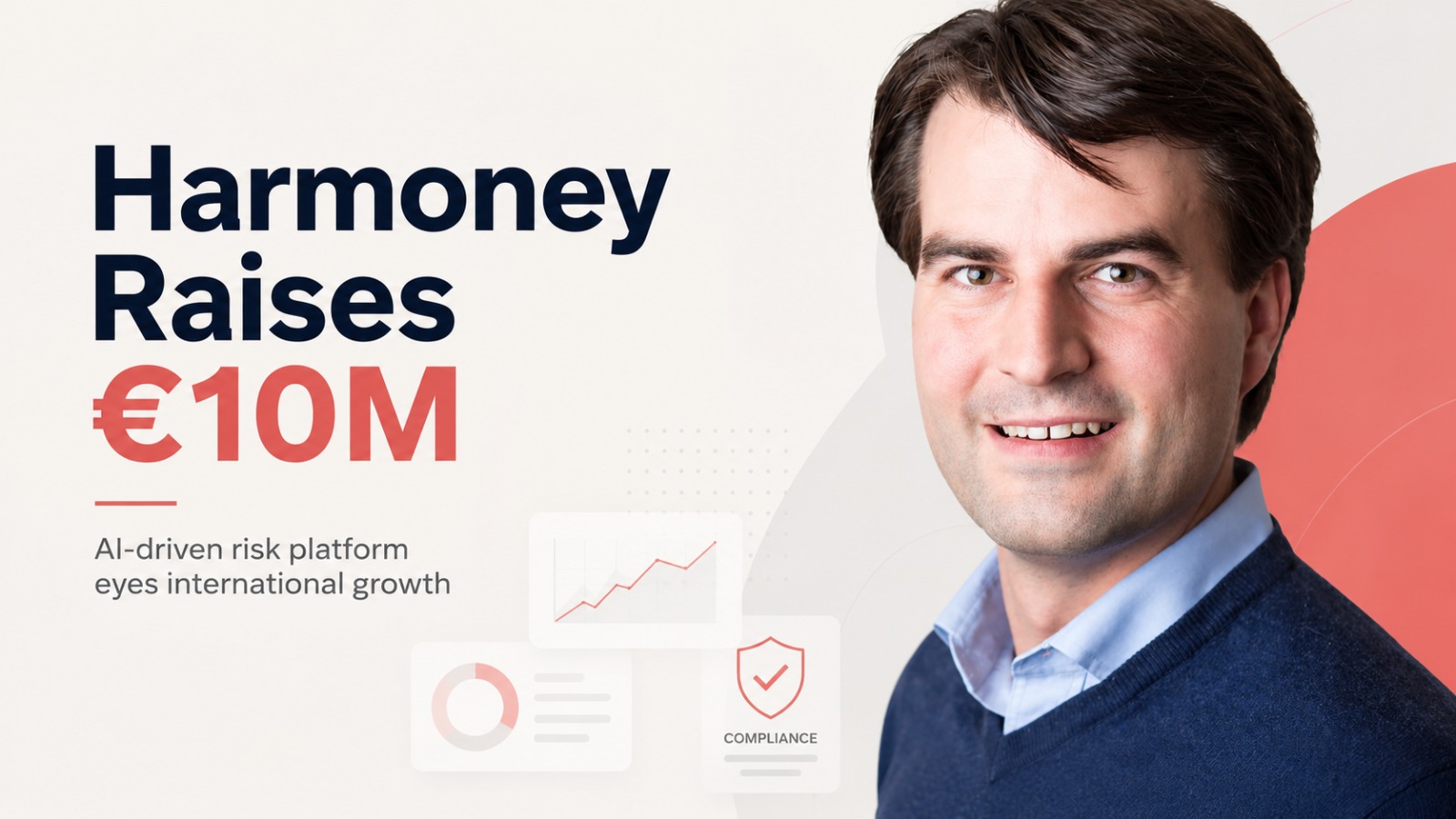
Ghent-based software company Harmoney has secured a €10 million strategic minority investment from Smile Sail, marking a fresh growth push for its AI-driven Counterparty Risk Management platform at a time when Europe’s compliance rules are becoming broader, tougher and more continuous.
Harmoney, founded in 2016, builds software for financial institutions and regulated enterprises that need to manage onboarding, compliance and risk workflows across the full client and third-party lifecycle. The company’s platform is used for processes linked to KYC, AML, MiFID, PEP, UBO, DORA, ESG and Third Party Risk Management.
The new investment comes from Smile Sail, an evergreen private equity fund focused on European software and AI companies. Harmoney plans to use the capital to support existing clients, expand its international go-to-market organisation and continue investing in AI-driven product innovation.
For Harmoney, the timing is important. Compliance in Europe is no longer just about checking a client at onboarding and revisiting the file later. Financial institutions are being pushed toward real-time, lifecycle-based monitoring of customers, suppliers and counterparties. The result is a market where separate tools for KYC, AML, ESG, MiFID and third-party risk are increasingly being replaced by broader orchestration platforms.
Thomas Van Maele, co-founder and CEO of Harmoney, said the company was created to reduce the operational burden of compliance and risk management so that clients can focus on building trusted relationships with customers and counterparties.
“As Counterparty Risk Management continues to evolve beyond traditional KYC and AML processes, we are realising the unique opportunity to further scale our platform internationally,” Van Maele said.
He added that Smile Sail brings “entrepreneurial DNA, deep sector expertise and proven track record of scaling B2B software companies internationally.”
Harmoney’s product is designed for banks, insurers, wealth managers, investment funds, asset leasing firms and professional service providers. The company says its modular platform helps these organisations manage onboarding, compliance checks and risk processes across jurisdictions.
The regulatory backdrop is central to the story. The EU’s new Anti-Money Laundering Regulation, effective from 10 July 2027, is expected to create the first unified AML rulebook for all member states. The European Anti-Money Laundering Authority has been operational since July 2025 and is preparing technical standards that will influence how financial institutions conduct customer due diligence, verify beneficial ownership and monitor customers over time.
DORA, the Digital Operational Resilience Act, has also expanded regulatory expectations around third-party supply chains for financial entities in the EU. Harmoney is positioning its platform around this shift, where risk is not limited to a one-time file review but extends across the entire relationship with a counterparty.
The company currently serves more than 70 financial institutions across seven countries. Its client list includes Belfius, Baloise and Ayvens. Harmoney also says it monitors millions of counterparties every day.
Ronald Kemmeren, Partner at Smile Sail, described Harmoney as an emerging European market leader in Counterparty Risk Management software.
“The market is moving decisively away from fragmented point solutions toward integrated orchestration platforms,” Kemmeren said.
He said AMLR, DORA and the broader Counterparty Risk Management agenda are accelerating demand across Europe, placing Harmoney “at the centre of this shift.”
Smile Sail invests alongside entrepreneurs and management teams as they scale software and AI companies. The fund has €275 million in evergreen private equity capital and is part of the Smile group of funds, which has assets under management approaching €1 billion.
For Harmoney, the funding is more than a capital raise. It signals a larger bet on a changing compliance market, where financial institutions need fewer disconnected tools and more connected systems that can give compliance teams a live view of risk.
The company’s challenge now will be execution. The opportunity is clear, but so is the complexity. Compliance software has to be trusted, adaptable and reliable across different regulatory environments. With new European rules reshaping the way institutions handle money-laundering risk, operational resilience and third-party exposure, Harmoney is entering its next phase with both capital and market momentum behind it.
Also Read: Cockroach Janta Party: How a Meme Protest Turned Into Gen Z’s Political Case Study