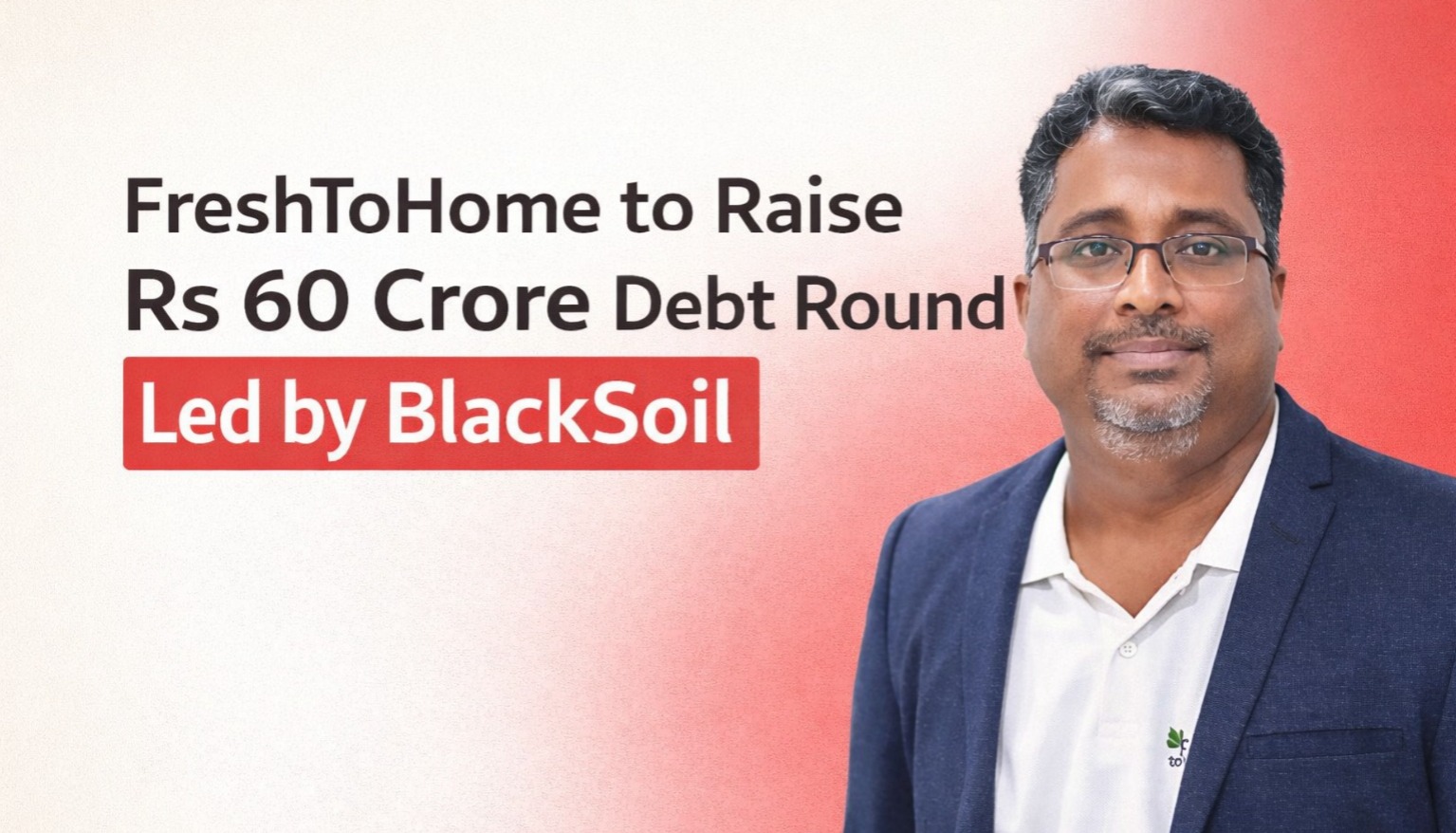
FreshToHome is preparing to raise another round of debt, signalling a continued shift towards structured financing as it looks to sustain growth without tapping equity markets again.
The Bengaluru-based meat and seafood delivery startup is set to secure around Rs 60 crore in a new tranche led by BlackSoil India, with participation from Stride Ventures. This comes shortly after an earlier raise in January, taking the company’s total debt funding over the past three months to approximately Rs 135 crore.
The structure of the latest round reflects a mix of instruments. The company plans to raise Rs 55 crore through non-convertible debentures, with BlackSoil contributing Rs 40 crore and Stride Ventures adding Rs 15 crore. Alongside this, a smaller portion of the round will include equity-linked instruments via optionally convertible redeemable preference shares.
This isn’t just another funding update, it’s a window into how FreshToHome is choosing to finance its next phase.
The company hasn’t raised fresh equity since its $104 million Series D round, and instead appears to be leaning on debt to keep operations moving while avoiding dilution. In the current funding climate, that choice is increasingly common among growth-stage startups that are still scaling but are more cautious about valuations.
The funds are expected to support working capital needs and broader business operations, including expansion, marketing, and day-to-day corporate activities. For a business like FreshToHome, where logistics, sourcing, and rapid delivery are capital-intensive, this kind of funding acts as operational fuel rather than a headline-grabbing expansion push.
Founded in 2015 by Shan Kadavil and Matthew Joseph, FreshToHome operates across around 160 cities and has also built a presence in key UAE markets. Over time, it has positioned itself as a fresh produce-focused platform, differentiating itself in a crowded food delivery ecosystem.
More recently, the company has moved into quick commerce, offering deliveries within 10 to 15 minutes, an aggressive play in a segment that is becoming increasingly competitive and resource-heavy.
Financially, the company is still growing well. However, the profitability aspect is still posing challenges. Revenue generated through operations has seen a 14 percent year-on-year growth to Rs 421.33 crore. At the same time, the losses remain stagnant at Rs 146.32 crore. This is to mean that although the scale is growing, the cost structure is yet to ease.
This is the reason behind the growing dependence on debt. It enables FreshToHome to continue growing its operations without raising equity capital again.
In many ways, this raise reflects a broader trend in India’s startup ecosystem, where companies are still chasing growth, but with a sharper eye on capital efficiency and funding discipline.
For FreshToHome, the strategy is clear: keep building, keep expanding, but do it with tighter financial control.