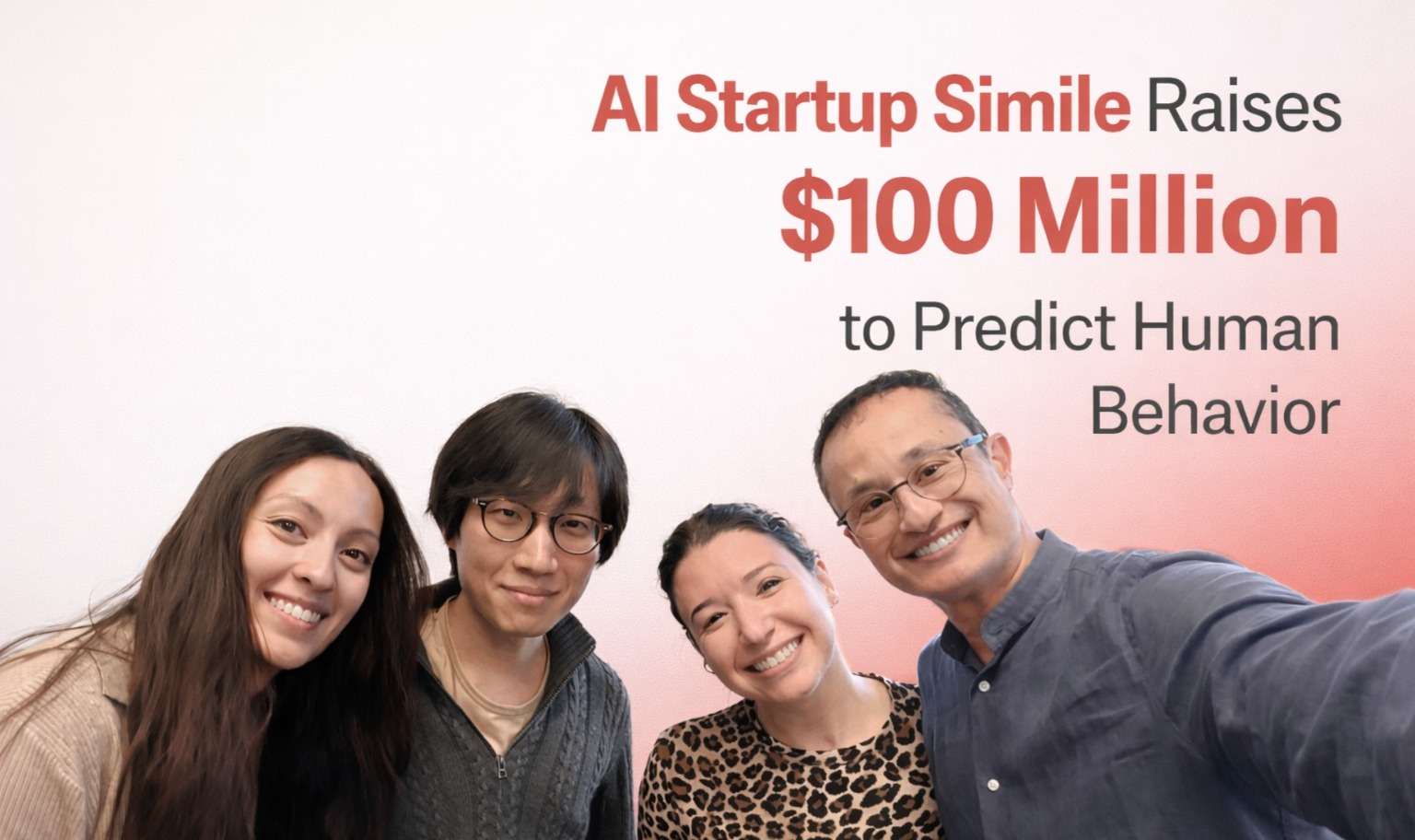
Artificial intelligence startup Simile has raised $100 million in a fresh funding round, pitching a bold promise to businesses: use AI to predict human behavior, from what customers might buy next to what questions analysts may ask on an earnings call.
The round, scheduled to be announced on Thursda y,was led by Index Ventures, with participation from Bain Capital Ventures, A*, and Hanabi Capital, according to details shared in the report. Simile also drew backing from prominent AI leaders, including Fei-Fei Li and Andrej Karpathy. The company did not disclose its valuation.
From “focus groups” to AI-populated simulations
Simile’s pitch is simple in concept and bold in vision: rather than relying solely on traditional focus groups to test their messages and products, Simile uses simulated environments inhabited by AI-driven agents who are meant to mimic the attitudes and behavior of human individuals.
What makes Simile’s approach notable is how it says it trained and enriched its system. The startup emerged from stealth this week after spending seven months building an AI model trained on interviews with hundreds of real people about their lives. Alongside those interviews, Simile says it used historical transaction data and text from scientific journals focused on behavioral experiments to strengthen the model.
Early enterprise testing: CVS Health
In retail, even small choices, what’s stocked, what gets the best shelf position, what sits near checkout, can move outcomes. Simile says CVS Health Corp. has already been testing its platform to help decide which products to stock and how to display them in stores.
Beyond shopping: earnings calls and corporate reactions
Simile also argues its simulations can help organizations prepare for the market’s toughest moments, like earnings calls. The company believes it can support teams in anticipating analyst questions or forecasting reactions to corporate announcements by analyzing historical earnings calls and research reports.
Who’s behind AI Startup Simile?
Simile is led by co-founders Joon Park, Michael Bernstein, Percy Liang, and Lainie Yallen, who have academic ties to Stanford University, per the report. It also notes Bernstein is a co-author of the ImageNet project, a foundational benchmark widely associated with modern computer vision progress.
The $100 million round signals strong investor interest in AI systems that aim to move beyond “generate text” and into decision-shaping enterprise tools. Simile’s bet is that businesses will pay for something more actionable than dashboards: a way to test strategy against realistic, human-like responses, before the real world responds.
Also Read: Journalist Ravi Nair convicted in Adani criminal defamation case