Namaste Buddy Story: Learning a language isn’t about memorising endless vocab lists anymore. It’s about getting ready for the conversations that actually matter in your life.
AI has already changed the way we search for information, write, code, and create. But for some reason, language learning hasn’t really evolved. For years, most language-learning apps followed the same basic script: drill vocabulary, explain grammar rules, nudge you to practice every day, and cheer you on to keep your streak going. Sure, this got millions of people started with a new language. But pretty often, after all those lessons, people still freeze up when it’s time for a real conversation.
Think about it: real-life moments are rarely about recalling a random word. It’s usually about finding the nerve to actually use those words. Whether you’re a kid nervously FaceTiming grandparents, someone meeting their future in-laws, a professional starting over in a new country, or just trying to order tea from a roadside vendor, the real test is having the confidence to speak, not just remember.
Now, a new wave of AI-powered companies think we’ve been solving the wrong problem. Instead of starting with vocab drills, they’re using conversational AI to replicate everyday situations; basically, you get to practise the kinds of conversations you’ll actually have before you ever have to face them for real.
One of the leaders in this space is Namaste Buddy, an Indian startup with a simple but honest insight: People don’t learn languages just to ace tests, they do it because they want to talk to someone they care about. The founder, Nikhil Singh (who also started BreezyScroll), built Namaste Buddy around one big question that most language apps ignore: Who do you want to talk to?
It makes all the difference. The young person in London who wants to communicate with his grandparents in Delhi does not require the same skills as the German businessman traveling to Bengaluru. The person marrying into an Indian household has a totally different set of discussions from the yoga practitioner on retreat in Rishikesh. What about the tourist visiting Rajasthan?
Instead of shuffling everyone through the same chapters, Namaste Buddy uses AI to create customised role-play conversations for all kinds of real-life scenarios. There are now more than forty-eight different situations, ranging from family get-togethers and business meetings to weddings, marketplaces, train stations, yoga retreats, and ordering chai on the street. The AI isn’t just reciting lines; it remembers your past conversations, adjusts to how comfortable you are, and keeps things natural, so it feels more like a rehearsal than a language lesson.
And the most interesting feedback? It came from people the team never expected. Namaste Buddy launched for Indian-origin kids overseas, hoping to help families worried that their children understood Hindi but wouldn’t speak it, afraid of making mistakes. Now, those families say their kids practise inside the app before calling grandparents, making awkward hellos turn into real conversations.
Pretty soon, adults found the app useful too. People reconnecting with Indian roots, folks working with Indian companies, travellers getting ready for India, new in-laws, and even yoga students worldwide started using it. Some of the most surprising requests came from yoga schools in Rishikesh; international students wanted to practise everyday conversations before arriving. They asked for things like slower speech playback, translations between languages, and offline features for patchy internet. Instead of guessing, the company let users point the way.
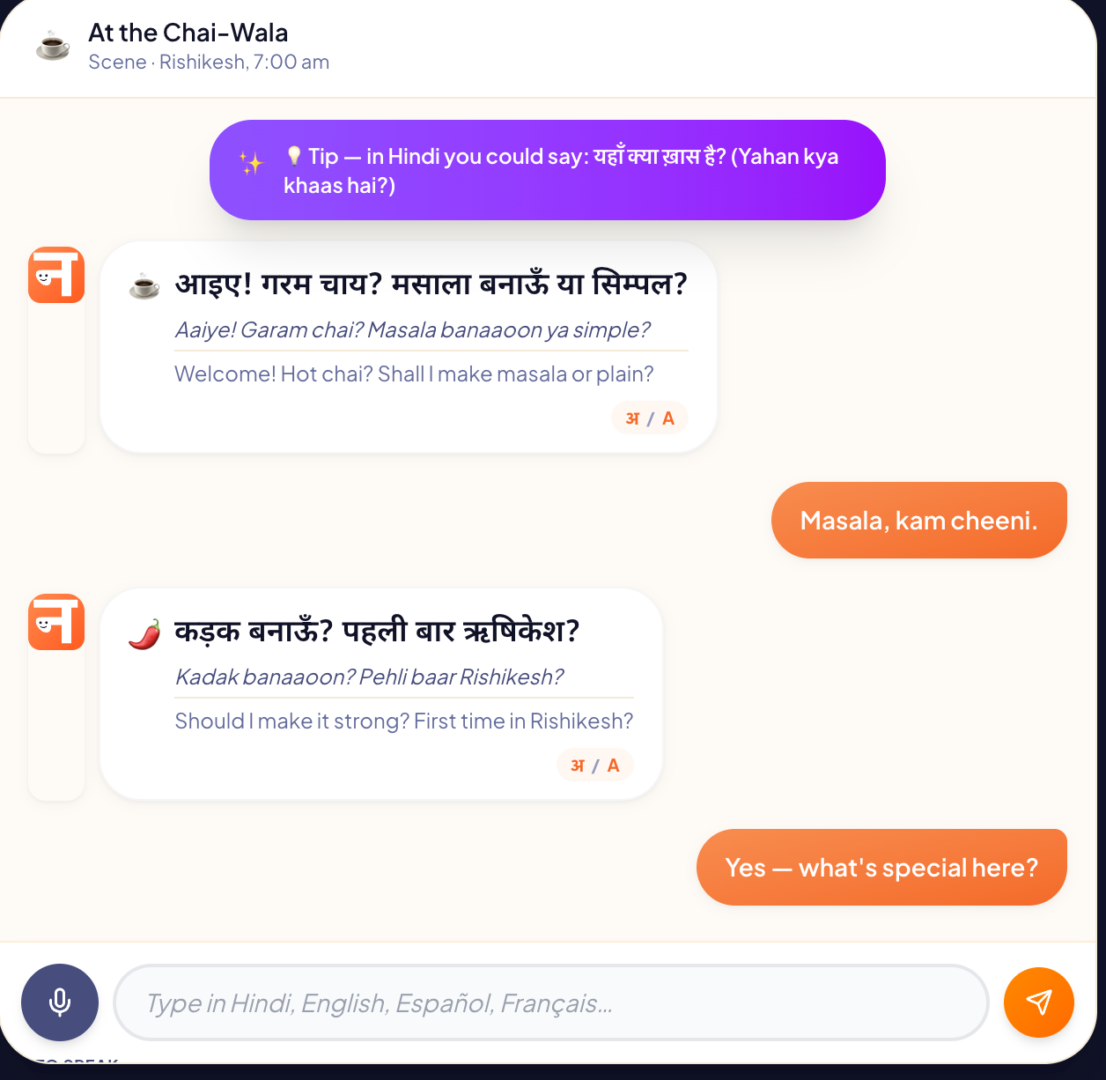
Today, Namaste Buddy has more than 700 registered users and over 500 people practising every month, spread across seven countries, especially popular in the UK and Australia. More than 20 schools in five countries are testing it out, weaving those AI-powered conversations into actual classes.
Conversational AI makes all this possible in a way old-school apps never could. Regular lessons can’t keep up, but with AI you get a conversation partner that remembers the context, adapts its replies, and creates new dialogues on the fly. It doesn’t feel like homework; it feels like practice for real life.
That’s what makes Namaste Buddy so different from established names like Duolingo. Duolingo made language learning gamified, short lessons, points, and quizzes. Namaste Buddy wants you to face the conversation you’ve been avoiding. The goal isn’t to grow your streak or beef up your vocab list; it’s to make you confident when it actually counts.
And this is just the start. Even though the company launched with Hindi, its vision goes way beyond. Korean, Mandarin, Tamil, they’re all in the works, each woven into the culture they belong to, not just translated. Whether you’re prepping for a business dinner in Shanghai, your first day in a Seoul office, or a family gathering in Chennai, the idea doesn’t change: Language learning works when it fits into real relationships.
AI is changing how we learn, a lot. Maybe one day, nobody will care about your lesson streak or how many flashcards you’ve flipped. They’ll care about something more real: Can you call home? Join a family meal? Introduce yourself in your new city? Understand your grandparents’ story without an interpreter?
The world’s connected like never before, but language can still keep people apart. Companies like Namaste Buddy are betting that the next leap in language learning isn’t about teaching more words. It’s about helping you use the ones that mean something.
Also Read: At 14, Jainam Jain Is Building an AI Startup From the Burj Khalifa