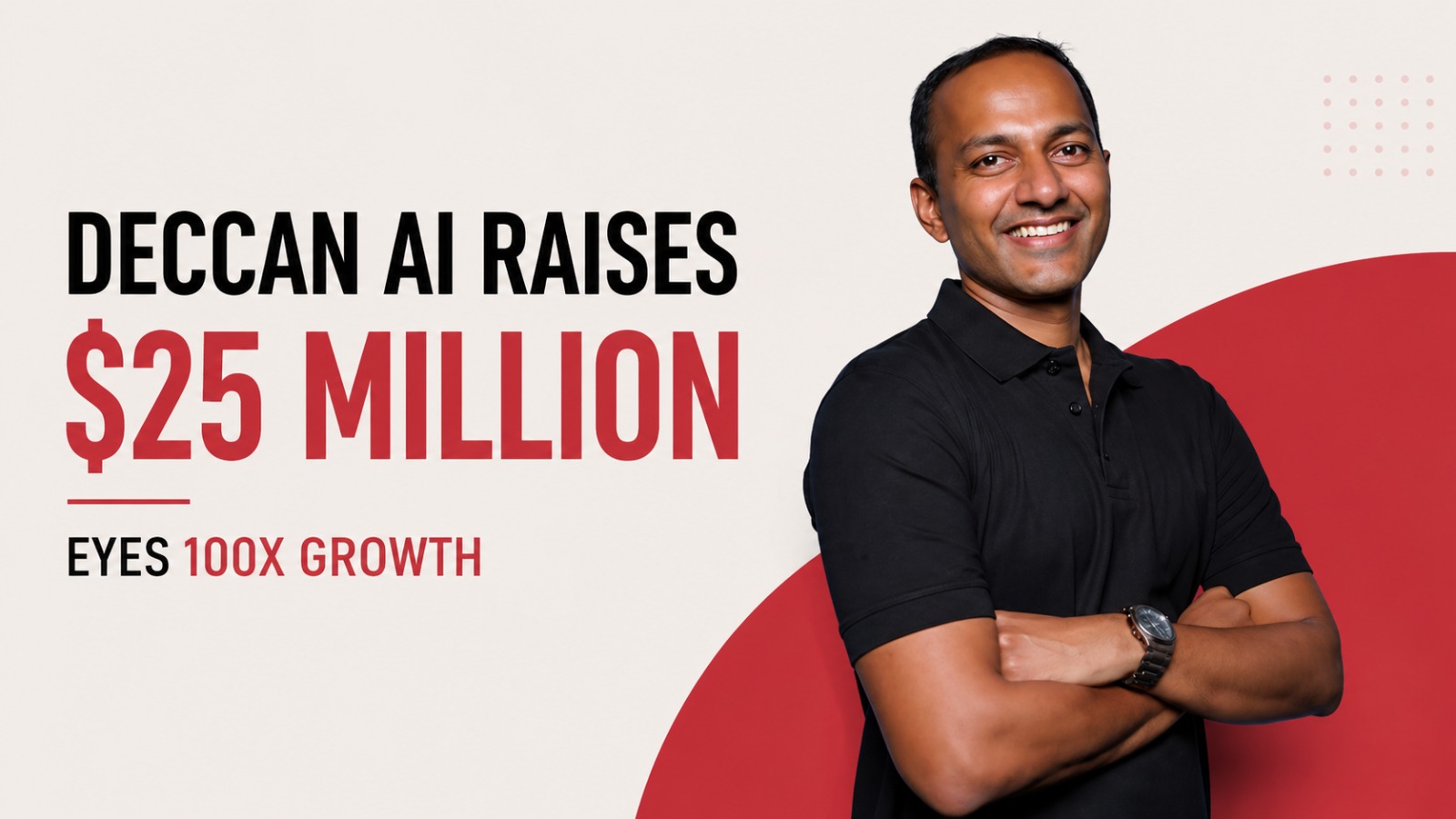
Deccan AI has raised $25 million in fresh funding from A91 Partners, Susquehanna and Prosus Ventures, as the company prepares to expand its work in making artificial intelligence systems more dependable for real-world business use.
The company, co-founded by Purva Bhandari and Rukesh Reddy, plans to use the capital to strengthen its deep-tech capabilities, hire more engineering talent and build enterprise-focused platforms. It is also investing in reinforcement learning environments and expanding hiring in the Bay Area.
The fundraise comes at a time when enterprises are moving beyond experimental AI pilots and asking a tougher question: can these systems be trusted in day-to-day operations?
Bhandari said Deccan AI has already grown 10 times over the past year and is now aiming for 100x growth in the coming years. The company’s next phase will focus on helping large AI labs, hyperscalers and enterprises improve model reliability before deployment.
Deccan AI operates in the post-training layer of artificial intelligence. Its work is centred on improving the dependability of AI models, especially large language models that may still fall short when accuracy and consistency are critical.
Bhandari said the company is working to take model accuracy from the current range of around 70 to 80 percent to 90 to 95 percent, particularly for enterprise use cases where errors can directly affect business outcomes.
The company is also preparing to roll out two product layers, Enterprise OS and Helix, to deepen its enterprise presence. These platforms are expected to support companies that want AI systems ready for production, not just pilot projects.
A key part of Deccan AI’s approach is keeping humans involved in the process. Bhandari said AI systems remain probabilistic, which makes human oversight important for predictable results. The company’s model is built around creating a bridge between humans and AI models so enterprises can deploy AI with greater confidence.
The timing is important. Over the past year, many companies experimented with AI tools, but the market is now shifting toward measurable returns, safer deployment and lower error rates. For Deccan AI, that shift creates a large opportunity.
Once the deployment of AI becomes more mature, the competitive landscape may not just revolve around having the best model. It could also become a question of which player can deliver a sufficiently robust model that business players can rely on.
Also Read: Who Owns Your Team Now? IPL’s Latest Ownership Breakdown