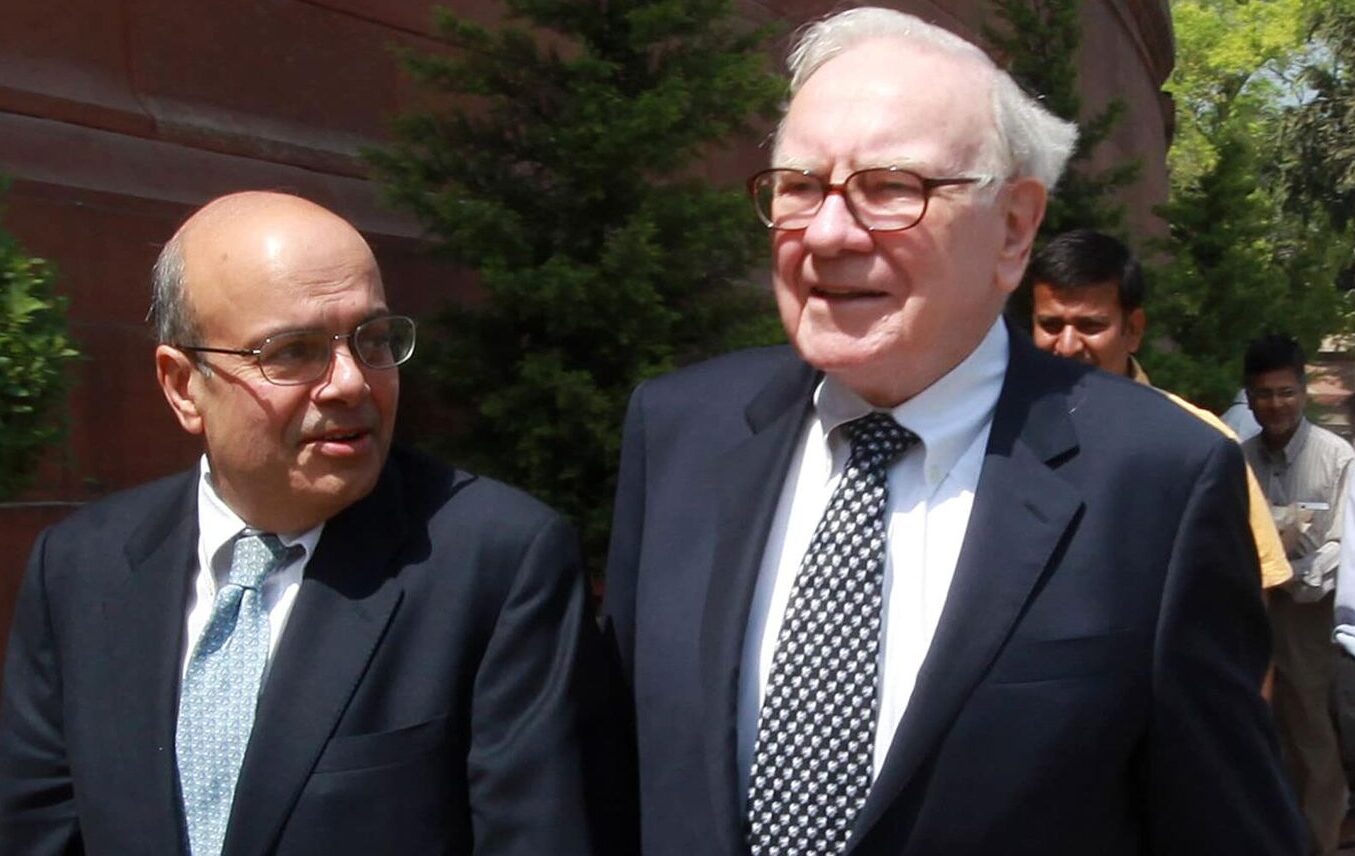
On an unremarkable Saturday in 1986, a soft-spoken engineer of Indian origin walked into Berkshire Hathaway’s small office in Omaha. He was not an insurance expert. He was not a finance professional. Yet, by the end of that meeting, Warren Buffett handed him responsibility for Berkshire’s struggling reinsurance business. That moment would go on to change the company forever.
The engineer was Ajit Jain, and today he is one of the most influential yet least visible figures behind Berkshire Hathaway’s rise. As the conglomerate prepares for a future beyond Buffett, Jain remains central to its strength, quietly managing the massive pool of insurance money that has powered Berkshire’s biggest investments for decades.
A Journey That Began Far From Wall Street
Ajit Jain was born on July 23, 1951, in Odisha. He studied engineering at IIT Kharagpur, graduating in 1972, with no clear path toward global finance. His first job was not glamorous. He worked as a salesman at IBM in India, where his sharp thinking and discipline quickly stood out.
When IBM exited India in 1976, Jain moved to the United States. He earned an MBA from Harvard Business School and later joined McKinsey & Co. Consulting sharpened his ability to break down complex problems, but it was a chance introduction through a former colleague that brought him face to face with Buffett.
That meeting changed everything.
Taking Charge of an Uncertain Business
When Jain joined Berkshire, the reinsurance operation was small, messy, and risky. Most insurers avoided large, unpredictable disasters. Jain did the opposite. He focused on understanding them better than anyone else.
He applied engineering logic to insurance, breaking massive risks into numbers that could be priced accurately. Whether it was natural disasters or long-term insurance contracts that stretched decades into the future, Jain had an unusual ability to stay calm where others hesitated.
Buffett noticed. Over time, he came to see Jain not just as a manager, but as the person who made Berkshire’s investment engine possible.
Building the Float That Fueled an Empire
The real power behind Berkshire’s success lies in something most investors overlook: insurance float. This is money collected from premiums that may not be paid out for years. Under Jain, this float grew from a modest sum into nearly $174 billion by 2024.
What makes this even more remarkable is that Berkshire has often earned money while holding this capital. Instead of paying for it, the company has historically been paid to hold it.
In today’s higher interest rate environment, this float generates billions in steady income, even when markets are volatile. It allows Berkshire to stay patient, avoid panic, and invest on its own terms.
Also Read: Bitcoin Slips to $87,000 as Nervous Markets Weigh on Crypto
A Reputation Built on Discipline
Those who worked with Jain often describe him as intensely disciplined. He never chased deals for growth’s sake. If the price was wrong, he simply walked away. Sometimes that meant writing no business for months.
This mindset fit perfectly with Berkshire’s culture. Charlie Munger once described Jain’s thinking as endlessly productive, praising his ability to see what others missed while refusing to follow the crowd.
Jain’s decisions were fast, firm, and grounded in logic, qualities that gave Berkshire an edge in complex insurance deals few competitors could handle.
A Key Figure in Berkshire’s Future
In 2018, Jain was named Vice Chairman of Insurance Operations, formalising his role at the top of the organisation. While Greg Abel manages Berkshire’s non-insurance businesses and is expected to become CEO, Jain remains responsible for safeguarding the insurance backbone of the company.
His pay reflects responsibility rather than short-term performance. In 2024, his base salary stood at about $20 million, set directly by Buffett.
A Share Sale That Drew Attention
In September 2024, Jain sold 200 Class A Berkshire Hathaway shares for roughly $139 million, reducing his stake by more than half. He still holds around 166 shares through trusts and his foundation. The move was widely seen as practical estate planning rather than a loss of confidence.
Despite his impact, Jain’s personal wealth is modest compared to many Wall Street executives. He chose long-term stability and culture over aggressive personal gain.
A Personal Cause Beyond Business
Away from boardrooms, Jain has devoted himself to a deeply personal mission. He founded the Jain Foundation to support research into dysferlinopathy, a rare muscular disorder that affects his son. The foundation brings together scientists worldwide, applying the same data-driven approach Jain uses in insurance.
A Legacy That Will Endure
Warren Buffett once called finding Ajit Jain a “gold strike.” As Berkshire Hathaway enters a new chapter, Jain’s steady hand and deep understanding of risk will continue to shape its future.
From a young engineer in India to the quiet force behind one of the world’s most powerful financial engines, Ajit Jain’s story is not about flash or fame. It is about patience, discipline, and the rare ability to think clearly when others cannot.
Also Read: Kerala’s Oppam raises ₹1.5 crore to expand mental health care