It all started on the banks of the Ganga River in Kanpur, where Ankit Agarwal, a software engineer, caught sight of a devastating scene: the temple flowers offered up every morning from the temples would be put into trucks and then dumped in the river. These flowers, though sacred, were coated with chemical fertilisers and pesticides, releasing toxins into India’s most revered waterway.
Disturbed by this pollution, Ankit and his friend Prateek Kumar began collecting small batches of discarded flowers from nearby temples. After several kitchen experiments, they discovered the flowers could be dried, processed, and repurposed into incense sticks, cones and compost. What started as a small experiment at home became a mission to clean rivers and create livelihoods, giving birth to Phool.co in 2017.
Flowercycling at Scale: Turning Waste into Worth
Phool.co (Kanpur Flowercycling Pvt. Ltd.) now runs an organised “flowercycling” operation that collects floral waste from temples and mosques across northern India. The idea is straightforward yet effective: collect waste that harms the environment and turn it into sustainable products that benefit people.
Key environmental milestones:
- 11,000+ metric tonnes of temple waste collected and recycled since inception (UNFCCC data).
- Helped rivers such as the Ganga and Yamuna to be free from toxic pesticides and dyes that could have polluted them.
- Developed zero-waste production methods, where even residue is used for compost or natural colours.
- Offset approximately 1,300 tonnes of CO₂, contributing to India’s green transition.
Also Read: Inside Bankim Brahmbhatt’s $500 Million BlackRock Scam That Shook Wall Street
From Ritual to Reinvention: Products Born from Faith
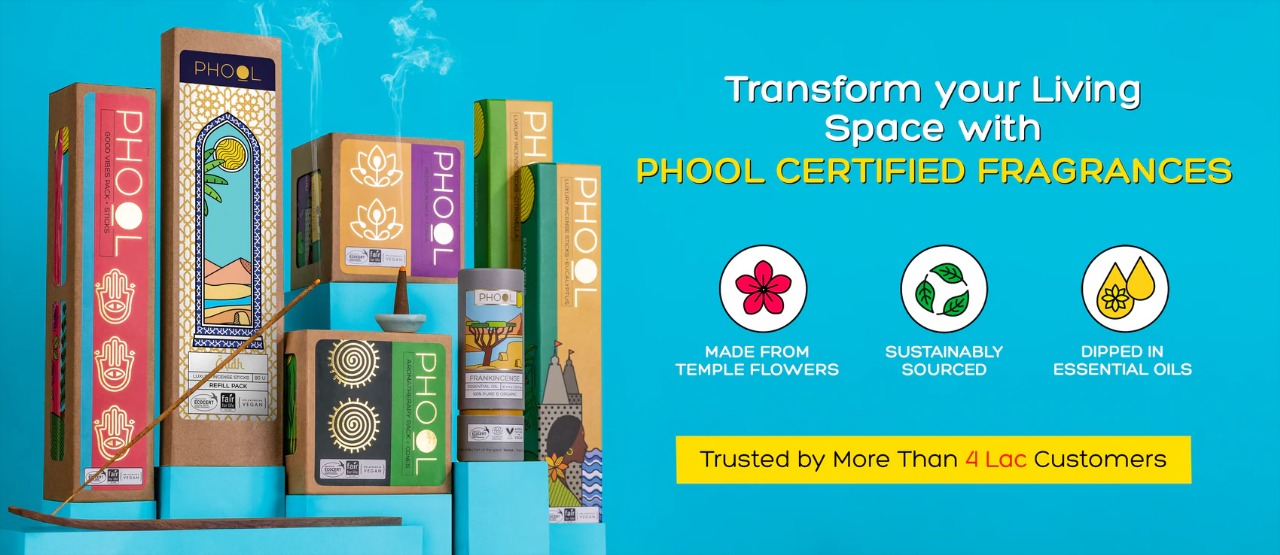
Phool.co’s offerings are not merely restricted to incense now. Their flagship charcoal-free incense sticks and cones are crafted using upcycled floral dust and essential oils, replacing coal-based incense that emits carbon and toxins.
They’ve since expanded into:
- Urban gardeners and farmers use organic compost.
- Natural pigments and packaging materials derived from waste petals.
- Fleather, a revolutionary vegan leather made from temple flowers, is an eco-friendly alternative to animal and synthetic leathers.
Fleather earned global attention, featured at New York’s Museum of Modern Art (MoMA) and shortlisted for international sustainability awards, positioning Phool as India’s first biomaterial innovation startup.
People and Purpose: Empowering Women Behind the Process
Beyond environmental gains, Phool.Co’s impact is deeply social. The startup deliberately hires women from Dalit and marginalised communities, many of whom previously worked as manual scavengers.
Major social accomplishments:
- Over 100 women are employed full-time across its Kanpur, Tirupati, and Varanasi facilities.
- Regular, dignified income for women previously excluded from formal employment.
- Access to healthcare, financial literacy training, and a safe workplace environment.
- Workers proudly identify as “Flowercyclers,” symbolising dignity through purpose.
Recognised by UNESCO and the United Nations Framework Convention on Climate Change (UNFCCC), Phool stands as a role model for women-led climate action in South Asia.
Growth, Funding, and Global Recognition
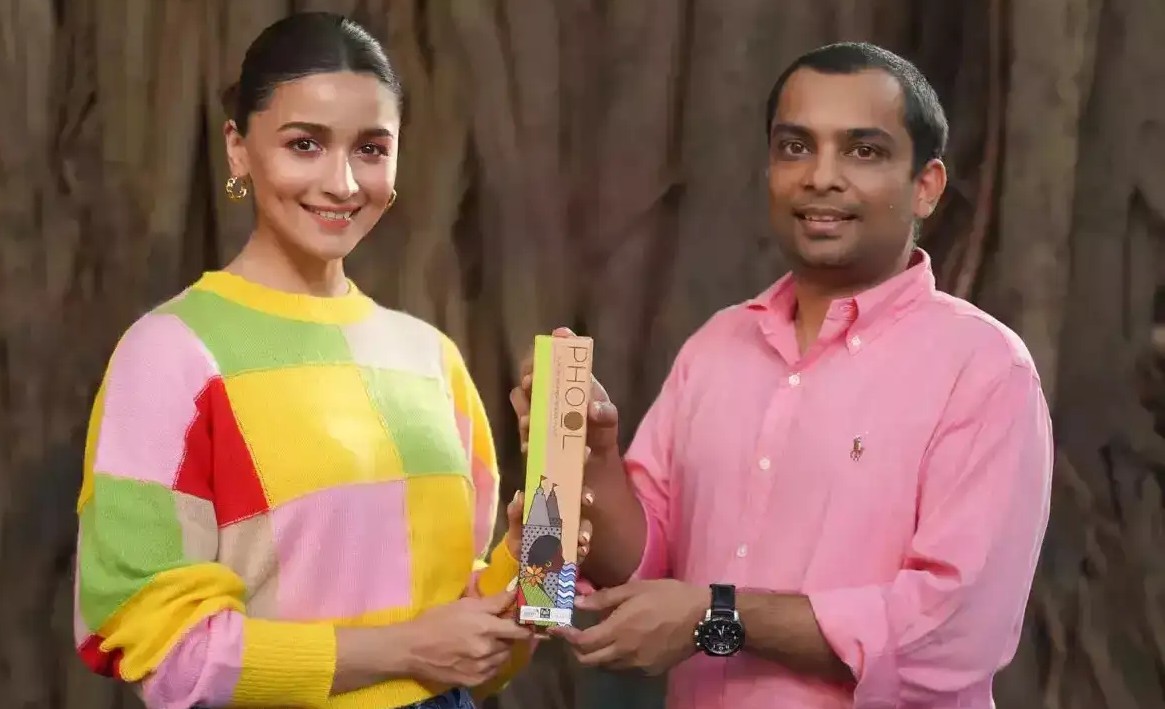
In April 2022, Phool.co raised $8 million in Series A funding, led by Sixth Sense Ventures with participation from IAN Fund and Bollywood actor Alia Bhatt as an angel investor. The funds are being used to scale collection networks, expand biomaterial research, and explore export markets for Fleather and sustainable incense.
Phool has earned prestigious honours, including:
- UNFCCC Momentum for Change Award (2018) for climate-positive entrepreneurship.
- UNESCO Green Citizens Award (2021) for linking faith and sustainability.
- Features in Forbes, Bloomberg Green, and The Guardian highlight its unique circular economy model.
Challenges and the Road Ahead
Phool.co serves as a great example, although scaling presents its obstacles: the logistics of collecting large amounts of floral waste across different regions, consistent quality, increased production costs, and ever-increasing and sometimes subsidised pricing from a cheap incense and leather industry are in and of themselves significant challenges. However, Phool world’s knowledge being rooted in purpose, design, and innovation provides it with significant advantages.
Why Phool.co Matters: For Rivers, People & Economy
In a nation where spiritual offerings are an indispensable part of culture, Phool.co is the proof of how tradition and technology can live together in harmony. It makes us remember that tiny flowers, if used again purposefully, can not only purify a river but also promote social justice.
Also Read: Goyaz Raises ₹130 Crore to Scale Gold-Plated Silver Jewellery Business Across India