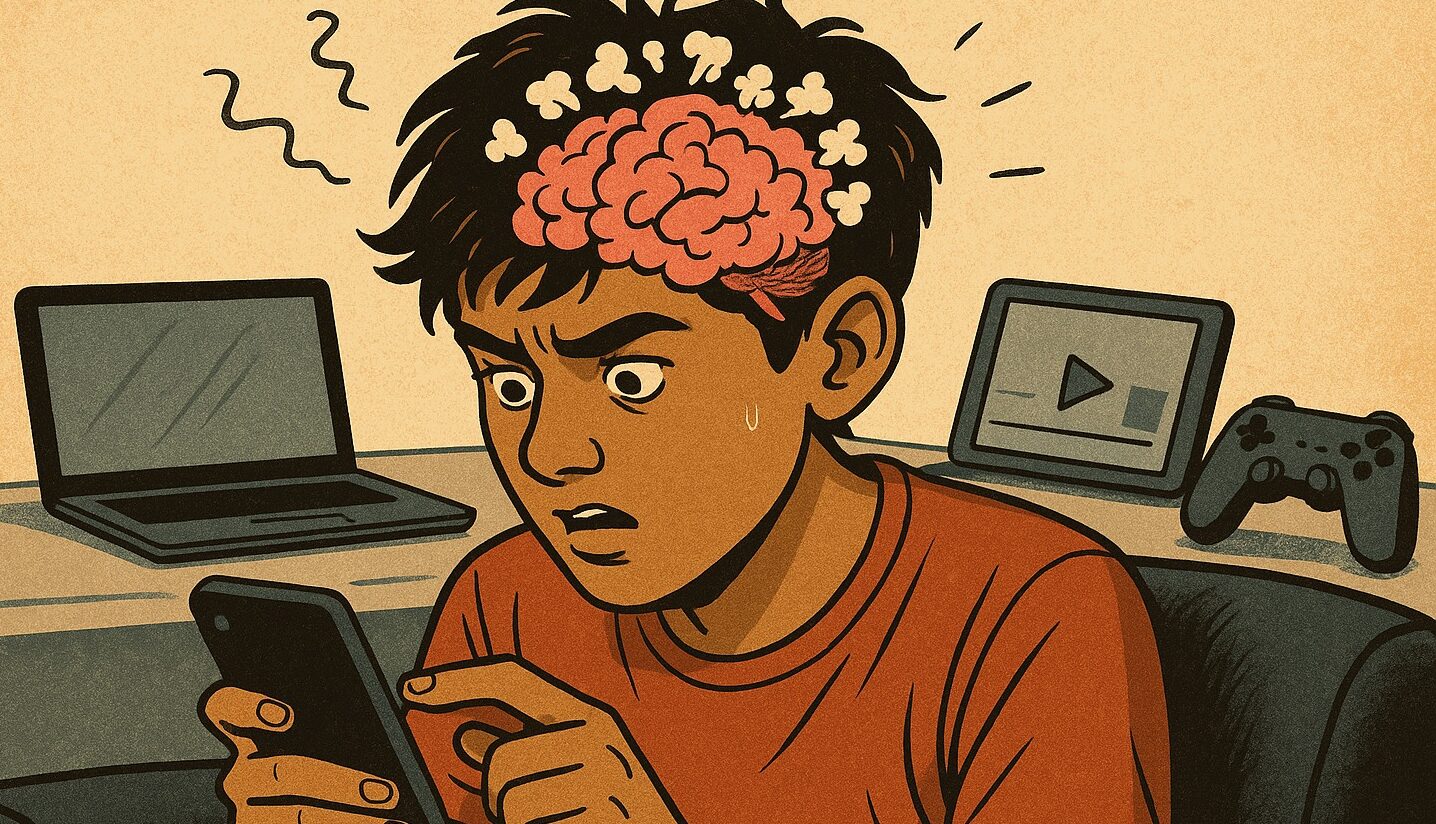
The daily lives of Indian teenagers are becoming more connected to screens than ever before. Whether it’s scrolling endlessly through videos, switching between apps, or jumping from one game to another, young people are spending more time online than previous generations. Doctors are increasingly concerned that this growing dependence on rapid digital stimulation is contributing to what is now widely known as Popcorn Brain Syndrome. This isn’t a medical diagnosis, but a popular term used to describe the way digital overload affects the mind and attention span.
A Brain That Can’t Slow Down
The idea behind “popcorn brain” was introduced in 2011 to describe a mind that has become so used to fast-paced digital information that it starts struggling with real-life tasks. Thoughts begin bursting like popcorn kernels, quickly, constantly, and uncontrollably. As a result, concentrating on a single task becomes difficult, and slow-paced activities feel unusually boring.
While it’s not classified as a medical disorder, many people relate to the feeling of mental restlessness that comes from constant screen exposure. Teenagers in particular face this challenge, as they spend a large part of their day switching between schoolwork, entertainment, social interactions and online content.
Also Read: Uranium Found in Delhi Groundwater, Health Alert Raised
What Popcorn Brain Looks Like
- Difficulty staying focused
- Jumping rapidly between thoughts
- Feeling overwhelmed even by simple tasks
- A desire for fast and instantly stimulating content
- Struggling to enjoy calm, offline moments
How Screens Shape the Way the Mind Works
Popcorn brain doesn’t appear overnight. It develops gradually through patterns that are now a normal part of life for many teenagers.
When Screen Time Becomes Excessive
Spending long hours on devices exposes the brain to constant visual and mental activity. Over time, the mind becomes conditioned to operate at that speed, making everyday offline tasks, like reading, writing, or studying, feel too slow and uninteresting.
Instant Digital Rewards That Keep Pulling You Back
Much of today’s digital content offers quick reactions and rapid entertainment. This creates a pattern where the brain begins craving fast rewards. As a result, regular tasks that require patience and attention feel less satisfying.
Notifications That Break Every Thought
Frequent alerts from messages, apps and updates constantly interrupt focus. These interruptions make it harder for the brain to maintain a steady thought process, eventually weakening concentration.
Trying to Multitask Everything
Modern digital habits often involve switching between multiple apps and activities at once. While it may feel productive at first, this constant switching can overload the brain and reduce its ability to process information efficiently.
Who Is Feeling the Pressure the Most?
Teenagers and young adults are the most common age groups experiencing popcorn brain, but doctors have noted that individuals aged 30 to 45 are also reporting similar symptoms. Although popcorn brain is not the same as internet addiction, it can be equally disruptive to daily life.
Those experiencing these symptoms often find offline activities dull or difficult. Their attention is scattered, and even moments intended for rest may feel mentally busy or restless.
Warning Signs Difficult to Ignore
- Irritability or rising anxiety
- Difficulty falling asleep or dealing with insomnia
- Trouble focusing for extended periods
- Feeling constantly alert or tense
- Losing interest in offline hobbies
- Mental fatigue or cognitive overload
- Acting impulsively or becoming easily distracted
Small Lifestyle Shifts That Can Make a Big Difference
Even though popcorn brain can feel overwhelming, simple changes in daily habits can help restore focus and bring balance back to the mind.
Using Breath to Calm the Mind
Practising slow breathing exercises helps quiet racing thoughts and brings a sense of calm.
Making Time for Daily Meditation
Just ten minutes of meditation each day can help improve concentration and mental clarity.
Choosing One Task at a Time
Focusing on a single task instead of multitasking can strengthen the brain’s ability to stay attentive.
Using Yoga for Mental Balance
Yoga practices help reduce stress and support clearer thinking.
Reducing Digital Distractions
Turning off unnecessary notifications and adjusting screen settings can help minimize interruptions.
Creating Device-Free Spaces at Home
Keeping certain areas, like the bedroom or dining room, free of devices encourages healthier habits.
Taking Breaks From Screens
Short digital detox breaks throughout the day give the brain time to rest.
Setting Boundaries That Support Focus
Limiting screen time for entertainment or social media helps prevent mindless scrolling and supports better attention.
Popcorn Brain Syndrome reflects how deeply digital life influences our minds today. As screens become central to learning, entertainment and communication, understanding and managing this condition has become essential. With intentional habits and a little structure, teenagers, and adults, can regain balance and improve their focus, emotional well-being, and overall quality of life.
Also Read: Japan’s 15-Minute Human Washing Machine Brings the Future of Bathing to Life