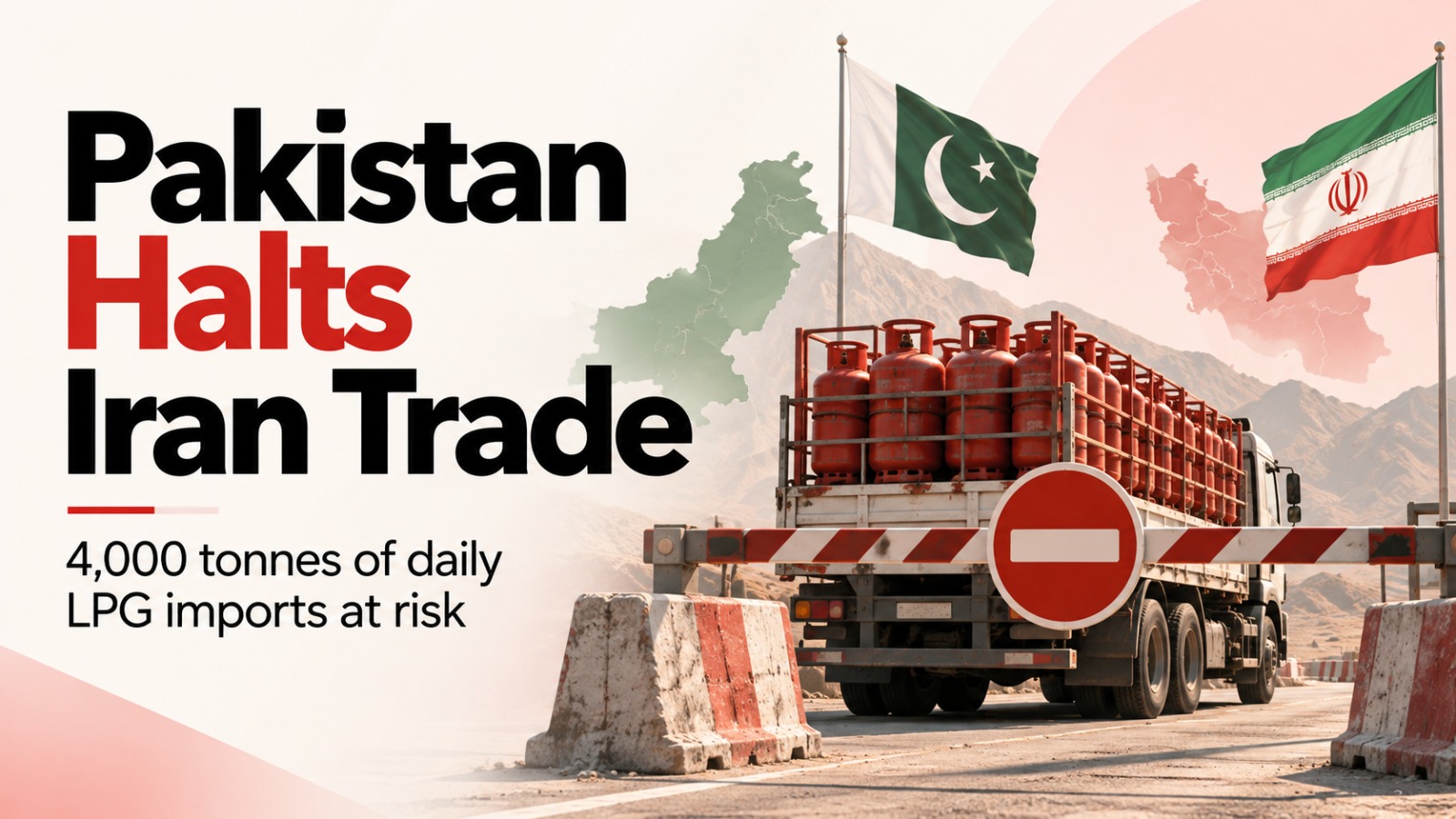
Pakistan has suspended commercial trade through two major border crossings with Iran, leaving hundreds of freight vehicles stranded and raising concerns about potential disruptions to liquefied petroleum gas (LPG) supplies and prices.
The suspension affects the Gabd-Rimdan and Taftan crossings in Balochistan. Pakistan’s Ministry of Commerce issued a memorandum on Friday, withdrawing an earlier order dated October 3 with immediate effect, according to a report published by Dawn on October 18.
The memorandum did not specify the reason for the decision. However, officials from Pakistan and Iran have offered different explanations for the temporary closure, while discussions continue to restore normal cross-border trade.
Why Has Pakistan Suspended Trade With Iran?
Shahid Rind, adviser to the Balochistan chief minister on media and political affairs, said the temporary closure was intended to address security concerns, prevent smuggling and improve border management.
Rind added that senior officials from Pakistan and Iran were discussing outstanding issues and that the crossings could reopen soon.
Iranian Foreign Ministry spokesperson Esmail Baghaei also described the closure as temporary but attributed it to technical issues, according to state-run IRNA, as reported by Dawn.
Baghaei said consultations were underway to resume normal operations. However, neither side had announced a confirmed reopening date in the reports available on October 18.
The differing explanations leave the precise circumstances behind the suspension unclear. For businesses dependent on cross-border shipments, the immediate concern is the interruption of commercial movement and the time required to resolve the outstanding issues.
Hundreds of Trucks Stranded at Pakistan-Iran Border
The suspension has disrupted the movement of essential commodities, including LPG, rice, fresh fruit and other goods. Hundreds of freight vehicles carrying these supplies have reportedly been stranded on both sides of the border.
The Quetta Chamber of Commerce and Industry (QCCI) has advised businesses engaged in trade with Iran to stop placing new import and export orders until further notice, Dawn reported.
The chamber also said commercial activity had been suspended across the Pakistan-Iran border. However, the Ministry of Commerce memorandum specifically covered the Gabd-Rimdan and Taftan crossings.
The disruption does not necessarily mean that all movement across the border has stopped. Iran’s WANA news agency reported that passenger traffic through the Rimdan-Gabd crossing continued despite the suspension of commercial operations.
For traders, the uncertainty surrounding the reopening could complicate shipment planning and delay the delivery of goods that are already in transit.
Why the LPG Supply Situation Matters
One of the biggest concerns is the potential impact on LPG availability in Pakistan.
The Gabd-Rimdan crossing has emerged as an important route for energy imports, with more than 4,000 tonnes of LPG reportedly entering the country daily through the crossing, according to Dawn.
Trade and energy-sector sources cited by the newspaper warned that a prolonged closure could worsen LPG shortages in Karachi and other parts of Pakistan. They also raised concerns that reduced supplies could push up prices in the open market.
The Taftan route was already experiencing disruptions amid unrest in Balochistan. With commercial movement through Gabd-Rimdan now suspended as well, the availability of alternative supply routes and arrangements could become particularly important if the interruption continues.
However, the reported closure does not establish that the latest suspension has already triggered a fresh nationwide LPG shortage or a specific increase in market prices. The immediate concern is the risk of tighter availability if shipments remain blocked.
The duration of the suspension will therefore be a key factor in determining how significantly the disruption affects energy supplies and consumers.
Pakistan and Iran Had Been Working to Expand Trade
The latest suspension comes after Pakistan and Iran took steps to facilitate bilateral commerce and improve cross-border logistics.
In August, an Iranian delegation led by Trade and Industry Minister Mohammad Atabak visited Islamabad for the 10th session of the Pakistan-Iran Joint Trade Committee. The delegation also met Prime Minister Shehbaz Sharif.
Discussions covered ways to expand trade, improve logistics and harmonise customs procedures, Dawn reported.
The latest disruption places renewed attention on the practical challenges facing businesses that rely on these routes. Even as the two countries work to improve trade facilitation, interruptions at key crossings can leave shipments delayed and create uncertainty for importers and exporters.
When Will Pakistan Reopen Trade With Iran?
Pakistani and Iranian officials are holding discussions to address the issues behind the suspension, with Rind indicating that the crossings could reopen soon.
Iran has also described the closure as temporary and said consultations are underway to restore normal operations.
As of October 18, however, no specific reopening date had been announced in the available reports. Until commercial movement resumes, freight operators and traders will have to contend with delays, while the duration of the suspension will remain central to concerns over LPG supplies and possible price pressures in Pakistan.
The immediate focus is now on resolving the outstanding issues and restoring commercial traffic through the two crossings without prolonging the disruption to essential supplies.
Also Read: Nestle India, HUL Face FSSAI Notices Over Kidney Nutrition Powder and Horlicks Claims