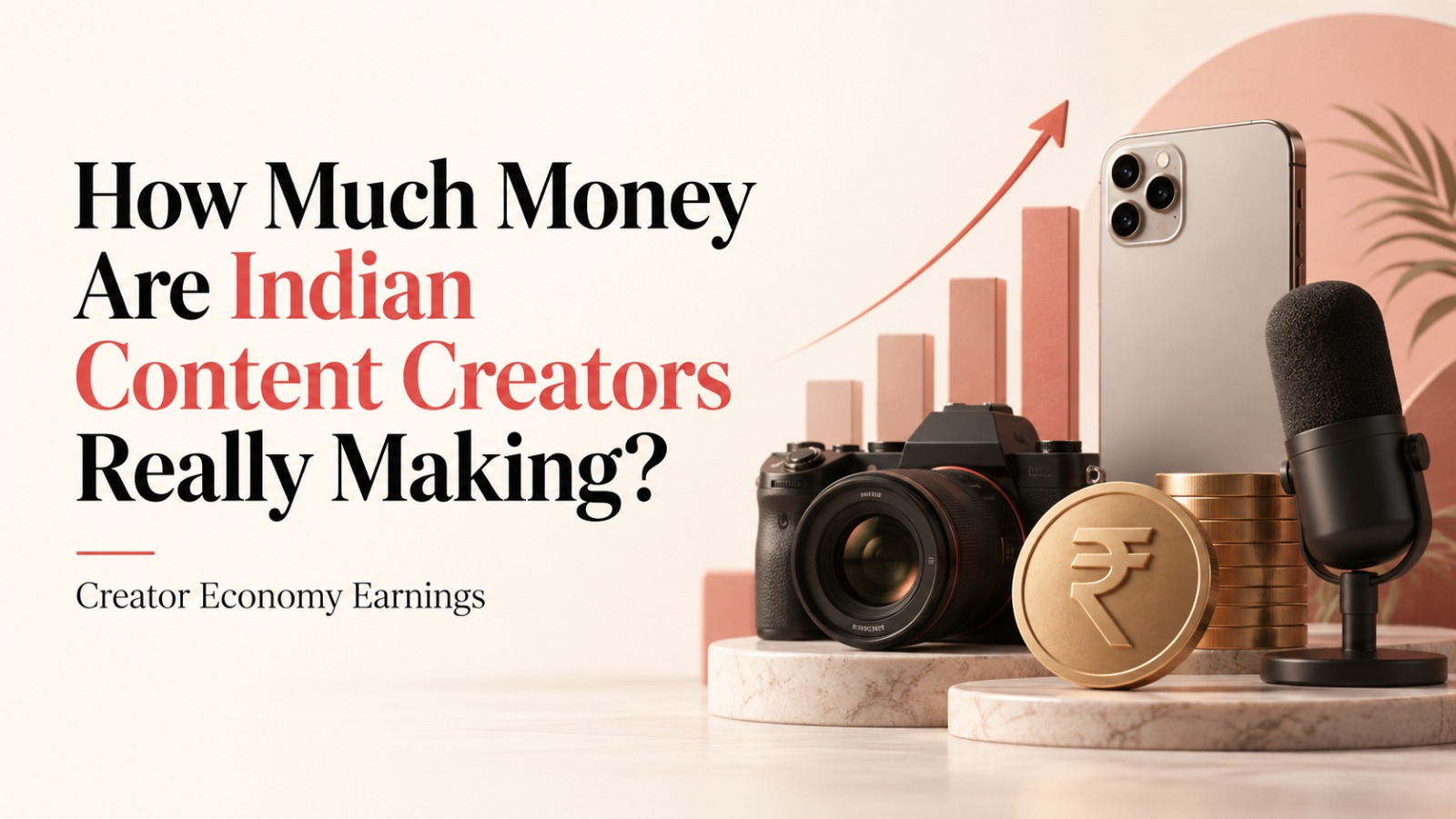
India’s creator economy has grown rapidly, with YouTubers and Instagram creators turning online audiences into businesses. But while views and followers can help creators build visibility, they do not automatically translate into high incomes.
YouTube says more than 3 million channels are now part of its YouTube Partner Program globally. The company has also paid more than $100 billion to creators, artists and media companies over the past four years.
In India, YouTube’s economic footprint has also expanded. The company said its creative ecosystem contributed more than Rs 16,000 crore to India’s GDP in 2024 and supported more than 930,000 full-time equivalent jobs, citing an Oxford Economics report. YouTube also said it had paid more than Rs 21,000 crore to Indian creators, artists and media companies over the previous three years.
A Million Views Does Not Come With a Fixed Paycheque
For creators, the biggest question is often how much money a certain number of views can generate. There is no universal answer.
YouTube earnings are influenced by several factors, including the location of viewers, advertising demand, the type of content, watch behaviour and whether individual views are monetised. The platform’s revenue opportunities extend beyond advertising and include YouTube Premium, Shopping, memberships and fan-funding features.
This means one million views can generate very different amounts for different creators. A channel with an audience in a market where advertisers pay more may earn considerably more than another channel with the same number of views but a different audience mix.
An industry estimate published by Influencer Marketing Hub in July 2026 puts typical YouTube creator earnings from advertising at around $1 to $30 per 1,000 views globally. Some high-value niches can command higher rates. However, these are industry estimates, not official YouTube rates, and they should not be treated as a standard figure for Indian creators.
Why Instagram Works Differently
Instagram follows a different monetisation model. Unlike YouTube’s established advertising revenue-sharing system, ordinary Instagram views in India do not have a universal fixed payout.
For many creators, brand partnerships, affiliate marketing and commerce are therefore important sources of income. Meta has also continued expanding its creator-commerce tools.
In June 2026, Meta announced that its affiliate partnership with Flipkart would expand to Instagram creators in India. The initiative allows creators to connect affiliate accounts and add product links to their content, giving them an opportunity to earn commissions when users make purchases through those links.
The development highlights the growing connection between content creation and online shopping.
India’s Creator Economy Is Moving Beyond Views
The wider creator economy is considerably larger than advertising revenue alone. A 2025 Boston Consulting Group report estimated that India had more than 2 million to 2.5 million monetised content creators influencing over $350 billion to $400 billion in consumer spending. It projected creator-influenced consumption could exceed $1 trillion by 2030.
India’s influencer marketing industry is also expanding. Kofluence estimates the market at around Rs 3,500 crore in 2026, although other estimates from the company place the 2026 market at a higher range depending on the methodology and forecast period.
This growth is giving creators more ways to monetise their audiences, including sponsorships, affiliate sales, shopping, memberships and other commercial partnerships.
Most Creators Still Earn Relatively Little
Despite the size of the industry, creator income remains highly uneven.
CreatorIQ’s 2026 State of Creators study, based on more than 5,000 creators across 100 regions, found that 67% earned less than $10,000 from content creation over the previous year. For 62% of respondents, content creation was not their primary source of income.
The distribution of money is also concentrated among a relatively small group of creators. CreatorIQ’s compensation data showed that the top 10% received 62% of total creator payments in 2025, while the top 1% received 21%.
For Indian creators, therefore, views are only one part of the income equation. Advertising can provide a foundation on platforms such as YouTube, while sponsorships, affiliate commissions, shopping, memberships and other commercial opportunities can add to overall earnings.
The creator economy may be growing quickly, but the financial rewards remain far from evenly distributed. For most creators, building a large audience is only the beginning of the journey towards turning content into a sustainable business.
Also Read: WWE Releases 10 Talents in 2026 Roster Cuts, Jasper Troy Among Biggest Names