

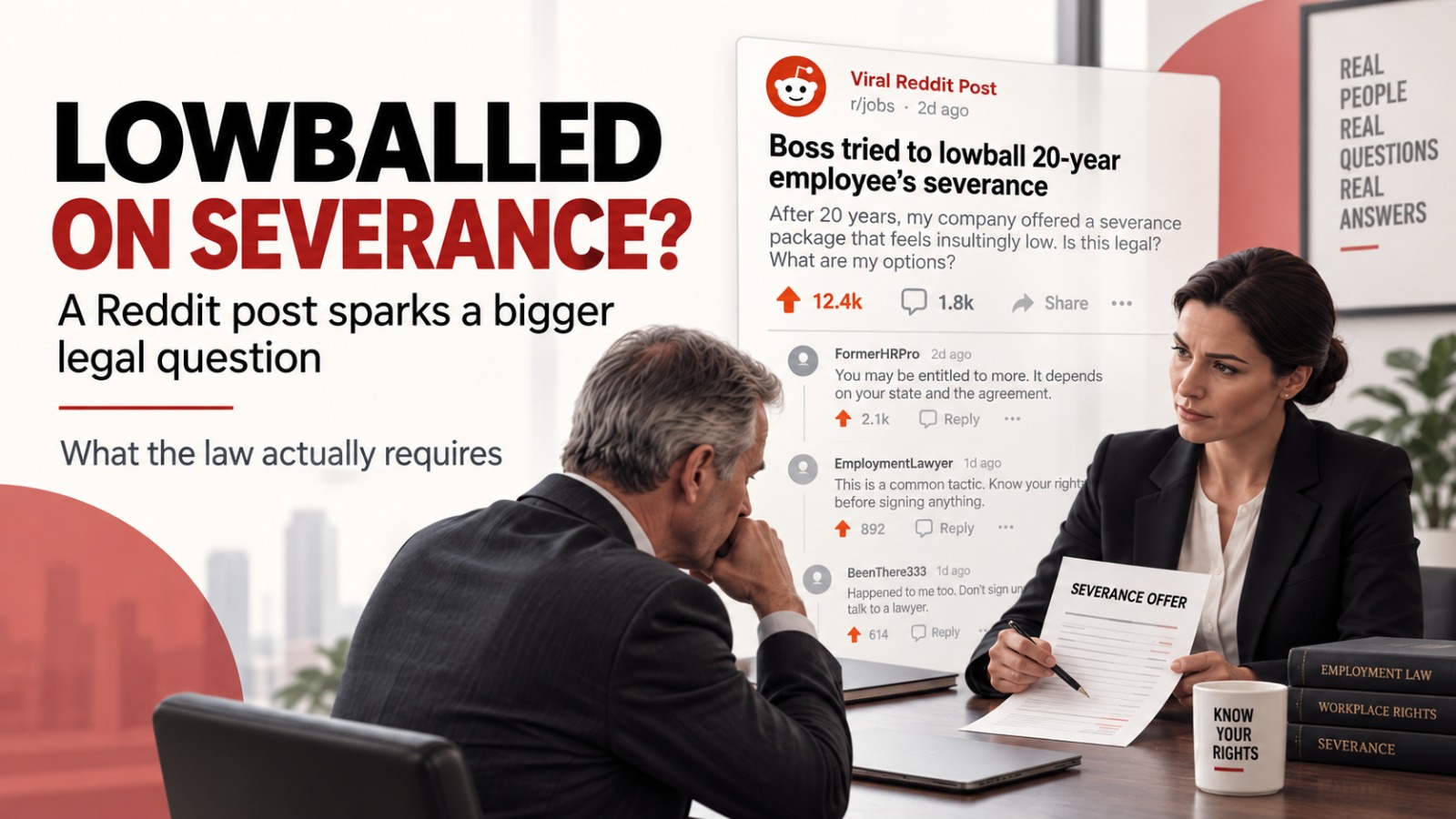
A Reddit post around Severance Pay is getting a lot of attention this week, and it has the kind of ending people love to see.
According to a post on r/pettyrevenge from a user going by TrantorX, their boss called them in one day and said, bluntly, that they’d become too expensive to keep around. Rather than firing them outright, the company put them on a special paid leave arrangement instead, one that could stretch on for months while the business figured out what to do next. Two months later, the employee was called back into the office. The boss, according to the post, didn’t look happy. He offered a payout, but not the full amount the employee believed they were owed after nearly two decades with the company. The offer came with a few different payment options attached, none of which involved handing over the money in full.
The post has pulled in more than 12,000 upvotes and over 200 comments, with plenty of people applauding the employee for holding their ground and pointing out that the amount in question wasn’t something the boss could simply negotiate down. It’s worth noting Reddit posts like this one can’t be independently verified, and the exact country or jurisdiction involved isn’t specified in the original account.
Why this story keeps happening
This isn’t a one-off. A similar story went viral last year on r/MaliciousCompliance, where a newly hired manager fired a 25-year employee without realizing the move would trigger a $200,000 payout. Stories like these tend to resurface again and again because they touch a nerve: the idea that a boss’s casual decision can collide with a legal or contractual obligation they didn’t fully understand.
What actually makes these stories interesting isn’t the drama, it’s the legal reality underneath them. Severance pay works very differently depending on where you are, and a lot of employers genuinely don’t realize how firm those numbers can be until they’re staring at the bill.
What severance law actually looks like around the world
In the United States, there’s no federal or state law that generally requires an employer to pay severance at all. It’s entirely down to what’s in an employment contract or company policy, and the country’s at-will employment system means an employer can typically end things with little obligation beyond what’s been agreed to in writing.
The United Kingdom works differently. Employees with at least two years of continuous service are entitled to statutory redundancy pay, and the amount is calculated using a formula based on age and length of service. That’s a legal floor, not a negotiating position.
India works differently again. Under the Industrial Disputes Act of 1947, anyone who’s put in 240 days or more of continuous service is legally owed retrenchment compensation, 15 days’ average pay for every year on the job. That’s not something a boss gets to haggle over in a meeting. It’s written into law, full stop, and has nothing to do with how generous the company feels like being that day.
Look across enough of these viral stories and you start seeing the same thing play out. A boss treats severance like a figure they get to pull out of thin air on the spot, not realizing the number was already locked in, either by contract or by law, long before they ever called that meeting.
None of this is legal advice, and if you’re actually in the middle of a severance dispute, go check the rules that apply where you live. But the takeaway holds no matter what country you’re in: know what you’re owed before you walk into that room. That’s the difference between someone lowballing you and someone handing you a mistake they now have to pay for.
Also Read: Apple iCloud+ Now Includes Free Apple TV and Arcade in India (Not in the US)