

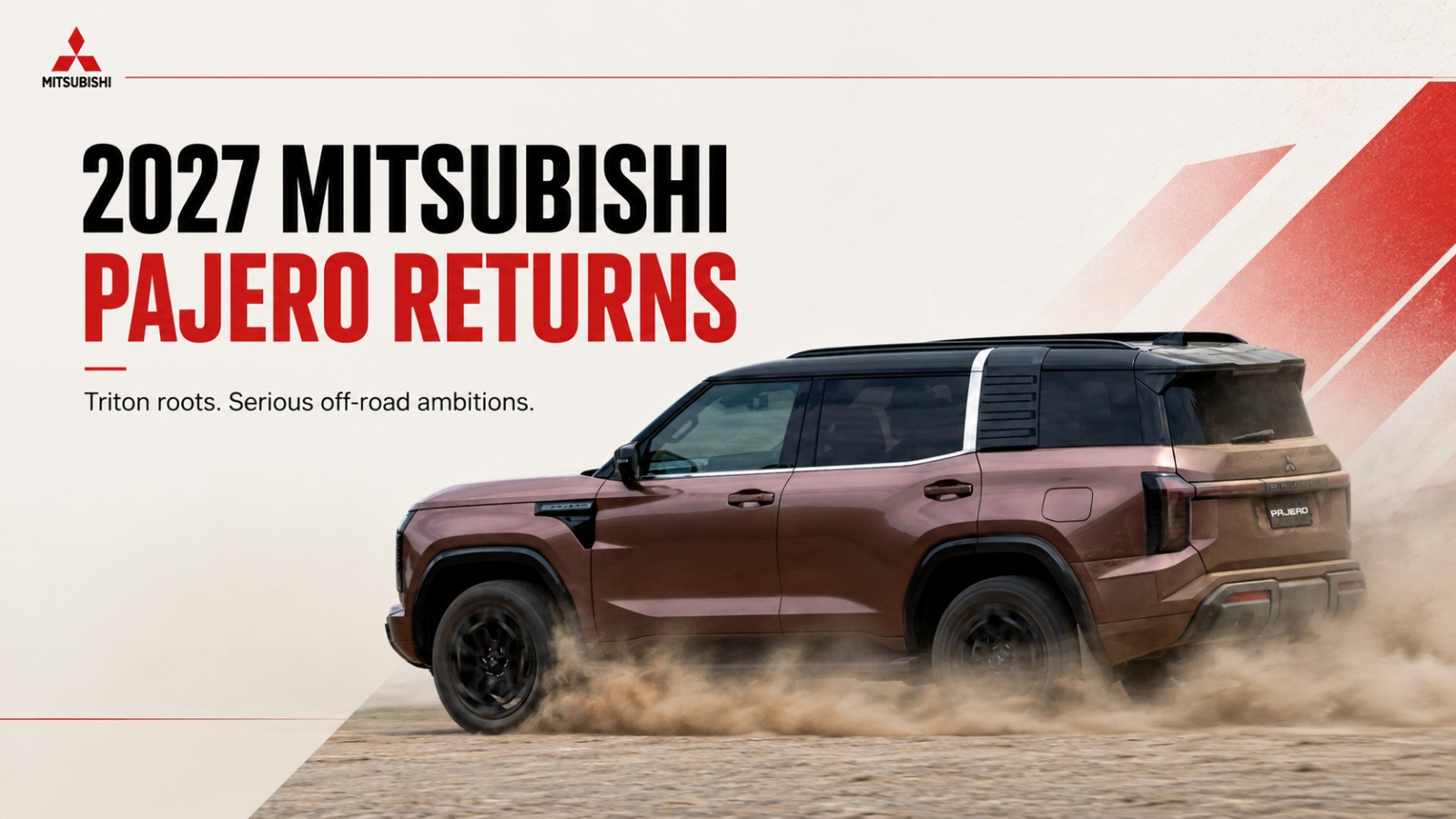
Mitsubishi has officially revealed the next-generation Pajero, bringing back one of its best-known SUV nameplates after a long absence. The fifth-generation model represents a major change for the Pajero, moving away from the monocoque construction of its predecessor and adopting a ladder-frame platform derived from the latest Mitsubishi Triton.
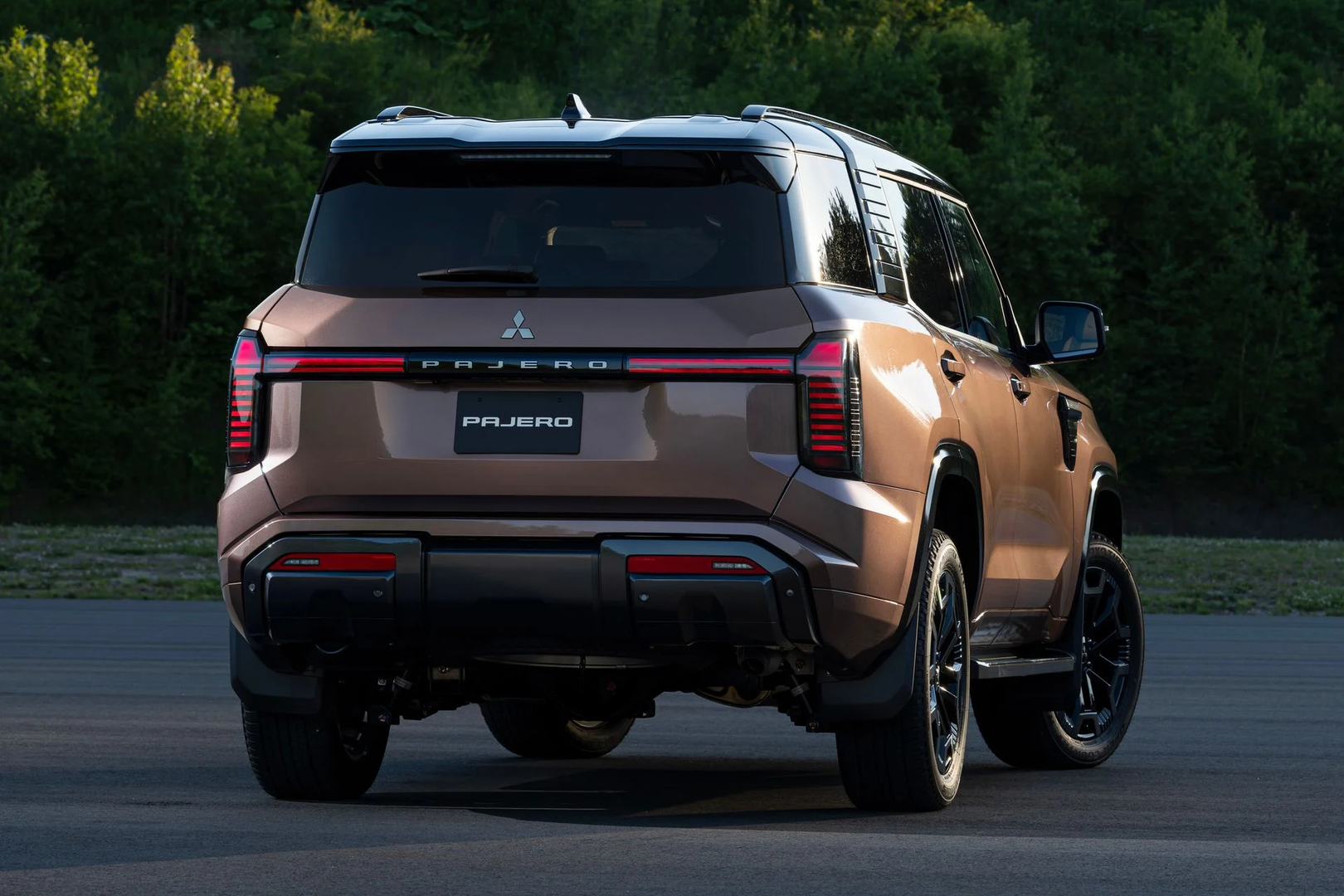
The new Pajero is the first completely new model in the nameplate since 2006. The fourth-generation Pajero ended production in 2021, leaving Mitsubishi without its flagship large off-road SUV for several years.
The reborn model shares its basic platform with the Triton, but Mitsubishi has made extensive changes to create a dedicated SUV. It will be produced alongside the Triton in Thailand, rather than Japan, with Thailand becoming the first market to receive the new Pajero. Australian pre-orders are scheduled to open in October, with local deliveries expected from December.
A boxier look with familiar Pajero influences
The new Pajero adopts a bold, upright design that combines modern Mitsubishi styling with references to earlier generations of the SUV.
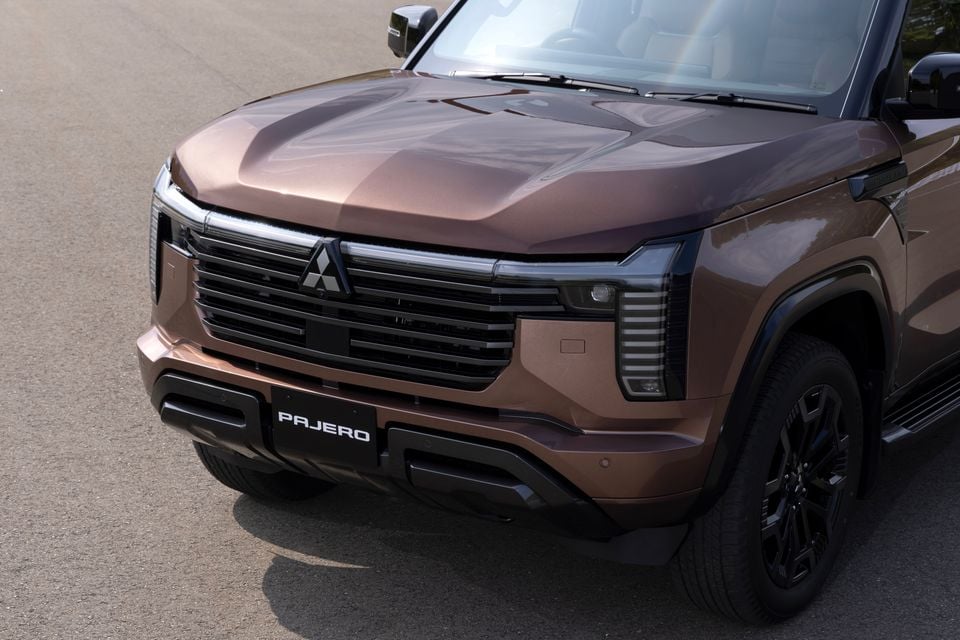
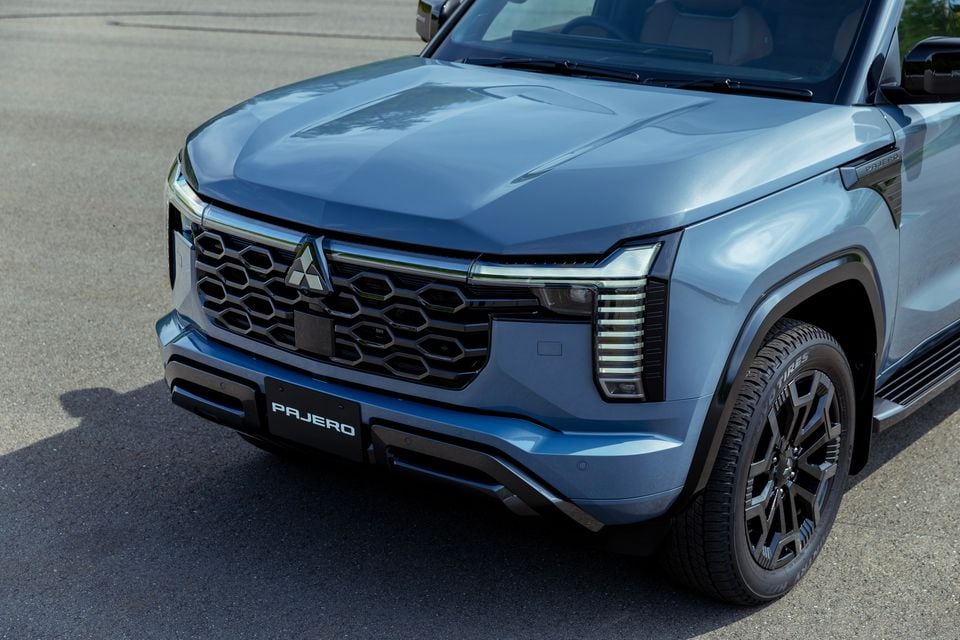
At the front, the grille features a subtle C-shaped design element, while Mitsubishi says the standard horizontal-slat grille takes inspiration from Japanese martial arts. A Dakar-inspired hexagonal grille will also be available.
Full-width lighting elements are positioned at both ends, with the front lights featuring an animated signature. One of the biggest visual changes is at the rear, where the spare wheel has been moved underneath the vehicle instead of being mounted externally on the tailgate.
The C-pillar design also pays tribute to the original Pajero, with ladder-like elements inspired by its roll bar. The body remains deliberately upright and boxy, while a range of accessories, including bull bars, will be available.
Mitsubishi will offer six exterior colours, largely centred around white, grey and black shades. Armour Copper and Phantom Blue will serve as the model’s standout hero colours.
Triton platform heavily reworked for SUV duty
Although the Pajero is based on the Triton’s ladder-frame architecture, Mitsubishi has substantially modified the chassis. It features thicker side members, additional cross-bracing and a 2,870mm wheelbase, which is 260mm shorter than the Triton’s.
The suspension has also been redesigned. The Pajero uses a double-wishbone front suspension and a five-link rigid rear suspension with coil springs. This replaces the Triton’s rear leaf springs and is intended to provide a balance between off-road capability and everyday ride comfort.
Other chassis changes include rear disc brakes instead of drums, a tighter turning circle and a higher driving position to improve visibility. Mitsubishi has also redesigned the front door structure and made the A-pillars more upright.
The new SUV measures 4,920mm long, 1,925mm wide and between 1,900mm and 1,910mm tall, depending on the variant. It retains seven seats across three rows, while a five-seat version is also expected for Australia.
A completely new cabin for Mitsubishi
Inside, the Pajero receives a dashboard layout unlike any Mitsubishi previously delivered in Australia. The tall, upright dashboard features a two-tier passenger glovebox, grab handles and a new integrated screen arrangement.
The design draws inspiration from the first-generation Pajero, while the soft-touch materials and stitching are influenced by the Japanese Kimekomi craft.
A physical climate-control layout remains below the central touchscreen. Both the infotainment and instrument displays can measure 14.3 inches, while selected variants will use 12.3-inch screens.
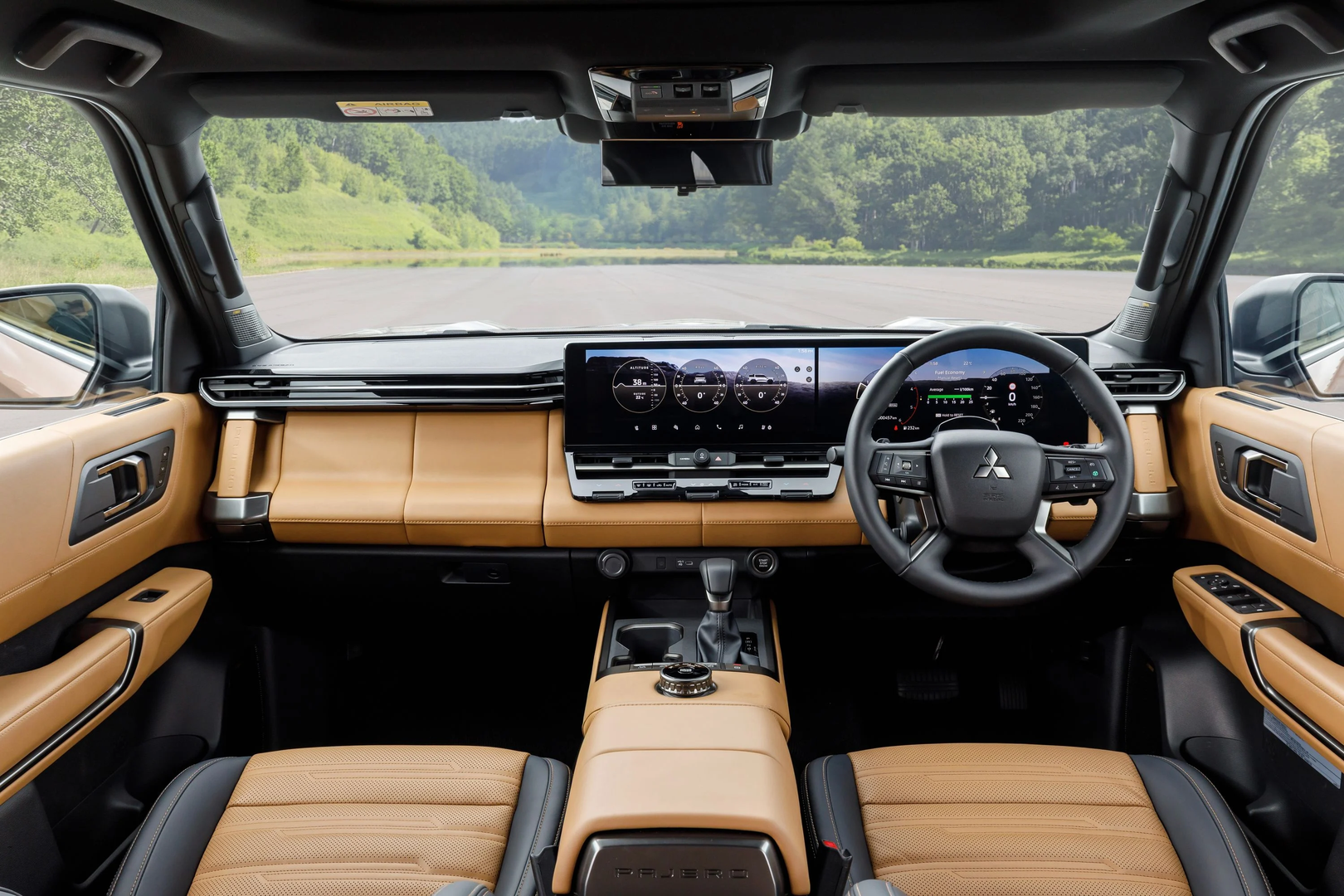
The infotainment system includes a triple-gauge Multi Meter display inspired by the Pajero’s heritage. The cabin also gets USB-C ports, a 12-volt outlet and wireless smartphone charging.
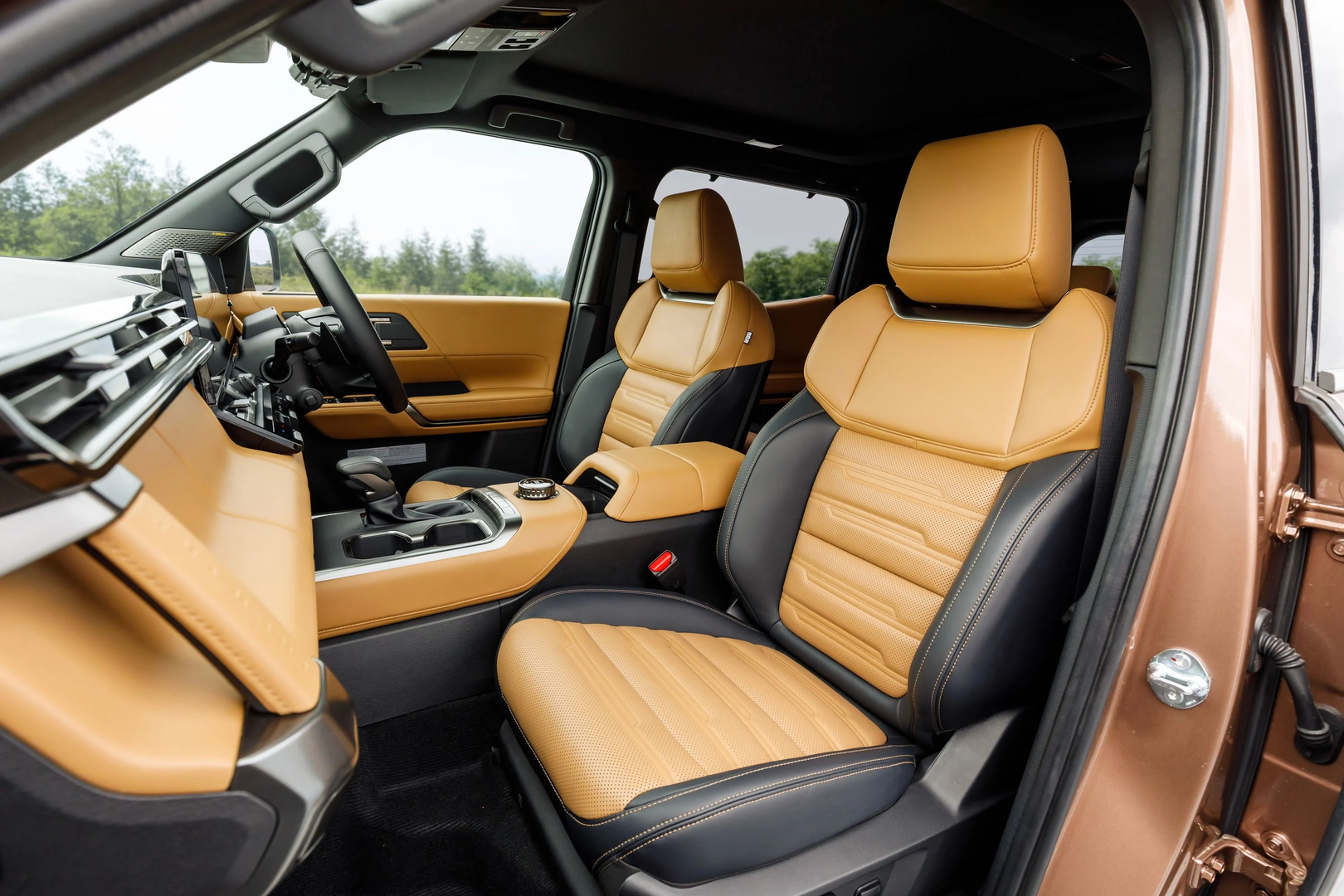
The centre console retains a traditional gear selector, cupholders, metallic-look controls and Mitsubishi’s familiar four-wheel-drive controller. Selected versions will also offer semi-aniline leather upholstery.
More comfort across three rows
Mitsubishi has given rear passengers several practical features, including USB-C ports mounted in the front seatbacks and a dedicated climate-control panel behind the centre console.
The second row can slide 150mm forward or backward, helping passengers balance legroom with access to the third row. Additional features include multi-tier map pockets, tray tables and a fold-down armrest with cupholders.
The third row is designed to provide enough headroom for adult passengers, adding to the Pajero’s focus on family practicality.
A 12-speaker Dynamic Sound Yamaha Ultimate audio system will also be available. The system uses two amplifiers and active noise compensation, working alongside insulated front and side windows.
Diesel power paired with an eight-speed automatic
At launch, the Pajero will be powered exclusively by a 2.4-litre four-cylinder turbo-diesel engine. Unlike the Triton’s twin-turbo setup, the Pajero uses a single turbocharger.
Maximum power remains at 150kW, while torque is rated at either 470Nm or 480Nm depending on the specification.
The engine is paired with a new-generation eight-speed automatic transmission, replacing the six-speed automatic used by the Triton.
Four-wheel-drive capability comes through Mitsubishi’s Super-Select 4WD-II system, offering 2H, 4H, 4HLc and 4LLc modes.
The Pajero also features Super All-Wheel Control, or S-AWC, with front-to-rear torque distribution, left-to-right torque vectoring and four-wheel brake control. Seven drive modes are available: Eco, Normal, Gravel, Snow, Mud, Sand and Rock.
Pajero prepares to re-enter a crowded SUV market
Further details about the new Pajero are expected closer to its local launch. When it arrives, the SUV will compete in the growing ute-based off-road SUV segment against models such as the Ford Everest, Isuzu MU-X and GWM Tank 500, while also going up against the Toyota Prado.
The new Pajero is expected to cost more than the outgoing Pajero Sport because of its extensive upgrades, although it is not expected to move dramatically upmarket.
The Pajero name has a long history. Since its introduction in 1982, the model has recorded more than 3.3 million global sales across four generations. It has also been sold under different names in several markets, including Montero and Shogun.
Mitsubishi is also expected to expand the Pajero family in the future, with reports pointing to additional SUV models and the potential introduction of hybrid versions of both the Triton and Pajero.
Also Read: Mitsubishi Has Seven New Models Coming Soon: Here’s What We Know















