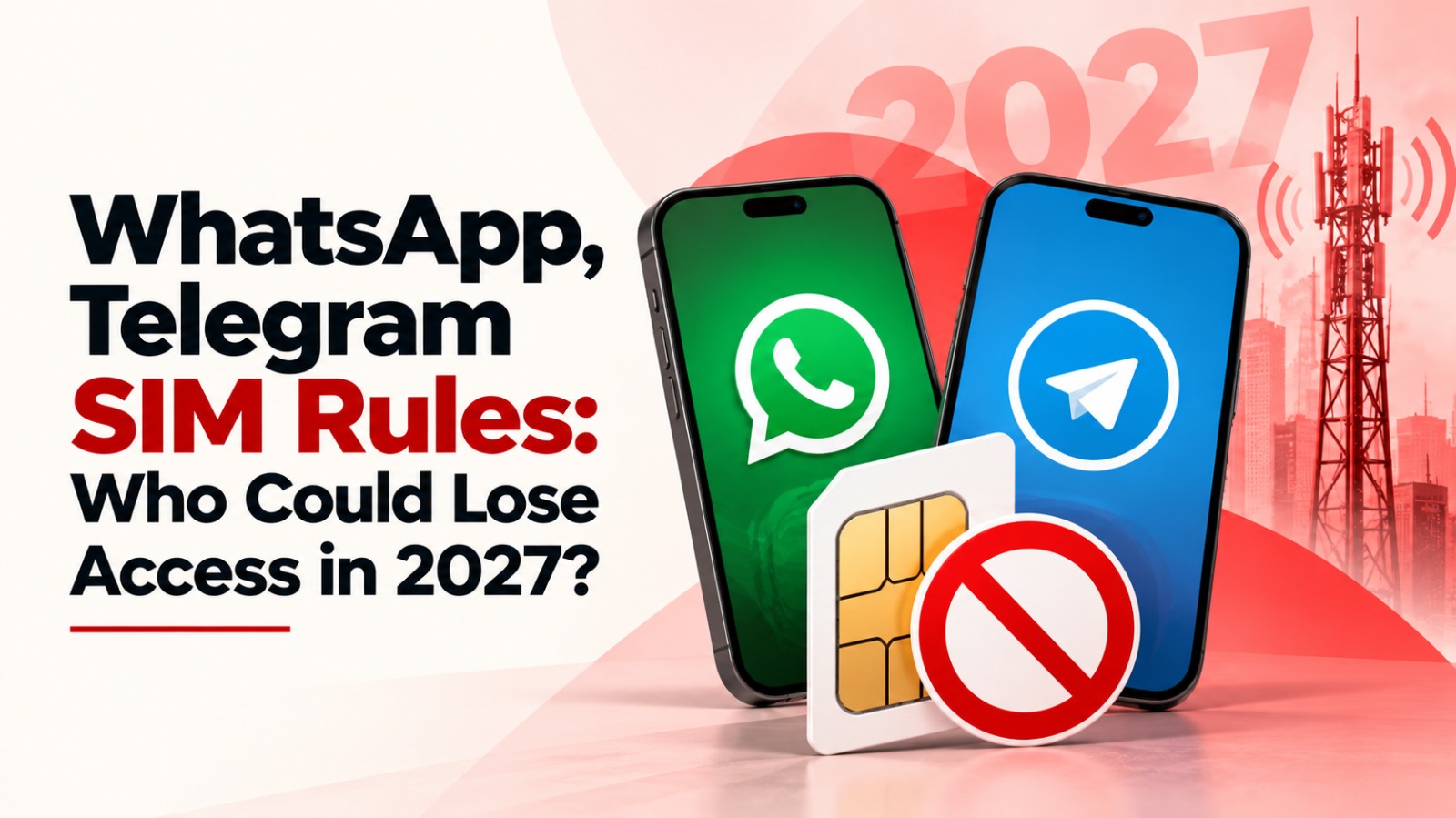
India is preparing to tighten the rules governing messaging apps, with new SIM-binding requirements expected to take effect on January 1, 2027. The change could affect how people use WhatsApp, Telegram and other communication platforms, particularly those who have removed their registered SIM cards but continue using their accounts over Wi-Fi.
The Department of Telecommunications (DoT) has directed affected messaging platforms to comply with the requirements by December 31, 2026. The measures are intended to strengthen telecom security and make it harder for cybercriminals to misuse Indian mobile numbers for fraudulent activities.
For everyday users, the biggest change is not about whether their smartphone can run WhatsApp. It is about whether the SIM card associated with their account remains active and available in the device.
What Is SIM Binding and How Will It Work?
SIM binding is a security requirement that links a messaging account to the active SIM card used to register or verify the associated mobile number.
Under the proposed requirements, messaging services using Indian mobile numbers will need to ensure that the registered number is linked to an active SIM card or eSIM in the device. If the relevant SIM is removed or becomes inactive, the account may no longer function normally on that device.
This could create problems for people who registered for WhatsApp or Telegram using one number but later removed that SIM card from their phone.
For example, someone may have registered for WhatsApp using their primary number, moved the SIM to another phone and continued using WhatsApp on their main device through Wi-Fi. Such users could face restrictions under the new requirements.
Dual-SIM users may also need to ensure that the SIM associated with their messaging account remains active in the device. Simply having another working SIM in the phone may not be sufficient if the number linked to the account is unavailable.
Why Is the Government Introducing SIM Binding?
The primary objective is to reduce the misuse of Indian mobile numbers in cybercrime.
The Department of Telecommunications has raised concerns about app-based communication services that allow accounts registered with Indian numbers to remain operational even when the corresponding SIM card is no longer present in the device.
According to the concerns outlined by the department, this gap could be exploited by fraudsters operating within India and abroad. Linking messaging accounts to active SIM cards is intended to make it more difficult to misuse these accounts after separating them from their original mobile connections.
The move comes amid substantial financial losses from online fraud. A December 2025 release from the DoT put India’s total financial losses from cyber fraud in 2024 at more than ₹22,800 crore.
The SIM-binding requirement is part of a wider effort to address threats such as phishing, financial fraud, cybercrime and scams commonly described as digital arrest.
However, the measure should not be seen as a complete solution to online fraud. Criminals can still attempt to deceive users through impersonation, fraudulent messages and social engineering. SIM binding addresses one potential security weakness, rather than eliminating every route through which scams occur.
Which Messaging Apps Could Be Affected?
The directive applies to app-based communication services that use Indian mobile numbers to identify users or provide their services.
Platforms mentioned in connection with the requirements include:
- Telegram
- Arattai
- ShareChat
- Josh
- JioChat
- Signal
The precise applicability and implementation may vary depending on the service and the requirements imposed on it. Signal’s status has remained unclear in the information provided, while Snapchat has been reported as unlikely to fall under the order.
Users should therefore avoid assuming that every messaging platform will implement the rules in exactly the same way.
Will WhatsApp Stop Working on Older iPhones and Android Phones?
No. The SIM-binding requirement, as described, is not an announcement that WhatsApp will stop supporting selected iPhone or Android models from January 1, 2027.
The central issue is the connection between the messaging account and its registered SIM, not the age or brand of the smartphone.
Users who keep their registered SIM active in their device should not confuse the new requirement with a general shutdown of WhatsApp on existing phones. The potential disruption is more relevant to people who use their accounts without keeping the associated SIM in the device.
This distinction is important because the change concerns account access and telecom security, rather than a new minimum hardware requirement.
What Will Happen to WhatsApp Web and Linked Devices?
The rules could also affect people who rely on WhatsApp Web or other linked-device features.
The original draft guidelines reportedly included a requirement for web sessions to log out every six hours, after which users would have to reconnect by scanning a QR code. However, the DoT subsequently removed this fixed six-hour interval and moved towards a more flexible, risk-based approach.
That means users should not automatically assume that WhatsApp Web will require a fresh QR-code scan every six hours from January 2027.
The practical impact will depend on how the platforms implement the final requirements and manage access across connected devices. Users who depend on tablets, computers or secondary phones may need to pay attention to any instructions issued by their messaging service.
Who Could Face the Biggest Problems?
People who use messaging apps exclusively over Wi-Fi without keeping their registered SIM in the device are likely to be among the most affected.
Consider someone who registered for WhatsApp several years ago, removed the original SIM from their smartphone and has continued using the account through a Wi-Fi connection. Under SIM binding, that arrangement may no longer work as it does today.
The same concern applies to people who keep their registered SIM in a secondary phone while using the messaging account on another device.
Users who have multiple phone numbers should check which number is linked to each messaging account. Keeping the associated SIM active and available in the relevant device could help them avoid access problems when the requirements come into force.
Can SIM Binding Completely Stop Cyber Fraud?
SIM binding may make certain forms of account misuse more difficult, but it cannot guarantee that messaging accounts will never be used for fraud.
A scammer may still send a convincing phishing message, impersonate a family member or attempt to trick someone into transferring money. An active SIM card does not automatically make every message or caller trustworthy.
The effectiveness of the new requirements will depend on how messaging platforms verify the presence of registered SIM cards, handle SIM replacements and number changes, and enforce the restrictions across devices.
For users, basic precautions remain important: never share verification codes, verify suspicious requests for money independently and avoid clicking on unfamiliar links.
What Should WhatsApp and Telegram Users Do Before January 2027?
With the compliance deadline approaching, users can take a few practical steps to reduce the risk of disruption.
First, check which mobile number is registered with WhatsApp or Telegram. If that number belongs to a SIM card kept in another phone, consider whether you need to change your setup.
Second, ensure that the registered number remains active and that you can access it when verification is required. If you have changed numbers or replaced a SIM, check the account’s registration details.
Finally, watch for official instructions from the messaging platforms about linked devices and SIM changes. The exact implementation details matter, particularly for people who regularly use messaging apps on computers or tablets.
The key takeaway is that the January 2027 change is about keeping messaging accounts connected to their registered mobile numbers. For most users, the important question will be whether their existing setup meets the new requirements, especially if they have been using WhatsApp or Telegram without the original SIM card in their device.
Also Read: Getty Images Files for Bankruptcy Amid AI Image Competition