


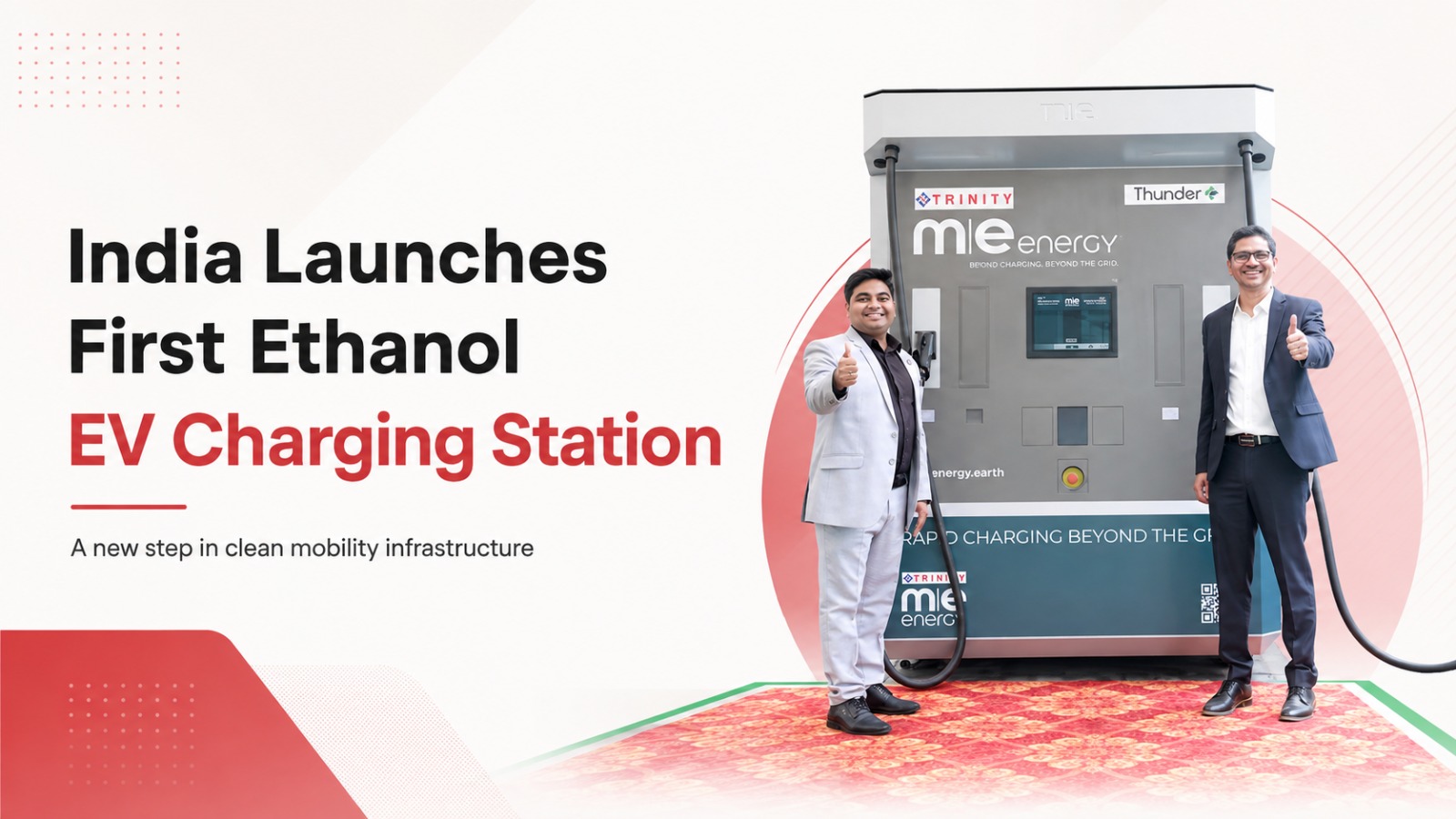
World’s First Ethanol EV Charger: Telangana has introduced an ethanol-powered electric vehicle charging system that could offer a new way to build charging infrastructure in places where dependable grid connectivity remains a challenge.
The technology, described by its promoters as the world’s first ethanol-based EV charging solution, combines a 150kW rapid charger with an electricity-generation system powered by ethanol. Rather than depending entirely on the conventional power grid, the unit produces the electricity needed to charge electric vehicles at the site.
Union Minister G. Kishan Reddy called the initiative an important green-energy milestone, highlighting its attempt to bring together electric mobility and India’s growing focus on ethanol as an alternative fuel.
A charging station built for difficult locations
Most public fast-charging stations require access to high-capacity electrical connections, along with approvals, transmission infrastructure and installation work. These requirements can slow deployment, particularly along highways, in remote areas and in regions where power infrastructure is limited.
The ethanol-powered unit has been designed to address that gap. Since the system generates electricity using ethanol, it can reportedly be installed without relying completely on an existing grid connection.
The 150kW charger is intended to provide rapid charging while reducing the need for diesel generators, which are often used as a backup power source in off-grid or poorly connected locations.
That could make the technology relevant for fleet depots, highway charging points, remote commercial sites and underserved regions where extending electrical infrastructure may be difficult or time-consuming.
Operational within 72 hours
One of the most notable claims around the system is the speed at which it can be deployed.
The charging unit can reportedly become operational within 72 hours. Conventional charging stations can take considerably longer because they may require grid approvals, new electrical connections and supporting infrastructure before charging can begin.
The new system is also expected to reduce installation costs and setup time by more than 50 per cent, according to the information released about the technology.
Faster deployment could help charging operators respond more quickly to demand in areas where EV usage is increasing but permanent power infrastructure has not yet caught up.
Lower emissions than diesel-based alternatives
The environmental argument for the system rests largely on its potential to replace diesel-powered electricity generation at charging sites.
The ethanol-based charger is expected to reduce carbon emissions by up to 80 per cent when compared with diesel-powered alternatives. The comparison is significant because diesel generators remain a practical, though polluting, option for producing electricity in locations where grid power is unavailable or unreliable.
The system does not remove electricity from the charging process. Instead, it changes how that electricity is produced at the station. Ethanol is used to generate power, which is then supplied to the electric vehicle through the rapid charger.
This approach could help reduce dependence on fossil-fuel generators while allowing charging infrastructure to reach locations that may not be ready for a conventional grid-connected station.
A possible complement to India’s charging network
The technology arrives as India continues to expand electric mobility and promote ethanol as an alternative fuel.
By combining the two, the project offers a different model for charging infrastructure. Grid-connected stations are likely to remain central to EV charging in cities and other well-served areas. Ethanol-powered systems, however, could complement those networks in places where installing a conventional charger is difficult, expensive or slow.
The identified applications include highways, fleet depots, remote areas and regions with weak grid connectivity. The broader objective is to improve access to EV charging while supporting cleaner transportation, domestic fuel use and greater energy security.
Its wider impact will depend on how effectively the technology performs outside the initial deployment and whether it can be expanded at a commercially practical scale. For now, the Telangana launch presents a notable attempt to solve one of the EV sector’s most persistent infrastructure problems: how to provide reliable fast charging where the electricity grid cannot easily support it.
Also Read: RoadGrid secures Rs 13 crore from TDB for EV charger manufacturing project