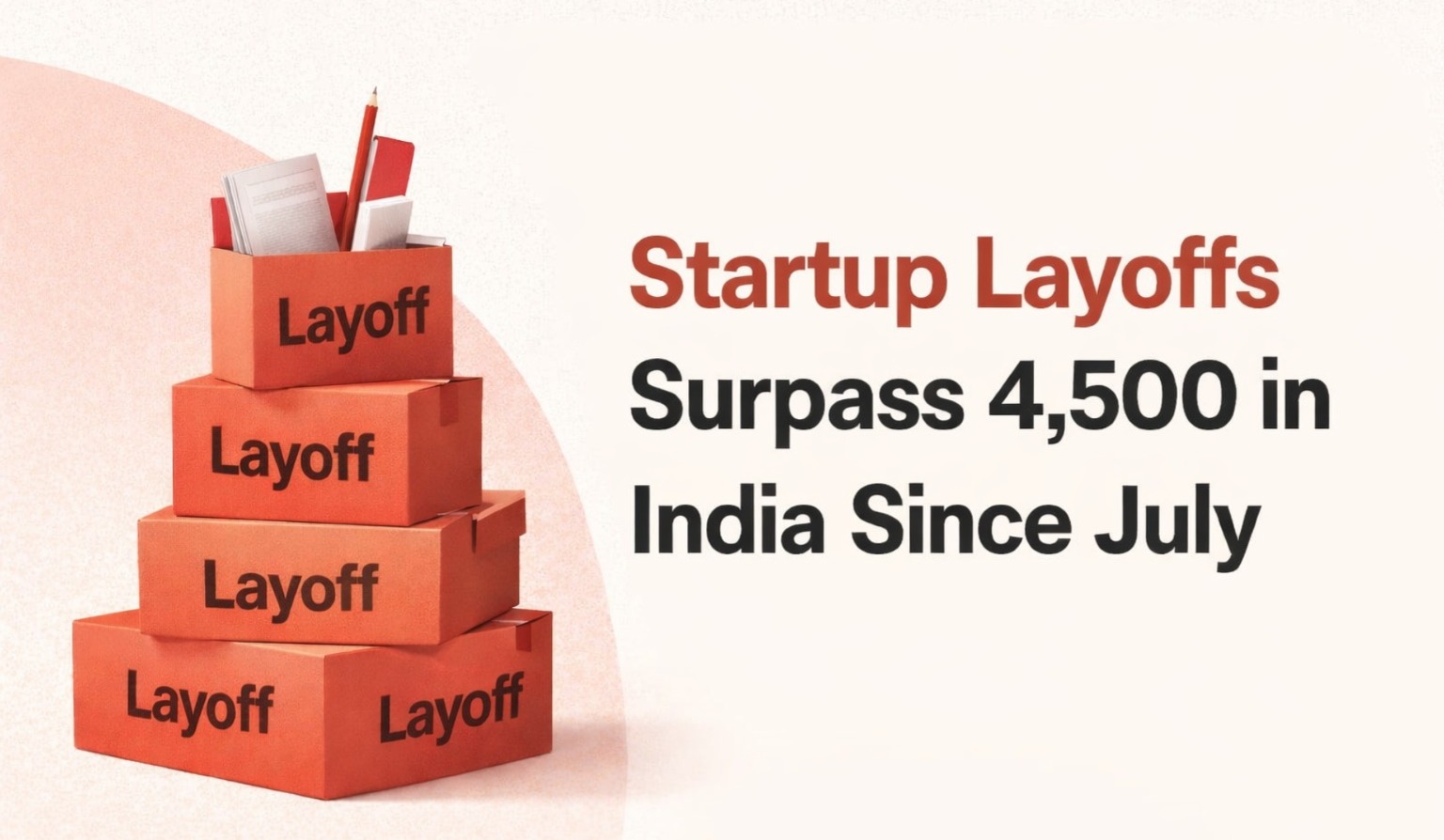
The startup ecosystem in India has witnessed more than 4,500 employees being laid off since July, which is a major correction in the workforce across various sectors such as gaming, quick commerce, SaaS, and AI startups.
The figure, compiled by executive search firm Longhouse Consulting, puts the estimated total layoffs at 4,838, including companies beyond those publicly listed. The data reflects reductions across firms such as Livspace (1,000), Games24x7 (400), GamesKraft (400), Zupee (370), Porter (350), Junglee Games (350), Mobile Premier League (300), Zepto (300), Krutrim (150), GupShup (100), Simpl (80), Bobble AI (50) and BharatAgri (37).
While the headline number appears stark, industry observers suggest the deeper story is structural, not cyclical panic.
A Reset in How Startups Are Built
As per the assessment cited in the report, startups are no longer hiring more people before the expected growth. They are now hiring based on output and capital efficiency.
Investor behaviour has shifted. Funding is still available, but it is selective. Companies that can demonstrate milestones with optimised headcount are finding favour. The “lean by design” approach is no longer reactive cost-cutting; it is becoming foundational strategy.
Part of the churn has also been triggered by regulatory shifts. A sudden ban on online real-money gaming disrupted several businesses, leading to abrupt restructuring and job losses.
At the same time, AI adoption is accelerating internal redesign. Livspace’s reported 1,000-person reduction, linked to an AI push, reflects how automation is increasingly influencing operational structures.
Startup Layoffs: “This Is a Transition Phase”
Samarth Sharma of Sandbox Concepts believes the current phase should not be mistaken for long-term contraction.
In his view, artificial intelligence will eliminate certain roles, but it will also create new categories of work. The challenge, he suggests, lies in adaptability.
He points out that every major technological shift has initially displaced roles before generating new ecosystems of opportunity. AI, he argues, will be no different. The workforce that evolves, by understanding AI tools, data workflows and new business models, will remain relevant.
According to Sharma, this moment represents transition rather than decline.
Capital Has Become More Discerning
The broader funding landscape reinforces this shift. Investment momentum has concentrated in segments like quick commerce, while traditional SaaS players face more scrutiny amid the AI-driven pivot.
Investors are increasingly prioritising runway, margin discipline and operational clarity over rapid expansion.
For employees, the implications are becoming clearer:
- Revenue-linked roles carry stronger resilience.
- AI literacy is moving from optional to essential.
- Cross-functional skillsets are gaining value.
- Automation-exposed roles face greater pressure.
The correction may feel sharp, but the startup ecosystem has historically evolved through cycles of expansion, recalibration and reinvention.
If the data from Longhouse Consulting signals anything, it is that the ecosystem is tightening, not collapsing.
And as Sharma frames it, the real divide ahead may not be between those who lose jobs and those who don’t, but between those who adapt and those who resist the shift underway.
Also Read: How to Start a Profitable Makhana (Fox Nut) Business in India!