

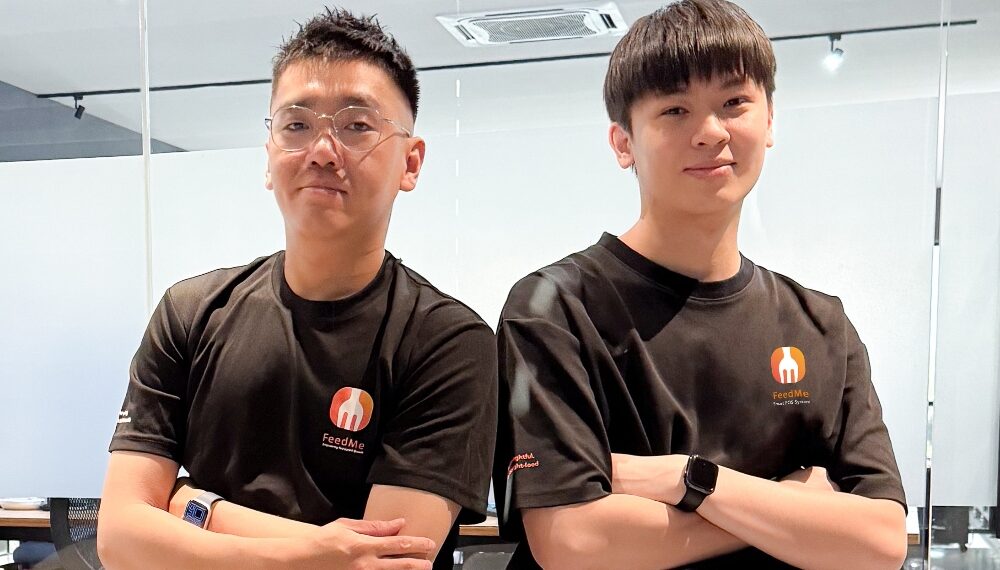
Malaysia-based restaurant software company FeedMe has raised US$5 million (RM23 million) in fresh funding to accelerate its expansion across Southeast Asia and deepen its artificial intelligence (AI) capabilities for food and beverage operators. The round is led by Integra Partners, with participation from Cento Ventures.
The new capital will be channelled into three clear priorities: expanding into Thailand, scaling the startup’s engineering team to enhance its AI-driven tools, and rolling out financial services aimed at improving payment and lending access for its merchant base.
Tackling the restaurant sector’s “fragmented tools” problem
Across Southeast Asia, restaurants are wrestling with outdated systems, fragmented software, rising labour costs and high failure rates. This environment has sharpened demand for automation, tighter inventory control and better use of data in day-to-day decisions.
FeedMe positions itself squarely in the middle of that problem. Instead of operators gluing together point solutions, the company offers an all-in-one operating system for restaurants that brings multiple tools into a single stack, including:
- Point-of-sale (POS)
- Delivery platform integrations
- E-invoicing
- QR code ordering
- Queue management
- Kitchen display systems
- Payments
- Accounting and HR
- Inventory management
- AI tools and customer relationship management (CRM)
Built specifically for the food and beverage (F&B) industry, FeedMe’s platform is designed to connect both front-of-house and back-of-house operations so that orders, payments, kitchen workflows and customer data sit on one layer instead of scattered across multiple vendors.
Co-founder and chief executive Squall Tan frames the company’s mission around letting restaurateurs refocus on the basics:
F&B operators want to focus on great food and guest experience, not stitching together fragmented tools, Tan said, adding that the fresh funding will help FeedMe pursue its ambition to become “the Toast of APAC” by embedding AI across its stack to forecast demand, optimise inventory and run smarter across outlets and channels.
FeedMe: 11,000 merchants and 10x revenue growth since 2021
The fundraise comes on the back of what investors describe as strong growth. FeedMe says it has already served 11,000 merchants across Southeast Asia and recorded 10x revenue growth since 2021.
Its customer list includes a number of recognised regional F&B names such as ZUS Coffee, Christine’s Bakery, Salad Atelier and Hock Kee Kopitiam, giving the startup a base of multi-outlet and chain brands to support its regional ambitions.
FeedMe was also the first Malaysian startup selected for the inaugural Google AI Academy in Asia Pacific, a programme that acknowledged its AI-driven platform for simplifying and transforming restaurant workflows.
Investors see a potential “category-defining” platform
For lead investor Integra Partners, FeedMe’s appeal lies in the combination of a tightly focused product and visible traction with regional chains.
“FeedMe’s unified platform, rapid product velocity, and traction with regional chains position it as the next-generation leader in restaurant digitalisation,” said Jennifer Ho, partner at Integra. She highlighted the firm’s plans to help FeedMe scale payments, AI and financial services to “thousands more merchants” across the region.
Co-investor Cento Ventures is backing the same thesis of depth over breadth. Partner Boon Ping Chua pointed to FeedMe’s concentration on restaurants, integrated payments and its data-driven roadmap as reasons the company could become the “category-defining operating system” for Southeast Asia’s restaurant sector. He also emphasised the startup’s focus on building a product-led, capital-efficient business as it scales across Southeast Asia and potentially beyond.
Why Thailand is next on the menu?
A key use of the new capital will be to deepen FeedMe’s presence in Thailand, a market with a dense, diverse F&B landscape, from independent eateries to fast-growing chains. While the company has not disclosed specific timelines or targets for that expansion in the information provided, the move aligns with its broader goal of becoming a regional operating layer for restaurants, rather than a single-country software vendor.
At the same time, FeedMe plans to expand its engineering capacity. That additional technical muscle is intended to support further development of its AI features, particularly around demand forecasting and inventory optimisation, areas that directly affect margins and waste in restaurant operations.
Embedding finance into restaurant software
Beyond pure software and AI, the startup is preparing to launch financial services for its merchants, including capabilities aimed at easing payments and lending access.
By sitting at the centre of a restaurant’s transaction and operations data, an operating system like FeedMe has visibility into sales patterns, cash flow and seasonality. While specific product details are not disclosed in the material available, the company’s stated goal is to use that vantage point to help merchants access more tailored financial products and smoother payment experiences.
A unified stack in a fragmented market
The restaurant technology landscape in Southeast Asia has often grown in silos, separate vendors for POS, delivery, loyalty, accounting and HR. FeedMe is betting that a single, F&B-first stack can lower complexity for operators who are otherwise forced to juggle multiple dashboards and reconcile data manually.
By tying together POS, delivery integrations, QR ordering, kitchen displays, payments, back-office tools and AI-driven insights, the platform aims to reduce friction for both small operators and regional chains that are scaling across borders.
With its latest US$5 million funding round, a base of 11,000 merchants, selection to the Google AI Academy in Asia Pacific, and a slate of recognised F&B brands already on board, FeedMe is now positioning itself as an emerging backbone for restaurant digitalisation in Southeast Asia, starting from Malaysia, and with Thailand next in line.
Also Read: iPhone Air’s Star Designer Abidur Chowdhury Quits Apple For AI Startup
















